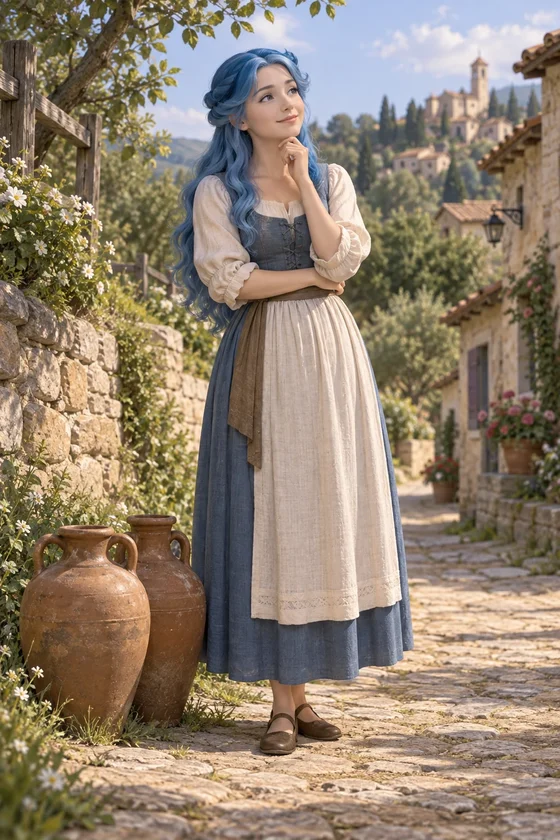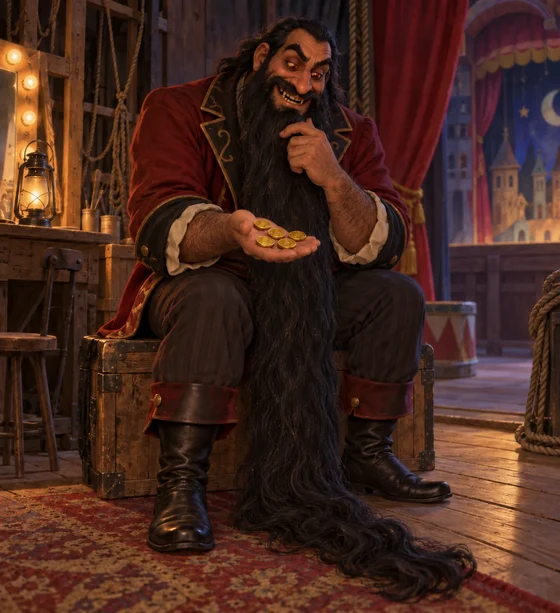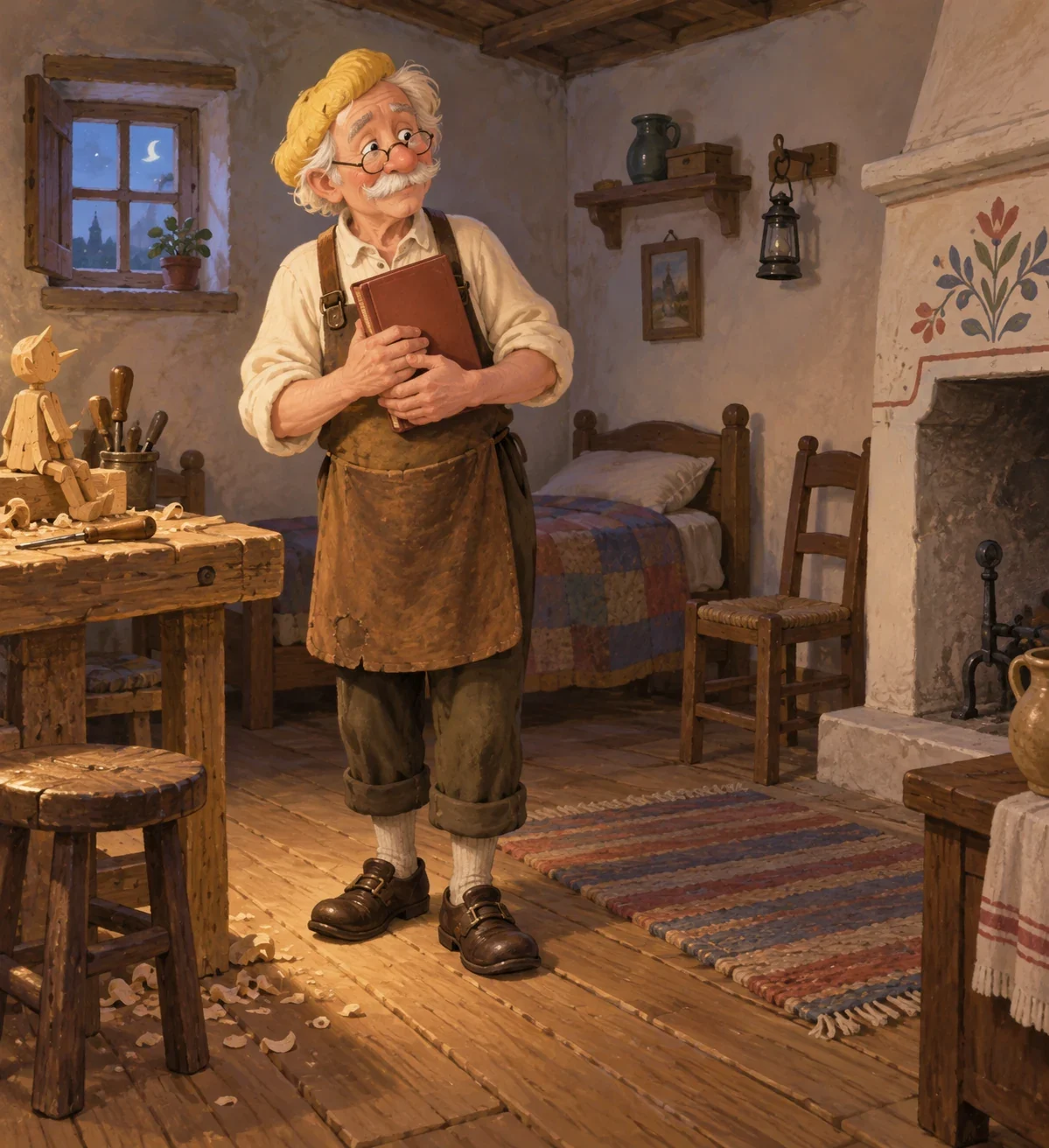
Imagined Geppetto returns with the schoolbook after selling his coat.
Unofficial AI interpretation. Geppetto returns with the schoolbook after selling his coat. Selected action and defining details follow the original narrative; portrait, precise age, clothes and surrounding scene are imagined, without an adaptation likeness claim. Full-frame display derivative; no upscaling.
Overview
Geppetto is the little old wood carver who makes Pinocchio and treats him as his son. The neighbourhood boys call him Polendina because his wig has the yellow colour of corn. The teasing name concerns that wig, not a naturally yellow-haired fantasy species. His modest home contains an old chair, a worn bed and an unstable table; even the fireplace and steaming pot are painted on the wall. From these limited circumstances he begins shaping the speaking wood into a Marionette, names it Pinocchio and is surprised by the movements and tricks of the unfinished figure.
The creation is not a simple display of mastery over a passive object. Pinocchio stares, laughs, steals the wig and kicks before running away, leaving Geppetto saddened and struggling to keep up. Yet he continues to care for him. When the hungry Marionette refuses pear skins and cores, Geppetto saves them rather than waste food, and the child eventually eats them. He is initially reluctant to replace the burned feet merely to enable another escape, but softens and carves two new feet, attaching them carefully with glue. The episode joins discipline to practical repair and generosity; it does not make him a magician who grants wishes at will.
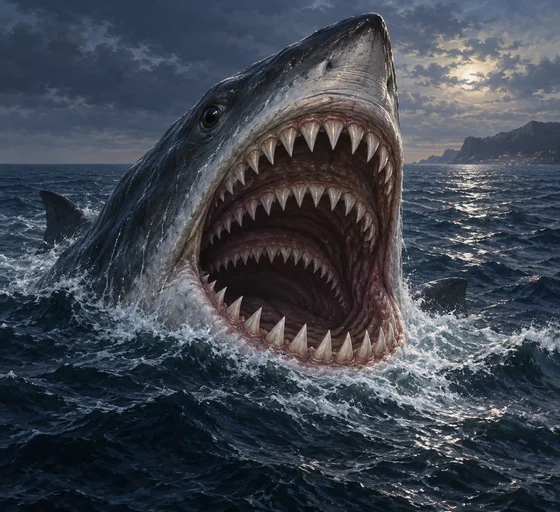
His poverty is especially clear in the school preparations. Unable to buy proper clothes, he makes a flowered-paper suit, bark shoes and a cap from dough. To obtain an alphabet book he sells his own patched coat, returning in shirtsleeves on a cold day. The sacrifice is understood by Pinocchio even though the child soon abandons the intended route to school. Geppetto later goes to sea in search of him. When father and son reunite inside the Shark, Geppetto explains that his boat was overturned and that the creature swallowed him. His account of surviving for two years on cargo swallowed from a wreck is attributed to his own dialogue, not evidence for a real animal’s digestive environment.
The father’s remaining provisions and last candle give the reunion urgency. He cannot swim and doubts that a small Marionette can carry him, but follows Pinocchio’s proposed escape. Later the sick and weakened man depends on the son’s work: milk, basket-making income and a rolling chair become concrete expressions of care. In the ending Geppetto appears younger and neatly dressed, back at his wood-carving trade and decorating a picture frame. The transformation belongs to the book’s happy conclusion; it is not a separately explained rejuvenation technique. This account follows the original translated narrative, preserves the yellow wig as an early identifying detail, and does not supply an undocumented surname, precise age or fixed adaptation portrait.
First appearances & development
Carlo Collodi’s original The Adventures of Pinocchio. Selected narrative episodes establish this character; undocumented real-life models, modern screen continuity and unrelated traditional beings are excluded.
Canon & continuity
Original narrative.
Selected bibliography
Documented works and useful reading. This is not a list of every appearance.
- 01
The Adventures of Pinocchio
Carol Della Chiesa translation.
Family & connections
A source-supported family tree or inspiration record has not yet been compiled for this profile. Related reading below indicates a connection in subject matter, not a proven lineage or creative influence.
References
Sources supporting this profile. Linked pages have their own scope and editorial standards.
- PrimaryThe Adventures of PinocchioResearch access: 2026-10-11
- CatalogueGutenberg: The Adventures of PinocchioResearch access: 2026-10-11
Image credits
Unofficial modern AI interpretationImagined Geppetto returns with the schoolbook after selling his coat.
Unofficial AI interpretation. Geppetto returns with the schoolbook after selling his coat. Selected action and defining details follow the original narrative; portrait, precise age, clothes and surrounding scene are imagined, without an adaptation likeness claim. Full-frame display derivative; no upscaling.