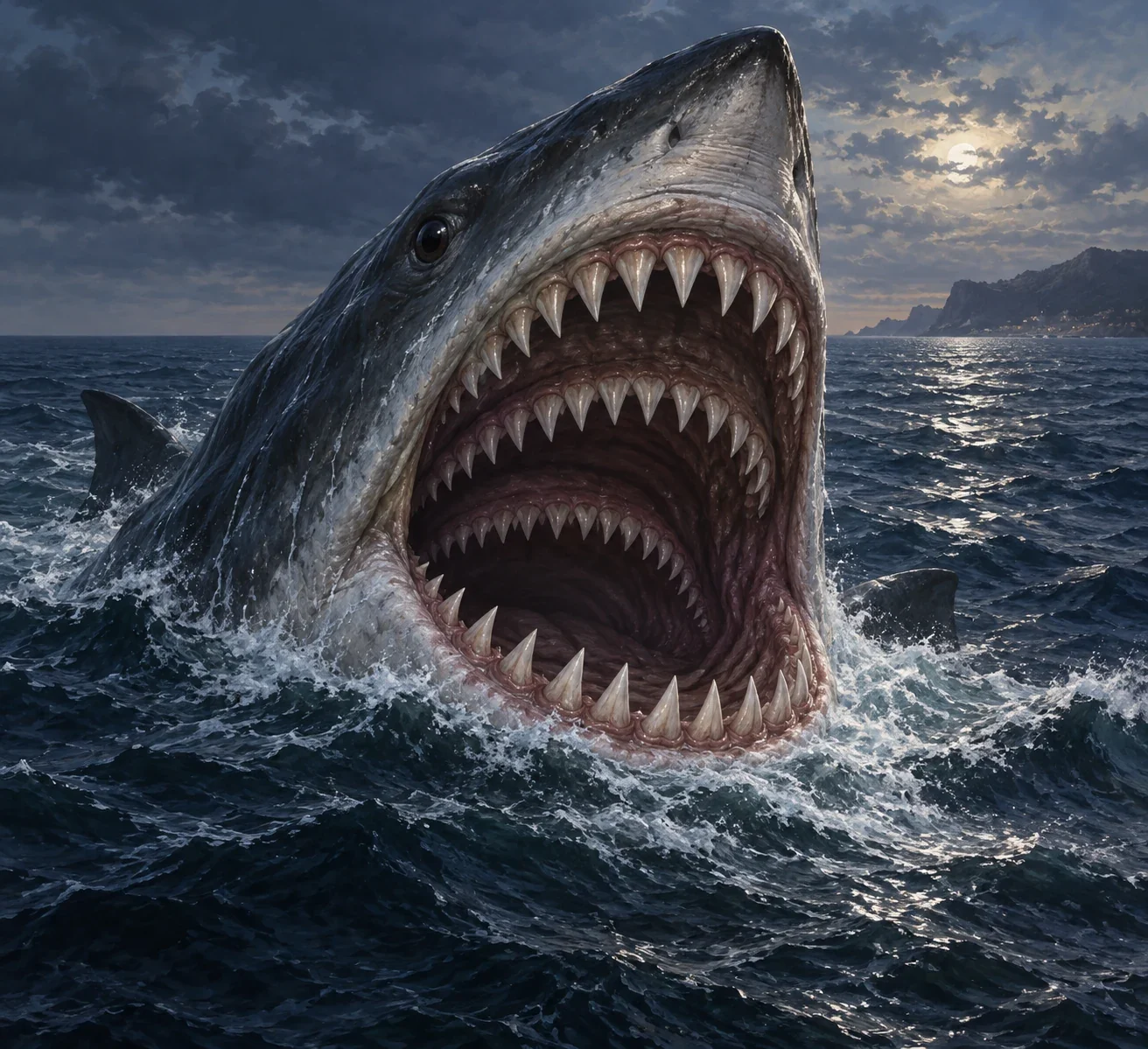
Unofficial AI interpretation of the Terrible Shark raising its enormous head, with three separated tooth bands following the translated narrative. Head proportions, palette, teeth within each row, fins, coast and sea details are imagined. This is literary staging, not a real species plate.
Unofficial AI interpretation of the Terrible Shark raising its enormous head, with three separated tooth bands following the translated narrative. Head proportions, palette, teeth within each row, fins, coast and sea details are imagined. This is literary staging, not a real species plate. Full-frame display derivative; no upscaling.
Overview
The Shark’s reputation precedes Pinocchio’s encounter with it. Schoolboys use a report of a creature as big as a mountain to draw him away from lessons. Later, when Pinocchio has returned from his donkey condition to his wooden form, a horrible sea monster raises its enormous head from the water. Its huge open mouth displays three rows of gleaming teeth. This is the translated narrative’s Terrible Shark, not a whale substituted from a screen version or a documented real shark species. The precise exterior body plan and colour are not established by these passages.
The creature overtakes and swallows Pinocchio. Inside, darkness and powerful gusts make the monster’s body an inhabited landscape. The narrator explains its storm-like breathing through asthma. A fellow swallowed Tunny speaks to Pinocchio and reports that the body, excluding the tail, is almost a mile long. That measurement belongs to the Tunny’s dialogue and is not an independently surveyed biological fact. Pinocchio refuses the fish’s resigned expectation of digestion and follows a distant light, making the interior a setting for action rather than only a threat.
The light leads to Geppetto, who explains that he survived after the Shark swallowed him and most of a provisioned ship, spitting out the mast. Food and a candle taken from the vessel support his continued existence in his account. Their reunion changes the direction of Pinocchio’s adventure: the son now seeks a way to save his weakened father. The Shark does not bargain with them or speak as the Tunny does. Its appetite, vast interior and sleeping condition supply the obstacles and opportunities, without establishing malicious human intentions or supernatural command over the sea.
The narrator describes the aged monster as suffering asthma and heart trouble and sleeping with its mouth open. Father and son reach the throat and broad tongue, see the stars beyond the jaws and attempt escape. A sneeze sends them back into the stomach, but Pinocchio leads a second attempt and carries Geppetto into the water. The Tunny later helps them reach shore. Three tooth rows and the open-mouth escape are specific literary features; the journey through a survivable interior is fantastical narrative geography, not medical or anatomical guidance.
First appearances & development
The monster belongs to the original Pinocchio narrative as rendered in the retained Carol Della Chiesa translation. Its report, direct attack, inhabited interior and escape are different episodes within one literary work. The translation’s name and measurements are retained without inventing a first appearance in another medium.
Canon & continuity
Complete primary translated text supports the selected episodes and attributed dialogue. Catalogue metadata establishes the translation and public-domain witness; its automated plot summary was not used.
Selected bibliography
Documented works and useful reading. This is not a list of every appearance.
- 01
The Adventures of Pinocchio
Original literary narrative in the identified translation. Electronic credits and later adaptations are distinguished; no source artwork was used.
Family & connections
A source-supported family tree or inspiration record has not yet been compiled for this profile. Related reading below indicates a connection in subject matter, not a proven lineage or creative influence.
References
Sources supporting this profile. Linked pages have their own scope and editorial standards.
- Primary fictionThe Adventures of Pinocchio — primary translated textResearch access: 2026-10-11
- Bibliographic and rights recordProject Gutenberg catalogue: The Adventures of PinocchioResearch access: 2026-10-11
Image credits
Unofficial modern AI interpretationUnofficial AI interpretation of the Terrible Shark raising its enormous head, with three separated tooth bands following the translated narrative. Head proportions, palette, teeth within each row, fins, coast and sea details are imagined. This is literary staging, not a real species plate.
Unofficial AI interpretation of the Terrible Shark raising its enormous head, with three separated tooth bands following the translated narrative. Head proportions, palette, teeth within each row, fins, coast and sea details are imagined. This is literary staging, not a real species plate. Full-frame display derivative; no upscaling.