A sourced illustration has not yet been added. This gap is included in the coverage record.
Overview
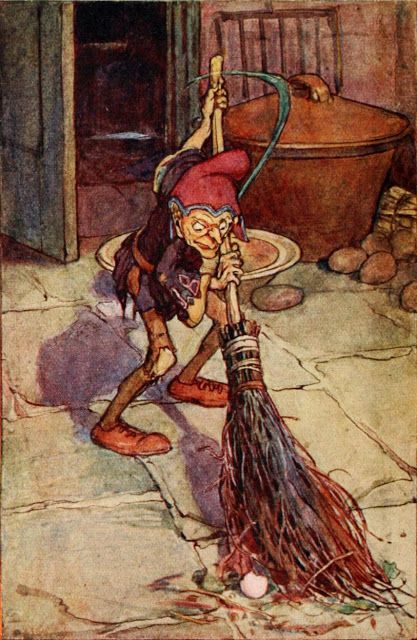
The selected episode describes a small weathered figure arriving during a storm, wearing a red pointed hat and long scarlet coat. He settles by the hearth with a pipe, then returns regularly at night. A hairy arm thrust through the doorway signals when the household should withdraw. These details make the stranger’s place within the house precise, without supplying a single appearance for every Irish mischievous spirit.
The family prospers while it observes the visitor's wishes; ignoring his signal brings trouble to the cattle. When the father refuses the landlord's demand to take more land at an unaffordable rent, the family is evicted. In their new cabin they copy the opening in the door and wait nightly, but no arm appears. They then bring the old hearth, door and objects they think the visitor favoured, without recovering him. The tale thus places the lost supernatural relationship beside a household's displacement and financial decline. Croker's accompanying comparisons with redcaps, Puck and continental spirits remain editorial proposals, distinct from this particular Irish household narrative.
Origins & earliest records
Croker’s1844 condensed collection supplies The Lucky Guest and the Fir Darrig section notes. The edition’s red-man naming and comparative remarks document its classification, not a demonstrated universal genealogy. The selected household tale is an edited nineteenth-century witness; its reported family history does not establish the first oral appearance of the figure.
Records & interpretation
The inspected episode supports scarlet clothing, pipe, nightly signal, prosperity and failure to relocate the visitor. The notes attest Croker’s comparative terminology. These are literary evidence for a household-spirit account, not proof of supernatural economic influence, verified causation of illness or grounds to equate every compared being with this particular figure.
Selected bibliography
Documented works and useful reading. This is not a list of every appearance.
- 01
Fairy Legends and Traditions of the South of Ireland, The Lucky Guest, XXXIII, pp201–208
Inspected selected tale and section notes. Condensed/revised edition and editorial comparisons distinguished from oral origins.
Family & connections
A source-supported family tree or inspiration record has not yet been compiled for this profile. Related reading below indicates a connection in subject matter, not a proven lineage or creative influence.
Encyclopedia background
An additional attributed reference, separate from the editorial profile above.
Read the open encyclopedia overview
A far darrig or fear dearg is a faerie type in Irish mythology. The name far darrig is an Anglophone pronunciation of the Irish words fear dearg, meaning Red Man, as the far darrig is said to wear a red coat and cap. They are sometimes known as Rat Boys as they are said to be rather fat, have dark, hairy skin, long snouts and skinny tails. The far derrig is generally described as short, while sometimes described as tall. It's said the far derrig has the ability to change sizes. An 1832 description from T. Crofton Croaker in Munster says the far derrig are around 2.5 feet tall with a wrinkled face, long grey hair, and a sugarloaf hat.
According to Fairy and Folk Tales of the Irish Peasantry, the far darrig is classified as a solitary fairy along with the leprechaun and the clurichaun, all of whom are "most sluttish, slouching, jeering, mischievous phantoms". The far darrig in particular is described as one who "busies himself with practical joking, especially with gruesome joking". One example of this is replacing babies with changelings. They are also said to have some connection to nightmares. Refusing any request from a far derrig was unlucky, as they were very imaginative in thinking of punishments.
When not playing jokes, the far darrig spend much of their time smoking by campfires and thinking. They will eat a meal if offered, and the presence of one in a house is said to bring good luck.
Text from Wikipedia contributors, “Far darrig”. CC BY-SA 4.0. Extracted introduction; formatting changed. Retrieved 5 October 2026. The source article may have changed since retrieval.
References
Sources supporting this profile. Linked pages have their own scope and editorial standards.
- Primary textCroker, Fairy Legends,1844 selected edition, The Lucky Guest, XXXIII, pp201–208Research access: 2026-10-05
Image credits
A sourced illustration has not yet been added. This gap is included in the coverage record.