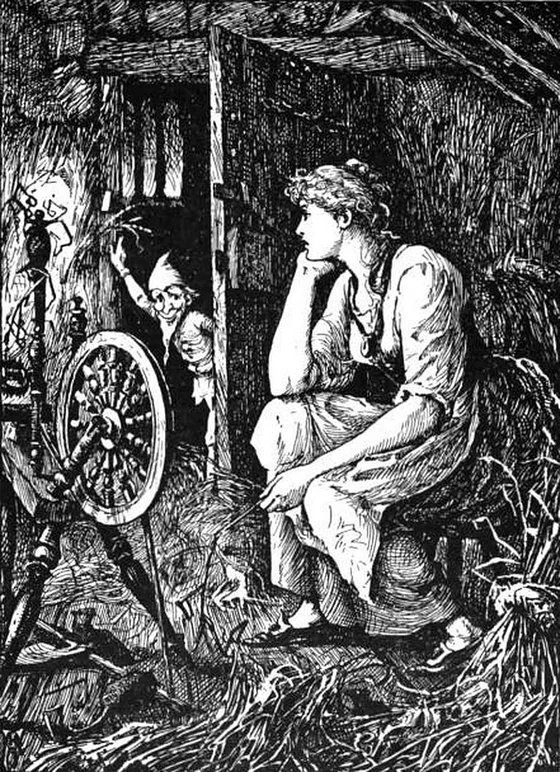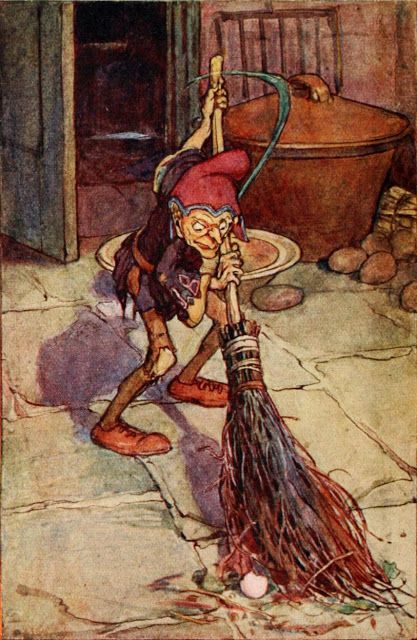
Leprechaun, modern2012 vector interpretation
Modern named Leprechaun cartoon with green clothing; a contemporary popular artistic interpretation rather than a historical tale illustration. Commons records the original2012 Pixabay CC0 release and an independent2020 license review.
Overview
Croker’s Little Shoe begins with Mr Coote questioning Molly Cogan, who explicitly says she has never seen the being. Her grandfather reportedly heard hammering and whistling while checking a mare after a day hauling turf. Looking beneath the animal, he discovered a tiny shoemaker in its girth, wearing an apron and red nightcap. He seized the busy worker and demanded its purse, but the captive asked for room to obtain it. The man loosened his hand and the shoemaker escaped laughing, leaving only the unfinished shoe. Molly says her mother often handled that object; it had disappeared before Molly’s own birth. This testimony chain is integral to the tale, separating the alleged encounter, reported possession of a token and the narrator who saw neither. Croker’s notes group several regional labels with the Cluricaune, but his classification does not establish that every later leprechaun or wine-cellar account is interchangeable.
Jacobs’s Field of Boliauns provides a second inspected treasure encounter. Tom Fitzpatrick finds a small cocked-hatted shoemaker with a leather apron, repairing a brogue beside a beer pitcher. The being says its heath-brewing secret came from the Danes, an internal claim rather than independently proven brewing history. A warning about cattle almost distracts Tom before he captures the figure and forces it to identify a buried crock. He marks the plant with a red garter and obtains a promise that it will not be moved. On returning with a spade, he finds identical garters throughout the field, defeating his plan without breaking that narrow promise. Jacobs acknowledges changing Croker’s original Cluricaune designation to Lepracaun following a reported newer telling. The two episodes support craft, elusive wealth and human overconfidence, without imposing a green uniform, rainbow or universally available pot of gold.
Origins & earliest records
Croker’s inspected 1844 Philadelphia condensed edition supplies The Little Shoe and regional naming notes. Jacobs’s 1892 Field of Boliauns cites a different Croker edition and admits changing its being’s label. The two selected witnesses establish collected literary transmission; neither proves every regional name identical or fixes the oral beginning.
Records & interpretation
Both complete tales supply the shoemaker’s appearance and escapes, while Molly’s account explicitly limits personal observation of the alleged shoe. The object is not independently examined here. Jacobs’s editorial admission demonstrates naming change, not zoological discovery or authenticated supernatural currency.
Selected bibliography
Documented works and useful reading. This is not a list of every appearance.
- 01
Fairy Legends and Traditions of the South of Ireland, The Little Shoe, XI, pp 77–80
Inspected selected tale and section notes. Condensed/revised edition and editorial comparisons distinguished from oral origins.
- 02
Celtic Fairy Tales: The Field of Boliauns
Complete episode and note inspected. Jacobs changes the original Cluricaune label to Lepracaun and retains a marked-field treasure trick.
Family & connections
A source-supported family tree or inspiration record has not yet been compiled for this profile. Related reading below indicates a connection in subject matter, not a proven lineage or creative influence.
Encyclopedia background
An additional attributed reference, separate from the editorial profile above.
Read the open encyclopedia overview
A leprechaun (Irish: lucharachán/leipreachán/luchorpán) is a diminutive supernatural being in Irish folklore, classed by some as a type of solitary fairy. They are usually depicted as little bearded men, wearing a coat and hat, who partake in mischief. In later times, they have been depicted as shoe-makers who have a hidden pot of gold at the end of the rainbow.
Leprechaun-like creatures rarely appear in Irish mythology and only became prominent in later folklore.
Text from Wikipedia contributors, “Leprechaun”. CC BY-SA 4.0. Extracted introduction; formatting changed. Retrieved 5 October 2026. The source article may have changed since retrieval.
References
Sources supporting this profile. Linked pages have their own scope and editorial standards.
- Primary textCroker, Fairy Legends,1844 selected edition, The Little Shoe, XI, pp 77–80Research access: 2026-10-05
- Primary textJacobs, Field of Boliauns and source noteResearch access: 2026-10-05
Image credits
Thematic illustrationLeprechaun, modern2012 vector interpretation
Modern named Leprechaun cartoon with green clothing; a contemporary popular artistic interpretation rather than a historical tale illustration. Commons records the original2012 Pixabay CC0 release and an independent2020 license review.