Devil with Three Golden Hairs
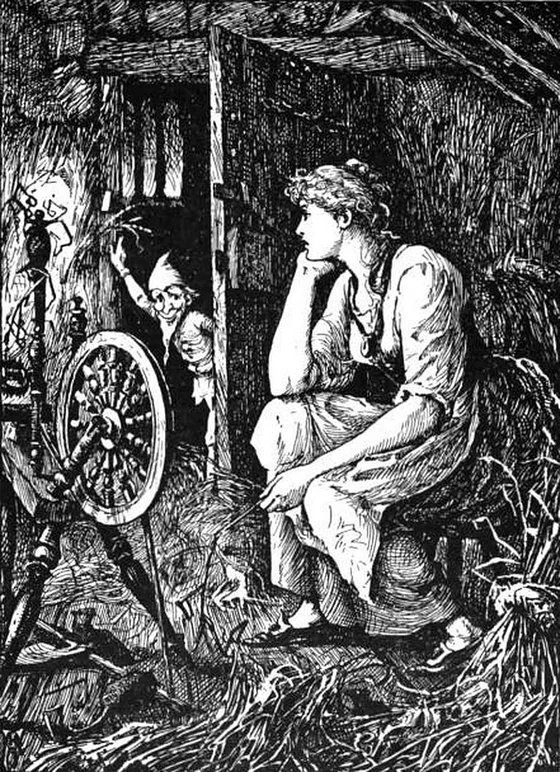
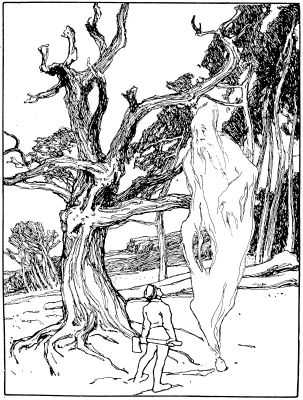
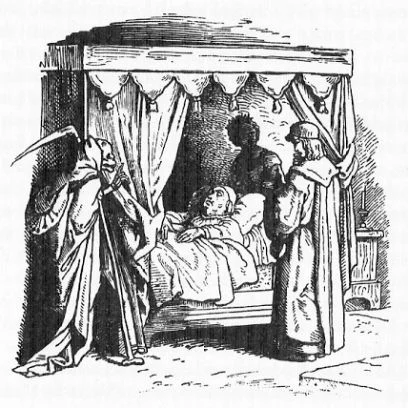
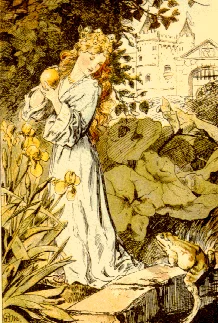
Image associated with the exact linked encyclopedia article; consult credited file description for its interpretation.
Overview
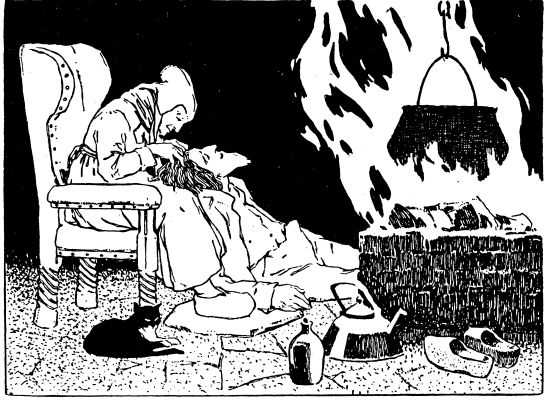
A king demands three hairs from the devil’s head as an apparently impossible condition for keeping his daughter as wife. On the journey, the young man is asked why a wine fountain has stopped, why an apple tree has withered and how a ferryman can leave his post. The devil’s grandmother shelters the visitor by changing him into an ant hidden in her clothes.
She plucks the hairs while the devil sleeps and presents each question as a dream when he wakes. His answers supply practical remedies and the way to transfer the ferryman’s duty. The creature’s knowledge therefore becomes useful through a helper’s deception, despite his threat to human intruders. This is the devil’s particular fairy-tale portrayal, not an account that resolves Christian theological understandings of Satan.
The answers name specific hidden causes. A toad beneath a stone has stopped the fountain; a mouse gnaws the apple tree’s root. Removing each creature restores the threatened resource. The ferryman’s remedy is different: he must place his oar in a passenger’s hand to transfer the compulsory work. The young man carefully waits until he has crossed before passing on that advice. The repaired towns each reward him with two asses laden with gold. When the king demands to know where this wealth came from, the young man directs him toward the river; the ferryman then gives the king the oar, making him the new captive worker.
Origins & earliest records
This entry follows tale 29 in the Grimm brothers’ Household Tales, using Margaret Hunt’s 1884 English translation. The collection was repeatedly revised during the nineteenth century and mediates material from storytellers and earlier literature. Its publication and translation dates identify the selected witness, not the beginning of every related oral narrative.
Records & interpretation
The numbered tale supplies the being’s appearance, speech and actions in a collected literary narrative. It documents storytelling and editorial transmission, rather than biological existence or actual animal behaviour. Different editions and related oral tales may alter transformations, endings or motives; the selected passage is identified so those differences can be compared.
In the literature
“I smell man’s flesh,”
Tale 29 The Devil With the Three Golden Hairs; paragraph beginning “As the evening came on, the devil returned home. No sooner had…” · Margaret Hunt
The tale’s devil detects a human smell when returning home.
Selected bibliography
Documented works and useful reading. This is not a list of every appearance.
- 01
Household Tales, tale 29: The Devil with the Three Golden Hairs
Specific public-domain collected tale inspected. The selected English edition is a literary witness, not a transcript of a universal oral version.
- 02
Household Tales: 29 The Devil With the Three Golden Hairs
Margaret Hunt’s English translation, London: George Bell and Sons, 1884; Gutenberg e-text identifies Hunt. Translation date corroborated by the Wikisource scanned title page and National Library of New Zealand catalogue.
Family, evolution & connections
The devil and his stated grandmother - Hunt 29
The explicitly stated grandparent relationship in Hunt’s complete English tale 29.
Scroll sideways to see all branches. With a keyboard, focus the tree and use the arrow keys.
- The devil’s unnamed grandmother
The branch directly represents grandmother-to-grandson kinship; it skips an unspecified intermediate generation. No intervening parent, other ancestor or personal name for the grandmother is supplied. The visitor’s temporary ant appearance is a disguise, not descent from either figure.
His unnamed grandmother in Hunt’s tale 29
The narrator repeatedly calls the old woman the devil’s grandmother. She hides the visitor and obtains the hairs and answers while the devil sleeps in her lap. Neither an intervening parent nor a wider devil family is supplied.
Located primary passages
Specific passages supporting details in this entry, grouped by their published witness.
Household Tales, tale 29: The Devil with the Three Golden Hairs
Margaret Hunt’s English translation, London: George Bell and Sons, 1884; Gutenberg e-text identifies Hunt. Translation date corroborated by the Wikisource scanned title page and National Library of New Zealand catalogue.
- The tale’s devil detects a human smell when returning home.
- The devil’s grandmother protects the visitor by turning him into an ant.
- The devil gives an explanation for the barren golden-apple tree.
- The devil explains how the ferryman can transfer his compulsory service.
This describes the version printed in Hunt’s translation; German tale origin and other versions require separate evidence.
Encyclopedia background
An additional attributed reference, separate from the editorial profile above.
Read the open encyclopedia overview
"The Devil with the Three Golden Hairs" (German: Der Teufel mit den drei goldenen Haaren) is a German fairy tale collected by the Brothers Grimm (KHM 29). It falls under Aarne–Thompson classification types 461 ("three hairs from the devil"), and 930 ("prophecy that a poor boy will marry a rich girl").
The story was first translated into English as "The Giant and the Three Golden Hairs" to avoid offense, but the devil in the story does indeed act like a folklore giant.
Ruth Manning-Sanders included it, as "The Three Golden Hairs of the King of the Cave Giants", in A Book of Giants.
Text from Wikipedia contributors, “The Devil with the Three Golden Hairs”. CC BY-SA 4.0. Extracted introduction; formatting changed. Retrieved 5 October 2026. The source article may have changed since retrieval.
References
Sources supporting this profile. Linked pages have their own scope and editorial standards.
- Primary textGrimm/Hunt, Household Tales, tale 29Research access: 2026-10-05
Image credits
Reference illustrationDevil with Three Golden Hairs
Image associated with the exact linked encyclopedia article; consult credited file description for its interpretation.