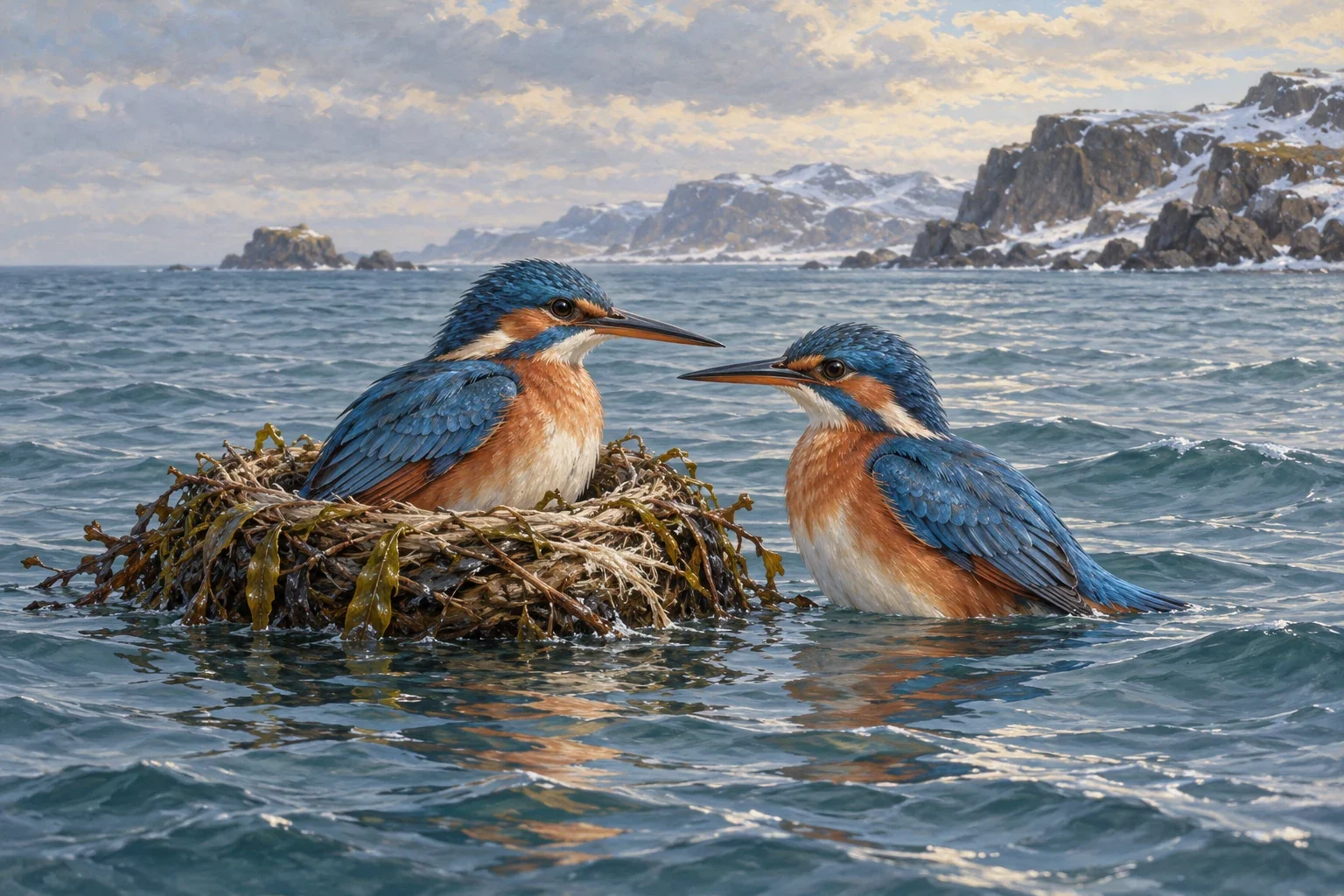
AI-generated illustration of Ceyx and Halcyone as birds beside a floating sea nest, following Ovid’s ending. Plumage, anatomy, nest materials, snowy coast and light are artistic choices. The floating nest is a literary marvel, not a claim about real kingfisher nesting. Nest and water naturally conceal parts of the birds; neither is cropped by the frame.
AI-generated illustration of Ceyx and Halcyone as birds beside a floating sea nest, following Ovid’s ending. Plumage, anatomy, nest materials, snowy coast and light are artistic choices. The floating nest is a literary marvel, not a claim about real kingfisher nesting. Nest and water naturally conceal parts of the birds; neither is cropped by the frame.
Overview
Ceyx’s departure begins a story in which affection cannot prevent disaster. Troubled by his brother’s strange fate, he intends to consult Apollo’s oracle at Claros because Delphi is inaccessible. Halcyone fears the sea and asks either that he remain or that she accompany him. Her father is Æolus, but she expressly rejects the idea that kinship with the keeper of winds makes a voyage safe. Ceyx refuses to expose her to the danger and promises a return before two lunar cycles, if fate allows.
The ship encounters a storm that defeats the sailors’ skill. Ovid’s long account follows their attempts to manage oars, sails, flooding and failing timbers before the vessel founders. Ceyx survives briefly on wreckage, thinking of Halcyone and wishing his body might reach those who would bury him. He then disappears beneath the water. At home, she still prepares clothes and prays for his return; the reader knows the loss before she does.
Juno sends Iris to the dwelling of Sleep so that Halcyone may learn what happened. Sleep chooses Morpheus, whose particular art is imitating human appearance, movement and speech. The vision takes Ceyx’s form, with wet hair and the signs of shipwreck, and tells her to mourn. Halcyone believes that her husband’s ghost has appeared. The narrator, however, has explicitly identified the visitor as Morpheus, so the dream should not be simplified into an independently wandering soul of Ceyx.
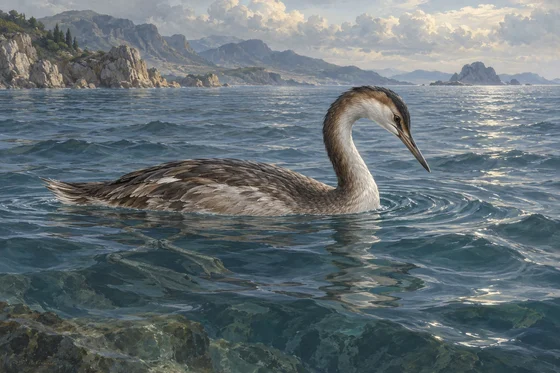
Next morning she returns to the shore where she watched him depart. A distant floating object gradually becomes recognizable as a body, and finally as her husband. She goes onto a man-made breakwater and finds herself flying with newly formed wings. Her slender, hardened bill and lamenting call accompany the change. Reaching Ceyx, she embraces him with her wings. Onlookers cannot tell whether his response is only the movement of the water, but the narrator confirms that he feels it and that divine pity transforms them both.
Their marriage continues in bird form: they mate and become parents. Halcyone broods for seven calm winter days on a nest floating at sea, while Æolus restrains the winds for his descendants. The synopsis calls the birds kingfishers. This is the account’s explanation of a seasonal calm and enduring partnership, not a description of how a modern kingfisher species actually nests. Riley’s note also records other ancient counts of the calm days, without changing Ovid’s seven.
The attached explanation must remain separate from that ending. Riley offers historicalizing conjectures and reports an alternative attributed to Apollodorus in which the couple’s assumption of divine names provokes punishment and they become different birds. He also describes a return-voyage wreck, whereas the translated narrative places the disaster on the outward journey. These differences are features of the retained commentary; they are not combined into a single supposedly consistent version.
Origins & earliest records
Ovid, Metamorphoses XI, in Henry T. Riley’s English prose translation and commentary; retained George Bell & Sons edition1893.
Records & interpretation
XI Fable VII,410–748, explanation and notes33–57. The complete selected narrative, synopsis, explanation and notes were read. Commentary variants are not independently collated against their named ancient authors.
Selected bibliography
Documented works and useful reading. This is not a list of every appearance.
- 01
Metamorphoses, Book XI, Fable VII
XI Fable VII,410–748, explanation and notes33–57. The1893 edition is distinguished from the earlier Riley translation.
Family & connections
A source-supported family tree or inspiration record has not yet been compiled for this profile. Related reading below indicates a connection in subject matter, not a proven lineage or creative influence.
References
Sources supporting this profile. Linked pages have their own scope and editorial standards.
- Public-domain literary witnessMetamorphoses XI — retained historical translation and commentaryResearch access: 2026-10-27
Image credits
AI-generated illustrationAI-generated illustration of Ceyx and Halcyone as birds beside a floating sea nest, following Ovid’s ending. Plumage, anatomy, nest materials, snowy coast and light are artistic choices. The floating nest is a literary marvel, not a claim about real kingfisher nesting. Nest and water naturally conceal parts of the birds; neither is cropped by the frame.
AI-generated illustration of Ceyx and Halcyone as birds beside a floating sea nest, following Ovid’s ending. Plumage, anatomy, nest materials, snowy coast and light are artistic choices. The floating nest is a literary marvel, not a claim about real kingfisher nesting. Nest and water naturally conceal parts of the birds; neither is cropped by the frame.