A sourced illustration has not yet been added. This gap is included in the coverage record.
Overview
Vicuña Cifuentes's 1915 collection makes Calchona a visitor with sharply different local behaviour. In Coihueco de Chillán she is a sheep haunting homes at night. People recognize her as a transformed person, leave food scraps in a basin and follow the priest's recommendation to spare her. At Culiprán, a Melipilla-area witness describes a doglike being whose very long wool drags along the ground. Its barking makes other dogs howl fearfully, yet the witness says repeated meetings on lonely roads caused no harm. The Machalí version is less forgiving: a large-woolled sheep demands food, knocks down solitary travellers who refuse and tramples them. Maipo's Escorial report provides another body altogether, a black hen accompanied by twelve white chicks that emerges nightly from a ravine.
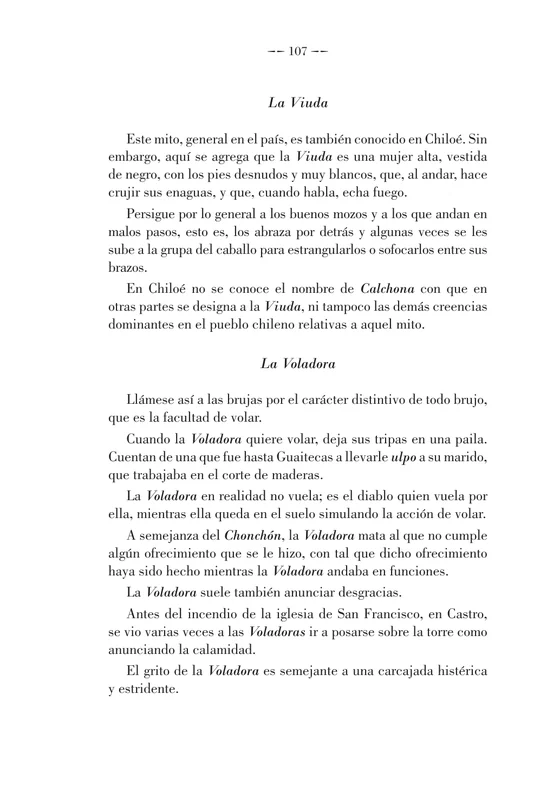
In San Javier, Calchona becomes a black-cloaked woman who springs onto a rider's horse behind him and kills through her embrace; that witness also calls her Viuda. In Rengo, a woman dressed in black rides a donkey through the night and frightens people she meets. The collection's transformation story explains a permanent sheep form. A suspicious husband sees his wife depart as a sheep, then discovers their four children have used her ointments and turned into little foxes. He restores the children with the same preparations and throws the remaining jars into an irrigation channel. When their mother returns, she lacks the means to become human again. The story turns a domestic intervention into irreversible transformation. It sits alongside the separate encounter reports, whose bodies and dangers need not follow that plot. The later Enciclopedia Chilena retains both woolly-animal and cloaked-woman designs.
Origins & earliest records
The profile’s earliest independently inspected witness is Vicuña Cifuentes’s 1915 collection, with places identified beside differing reports. The Enciclopedia Chilena supplies a later synthesis from its 1948–1971 project. Earlier dictionaries are quoted by Vicuña, but their original entries were not independently inspected here. The oral figure’s beginnings and transmission remain undated.
Records & interpretation
Printed pages 21–25 preserve distinct local appearances, levels of danger, and the transformation tale. The encyclopedia reproduces a broader range and compares Calchona with other night beings. Neither justifies imposing one standard body. Cavada’s separate Chilote Viuda account rejects some mainland Calchona features, reinforcing the need to keep named regional witnesses visible.
Selected bibliography
Documented works and useful reading. This is not a list of every appearance.
- 01
Mitos y supersticiones recogidos de la tradición oral chilena
Printed pp21–25; separately identified regional descriptions and the failed return from sheep form.
- 02
La Calchona
Document ECH-519/7; historical synthesis with comparative suggestions.
Family & connections
A source-supported family tree or inspiration record has not yet been compiled for this profile. Related reading below indicates a connection in subject matter, not a proven lineage or creative influence.
References
Sources supporting this profile. Linked pages have their own scope and editorial standards.
- Primary textVicuña Cifuentes, Calchona, pp21–25Research access: 2026-10-05
- ReferenceEnciclopedia Chilena ECH-519/7: La CalchonaResearch access: 2026-10-05
Image credits
A sourced illustration has not yet been added. This gap is included in the coverage record.