Cadejo
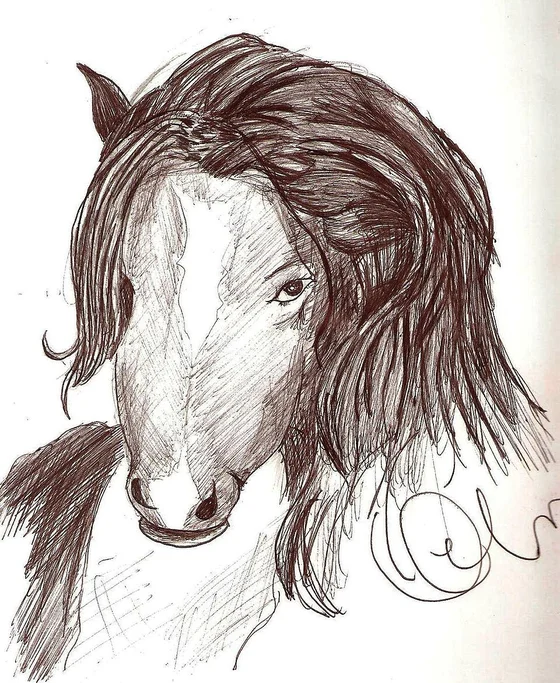
Image associated with the exact linked encyclopedia article; consult credited file description for its interpretation.
Overview
In a Guatemalan account recorded by the national news agency, a light-coloured cadejo protects a person travelling for a good purpose, while a dark one follows someone behaving badly. The apparition resembles a dog, but its significance rests on nocturnal conduct and the traveller's circumstances. The colour distinction should be attributed to this version rather than assumed to govern every Central American telling.
Miguel Ángel Asturias reshaped the cadejo in his literary collection, giving it composite animal features and a poetic origin episode. That authored treatment is evidence of literary reception, not a neutral transcription of every oral account. The creature's persistent association with roads and night creates a setting for stories about vulnerability, protection and judgement. A detailed entry can retain both oral circulation and literary invention without joining all their features into one compulsory anatomy.
A San Salvador-born student’s 24 April 2018 telling, archived at USC, gives the dogs a Christian opposition: God creates the white protector and the devil creates the black adversary. The latter’s red eyes hypnotise victims before it takes their souls. She attributes the account to her believing grandfather while saying that she herself does not believe the legends. She also recalls school teaching and Independence Day costumes, showing that public performance and personal conviction need not coincide.
Sophia Guzman’s 2026 record preserves a different family transmission from a 74-year-old Nicaraguan-born speaker who moved to the United States at sixteen. Their mother and grandmother taught that a white dog protects solitary travellers on farms, mountain roads and late journeys, while the black spirit-dog attacks intoxicated people. People flee to a house for refuge. This short account does not repeat the Salvadoran soul-taking episode or divine creation story.
Origins & earliest records
Asturias's 1930 Leyendas de Guatemala provides a dated literary witness, and subsequent cultural accounts document continued circulation. The story's oral history is older than any one collected version but cannot be precisely dated from that fact alone. Cross-border variants require their own evidence rather than a claim that one published account is the original.
Records & interpretation
The Guatemalan account explicitly reports the protective and threatening colour variants. The Instituto Cervantes essay identifies Asturias's distinctive literary description. These are different forms of cultural evidence, not records of a zoological animal. A storyteller's assertion of experience belongs to the study of narration and belief rather than independent confirmation of supernatural anatomy.
Selected bibliography
Documented works and useful reading. This is not a list of every appearance.
- 01
Leyendas de Guatemala
Contains Leyenda del Cadejo; an authored literary transformation rather than a universal oral text.
- 02
Bestiario latinoamericano (V). El Cadejo
Selected literary and folklore comparison from Instituto Cervantes.
- 03
El Cadejo, El Salvador
Complete 24 April telling and context; posted 6 May. Family attribution and narrator’s disbelief retained.
- 04
El Cadejo
Complete short text and context, posted 9 May; mother/grandmother transmission.
Family & connections
A source-supported family tree or inspiration record has not yet been compiled for this profile. Related reading below indicates a connection in subject matter, not a proven lineage or creative influence.
Encyclopedia background
An additional attributed reference, separate from the editorial profile above.
Read the open encyclopedia overview
The cadejo (Spanish pronunciation: [kaˈðexo]) is a supernatural spirit in Central American folklore of indigenous origin. It is commonly depicted as a dog-like creature with blue eyes when calm and red eyes when hostile. According to legend, it wanders along isolated roads at night.
The myth is also present in several states of Mexico.
According to folklore, there are two forms of the Cadejo: a benevolent white cadejo and an evil black cadejo. Both are said to appear to travelers at night. The white cadejo protects travelers from harm and danger, while the black cadejo attempts to kill them (it is sometimes regarded as an incarnation of the devil). In Costa Rica and Panama, the cadejo is instead described as a single black creature that, despite its monstrous appearance, is generally considered harmless. In Costa Rica and Nicaragua, the creature is also known as el cadejos.
They are usually described as large, shaggy dogs, sometimes said to be as large as a cow, with glowing red eyes and goat-like hooves, however, they are said to possess more unusual or grotesque features.
In traditional accounts, many have attempted to kill the black cadejo but have failed and died in the process. It is said that when a cadejo is killed, its body emits a foul odor for several days before disappearing.
Guatemalan and Salvadoran folklore also tells of a cadejo that protects drunk people from those who wish to rob or harm them. Its presence is said to be accompanied by a strong, goat-like odor. It is said that turning one's back on the cadejo or speaking to it can cause insanity.
Text from Wikipedia contributors, “Cadejo”. CC BY-SA 4.0. Extracted introduction; formatting changed. Retrieved 5 October 2026. The source article may have changed since retrieval.
References
Sources supporting this profile. Linked pages have their own scope and editorial standards.
- ReferenceLas leyendas populares de GuatemalaResearch access: 2026-10-05
- ResearchBestiario latinoamericano (V). El CadejoResearch access: 2026-10-05
- Primary textEl Cadejo, El SalvadorResearch access: 2026-10-05
- Primary textEl CadejoResearch access: 2026-10-05
Image credits
Reference illustrationCadejo
Image associated with the exact linked encyclopedia article; consult credited file description for its interpretation.