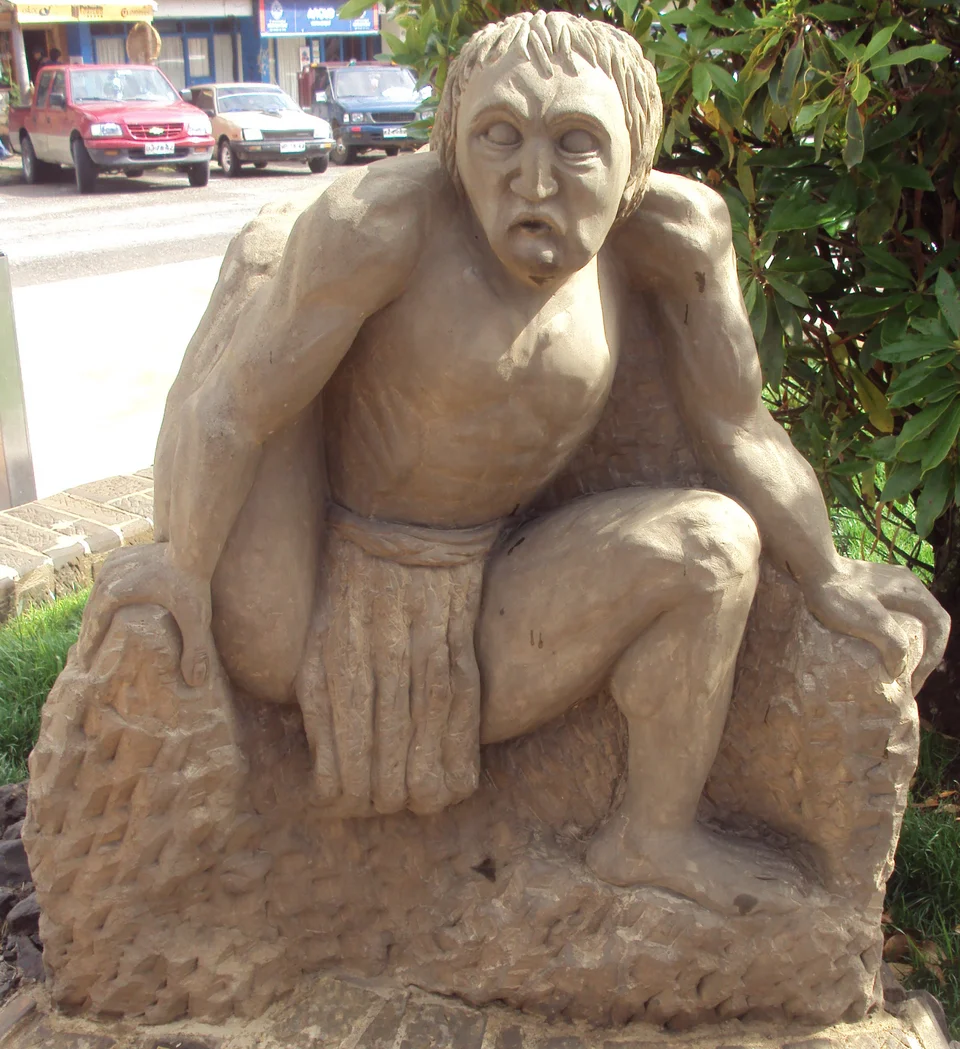
Invunche
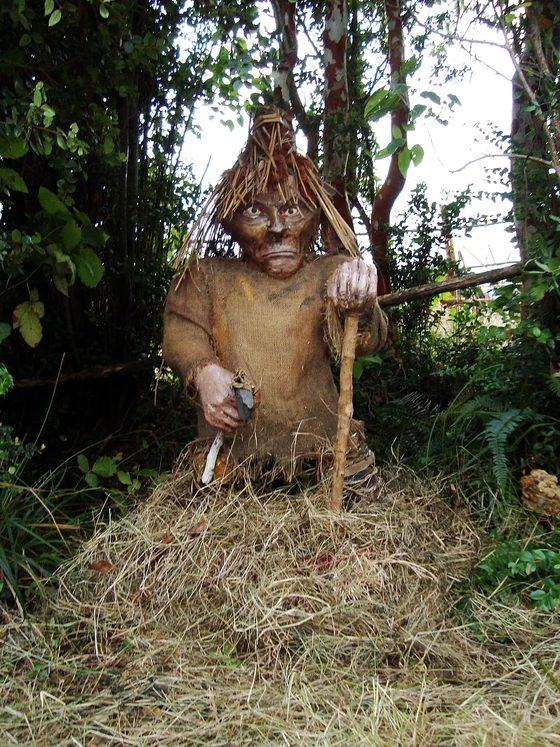
Image associated with the exact linked encyclopedia article; consult credited file description for its interpretation.
Overview
Cavada's 1914 account presents the Invunche as a person made captive and transformed through inflicted violence. A child is taken in its earliest months and manipulated until the face looks backward and one leg is fixed behind the neck. The body described here is the outcome of an abusive narrated process, not an inherited monster species or an explanation of actual disability. Cavada places the captive especially in the Casa Grande, the cave of Quicaví, and reports a horrifying diet of newborn flesh. He also corrects what he calls an ordinary misunderstanding: the Invunche does not lead the witches' gathering. They consult it and use it as an instrument of harmful action. When they take it outside, they beat it along the route; its goatlike cries frighten neighbours and are understood as announcing misfortune. This combination of confinement, compelled movement and feared voice distinguishes Cavada's version from a generic cave guard. His recorded pronunciations, Ivunche, Vuta and Vuta-macho, also show that even naming was mediated through local speech and the collector's preferred spelling. The museum's modern edition preserves a historical witness rather than proving the acts happened.
The figure has a substantial literary afterlife in José Donoso's El obsceno pájaro de la noche, published by Seix Barral in 1970. Its sewn, bundled imbunche develops the idea of bodily enclosure within an authored novel, and should not be retroactively inserted into every Chilote account. Evan Chastain and Elizabeth Horan's 2019 study follows sewing, embroidery and repair through the novel's communities of women. Their feminist reading gives particular attention to the mute, bound figure as a surface through which those characters act and express collective agency. The same needlework can appear protective, restorative and violent, making confinement more complex than a simple act performed by an isolated villain. Memoria Chilena's literary overview records additional critical readings of the novel's social antagonisms and unstable narration. These interpretations document how writers and readers have transformed the inherited figure; they are not additional ethnographic evidence for Cavada's cave. Keeping the historical captive, Donoso's literary construction and scholars' interpretations distinct makes the Invunche useful for understanding both regional legend and the changing language of power, enclosure and bodily control.
Origins & earliest records
Cavada's 1914 collection supplies a dated written witness, reproduced in the Museo Regional de Ancud's 2016 edition. It does not establish when the oral narrative began or demonstrate that Quicaví housed such a being. The profile retains the collector's local pronunciation and his disagreement with other descriptions rather than claiming a universal Chilote version.
Records & interpretation
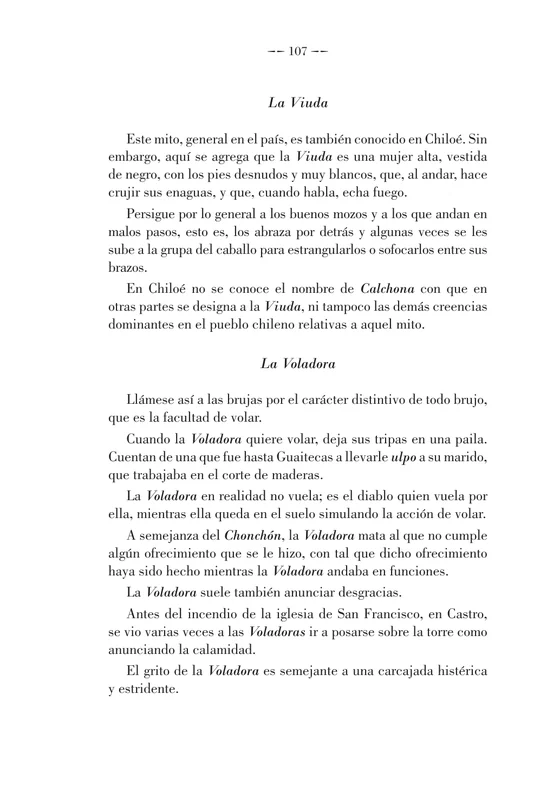
The claim-bearing passage is on printed page 106 of the museum edition. It distinguishes consultation from leadership and describes the creature's captivity. Cavada's surrounding commentary is hostile to Indigenous healing and popular belief, so it is evidence for a mediated historical narrative, not a neutral account of community religion or proof of the alleged violence.
In the literature
“no es el jefe del aquelarre”
IV: Mitos / El Invunche; printed p.106; paragraph beginning “El Invunche no es el jefe del aquelarre…”
Cavada explicitly describes Invunche as a consultant and instrument of the witches, confined in the Quicaví cave and brought out for harm; not their chief.
Selected bibliography
Documented works and useful reading. This is not a list of every appearance.
- 01
Chiloé y los chilotes
Historical folklore witness; cited printed pages 106. The museum edition updates orthography.
- 02
Chiloé y los chilotes (1914) de Francisco J. Cavada: un estudio glotopolítico
Critical context for the collector's linguistic authority and national modernisation project.
- 03
El obsceno pájaro de la noche
Authored literary reception; publication verified through Memoria Chilena and motif inspected through scholarly discussion, not a complete novel reading.
- 04
Bordas sobre la trama esencial: Needlework as Communal Rhetorical Practice in El obsceno pájaro de la noche
Árboles y Rizomas 1(2), pp. 1–17; directly inspected feminist study of the sewn literary imbunche.
Family & connections
A source-supported family tree or inspiration record has not yet been compiled for this profile. Related reading below indicates a connection in subject matter, not a proven lineage or creative influence.
Located primary passages
Specific passages supporting details in this entry, grouped by their published witness.
Chiloé y los chilotes
Underlying work1914; inspected fourth museum edition, Ancud, November2016 (ISBN978-956-9172-04-5); modern typography, pagination and annotations.
- Cavada explicitly describes Invunche as a consultant and instrument of the witches, confined in the Quicaví cave and brought out for harm; not their chief.
- The described body has its face turned backward and one leg attached behind the neck; witches deform a child into this form.
IV: Mitos / El Invunche; printed p.106; paragraph beginning “El Invunche o mejor Ivunche…”
This is Cavada’s historical collected account reproduced in2016, with its Christian and colonial framing; source criticism does not endorse its judgments or alleged practices. Exact inspected2016 pages, not assumed original1914 pagination. Spanish passage retained without an invented translation.
Encyclopedia background
An additional attributed reference, separate from the editorial profile above.
Read the open encyclopedia overview
In the Chilote folklore and Chilote mythology of Chiloé Island in southern Chile, the imbunche (Mapudungun: ifünche, lit. "short person") is a legendary monster that protects the entrance to a warlock's cave.
Text from Wikipedia contributors, “Imbunche”. CC BY-SA 4.0. Extracted introduction; formatting changed. Retrieved 5 October 2026. The source article may have changed since retrieval.
References
Sources supporting this profile. Linked pages have their own scope and editorial standards.
- Primary textChiloé y los chilotes — Museo Regional de Ancud edition, pp. 106Research access: 2026-10-05
- ResearchChastain and Horan: Needlework and the literary imbuncheResearch access: 2026-10-05
- ReferenceMemoria Chilena: El obsceno pájaro de la nocheResearch access: 2026-10-05
Image credits
Reference illustrationInvunche
Image associated with the exact linked encyclopedia article; consult credited file description for its interpretation.