Trauco
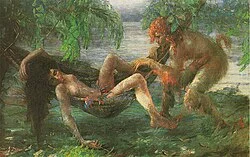
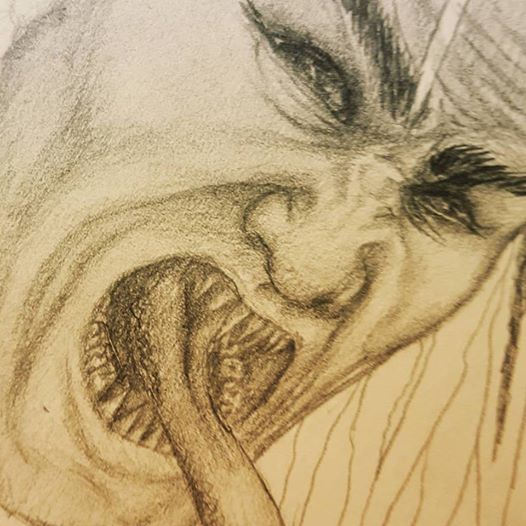
Image associated with the exact linked encyclopedia article; consult credited file description for its interpretation.
Overview
Public Chilote accounts commonly portray Trauco as a small, unusually formed forest figure. His encounter with humans is threatening, and some stories connect him with illness or overpowering sexual attraction. The descriptions should be treated as particular folklore accounts rather than a single complete portrait of Chiloé’s inhabitants or beliefs.
The sexual plots carry social consequences, especially when used to explain pregnancy or avoid discussing coercion. A careful entry describes the traditional attribution without accepting it as evidence about a real person. Chilean public educational material provides a traceable telling, while Cavada’s historical collecting offers a selected earlier witness. Neither authorizes disclosing private practices or treating a tale’s alleged remedies as medical guidance.
Origins & earliest records
Cavada’s 1914 Chiloé y los chilotes is a selected historical collection. Later publicly circulated accounts preserve different details, so their publication dates should not be treated as an oral origin. A surviving record dates its documentation, not the beginning of an oral tradition; earlier transmission cannot be timed precisely from this witness alone.
Records & interpretation
Collected tales and educational retellings document a locally named forest being and attributed dangers. They are evidence of folklore, not confirmation of supernatural causation for illness or pregnancy. This is evidence for cultural expression and recorded interpretation, rather than a zoological specimen or independently verified supernatural event.
In the literature
“sus pies, sin talón ni dedos, son unos muñones informes”
IV: Mitos / El Thrauco; printed p.103; paragraph beginning “El Thrauco tiene por morada habitual…”
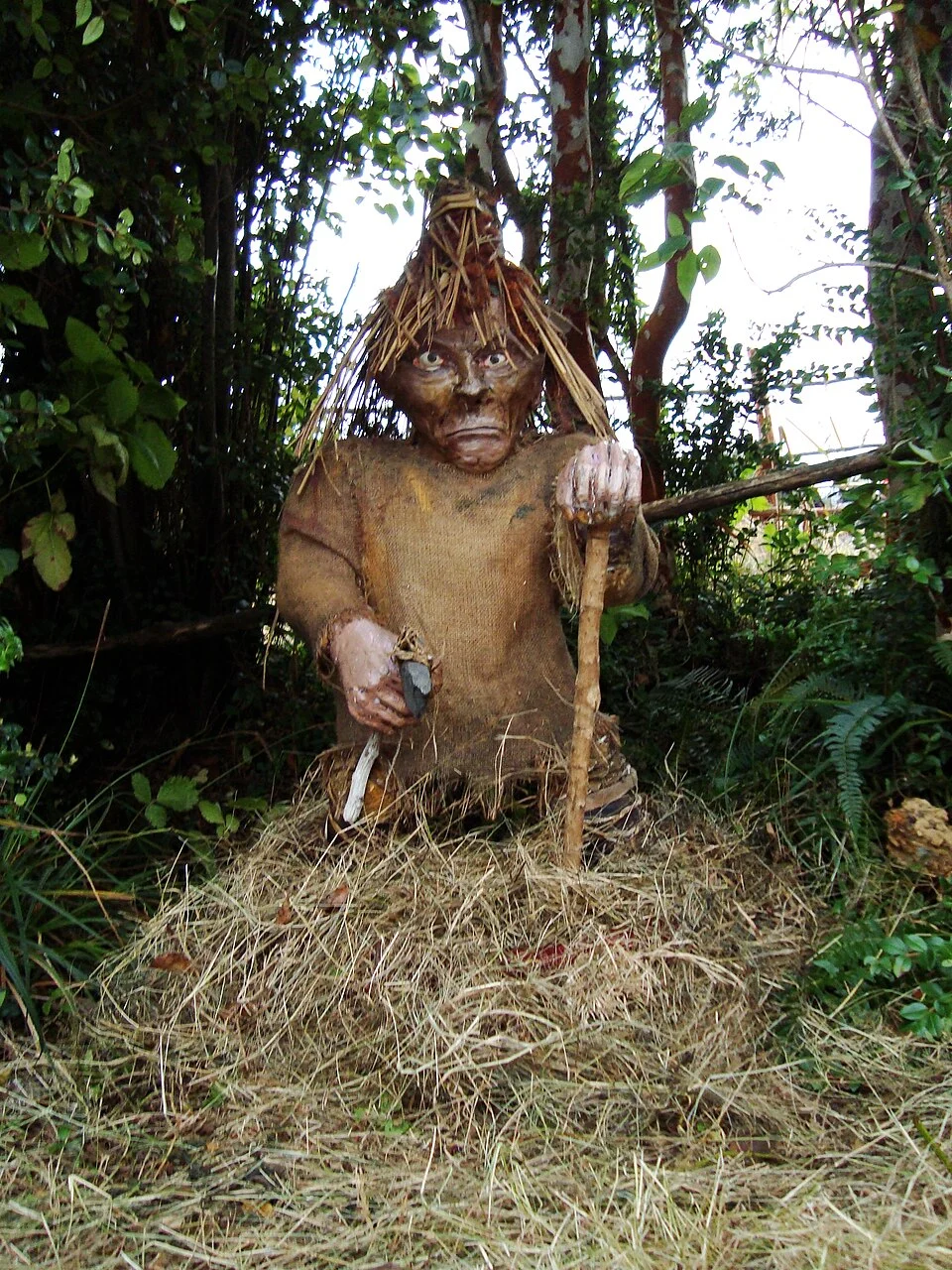
Cavada gives tree trunks or crowns as dwellings, quilineja clothing and a conical hat, feet without heels or toes, and a reciprocal danger in which the being kills or deforms a person it sees first but dies when spotted first.
Selected bibliography
Documented works and useful reading. This is not a list of every appearance.
- 01
Chiloé y los chilotes
Selected relevant primary or ethnographic work; the online source below is separate.
Family & connections
A source-supported family tree or inspiration record has not yet been compiled for this profile. Related reading below indicates a connection in subject matter, not a proven lineage or creative influence.
Located primary passages
Specific passages supporting details in this entry, grouped by their published witness.
Primary source witness
Underlying work1914; inspected fourth museum edition, Ancud, November2016 (ISBN978-956-9172-04-5); modern typography, pagination and annotations.
- Cavada gives tree trunks or crowns as dwellings, quilineja clothing and a conical hat, feet without heels or toes, and a reciprocal danger in which the being kills or deforms a person it sees first but dies when spotted first.
IV: Mitos / El Thrauco; printed p.103; paragraph beginning “El Thrauco tiene por morada habitual…”
- The protective-practice list includes a cross made from knives, fumigation and striking the pahueldón staff; a captured Trauco hung over the hearth becomes a stick whose oil is applied to victims.
IV: Mitos / El Thrauco; printed p.105; paragraph beginning “Entre las defensas o amuletos…”
This is Cavada’s historical collected account reproduced in2016, with its Christian and colonial framing; source criticism does not endorse its judgments or alleged practices. Exact inspected2016 pages, not assumed original1914 pagination. Spanish passage retained without an invented translation.
Encyclopedia background
An additional attributed reference, separate from the editorial profile above.
Read the open encyclopedia overview
In the traditional Chilote mythology of Chiloé, Chile, the Trauco is a humanoid creature of small stature—similar to a dwarf or goblin—who lives deep in the forest. It has an ugly face and legs without feet.
Text from Wikipedia contributors, “Trauco”. CC BY-SA 4.0. Extracted introduction; formatting changed. Retrieved 5 October 2026. The source article may have changed since retrieval.
References
Sources supporting this profile. Linked pages have their own scope and editorial standards.
- ReferenceMinisterio de Educación, Chile: El traucoResearch access: 2026-10-05
Image credits
Reference illustrationTrauco
Image associated with the exact linked encyclopedia article; consult credited file description for its interpretation.