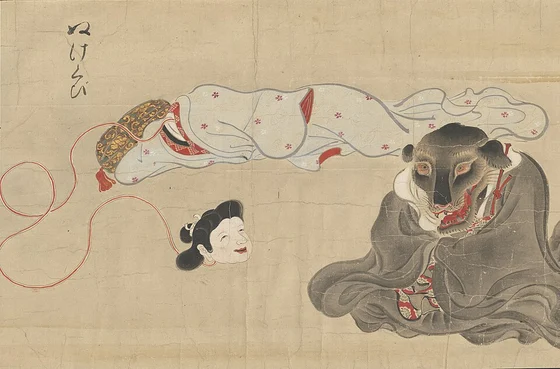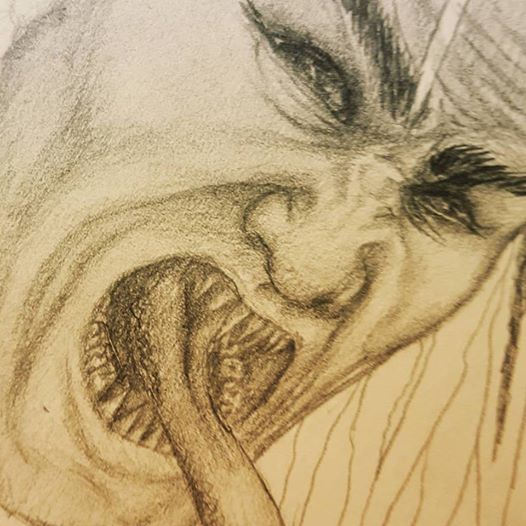
Original illustration of a Philippine Aswang
Modern original interpretation; forms vary across traditions.
Overview
Aswang is a Philippine supernatural designation whose meaning depends on the source and community. It should not be reduced to a single body assembled from every nocturnal predator, flying witch and transformed human in Philippine traditions. The selected historical accounts below use related spellings and different narrative settings. They document how writers described these beings, without making supernatural accusations against living people reliable evidence of wrongdoing.
Juan de Plasencia’s 1589 account, read in the Blair and Robertson translation, lists an osuang among several classes he describes through Christian missionary categories. The brief notice reports flight, killing and the eating of human flesh. It assigns this account to the Visayas and explicitly says that it is not among the Tagalogs. That geographical statement belongs to the particular sixteenth-century report; it does not settle every later community’s usage or establish an enduring boundary for the word.
The surrounding list matters because it distinguishes the osuang from other figures. Plasencia describes the magtatangal of Catanduanes separately, associating it with a head and entrails absent from the body at night and a morning reunion. He also gives the organ-taking silagan its own notice. Combining all these passages into one standard aswang anatomy would erase distinctions made by the source itself. The writer sometimes asserts an extraordinary event and elsewhere expresses disbelief while attributing it to deception; his religious judgments are part of the document’s perspective, not the compendium’s explanation of Philippine life.
A different literary treatment appears in Emanuel E. Baja’s The Friendship of an Aswang and a Duende, printed in Harriott Ely Fansler’s 1911 textbook. An aswang loves Bituin, a nymph associated with a pond near Noveleta. A small duende tries to help by playing a flute, but the aswang’s roar frightens her away. He blames and kills his helper. The ending connects this betrayal with later hostility between these beings. Fansler identifies the included student pieces as authored classroom work; this tale is therefore a located literary use of the name, not an unedited transcript of a universal oral version.
The two witnesses cannot be joined into one continuous biography. Plasencia supplies a terse colonial classification and attributed beliefs; Baja gives an individual a desire, a failed alliance and a destructive response. Neither passage supports every feature assigned to aswang in later film, illustration or encyclopedic lists. Further community-specific research is needed for other transformations and predatory roles. The bibliography retains Ramos’s later study as a research lead, while distinguishing that reference from the primary passages actually read here.
Origins & earliest records
An early selected written witness is Plasencia’s 1589 second relation, accessed in the later Blair and Robertson English edition. Its osuang notice is explicitly located among the Visayas. This is not a claim that he invented the term, that the account is the earliest surviving mention anywhere, or that an English translation is the original manuscript. Baja’s 1911 student tale supplies a separate dated literary appearance.
Records & interpretation
Read the complete second relation on worship, gods, burial and beliefs, including the separate osuang/magtatangal/silagan notices, conclusion and notes, in the selected English text. Read Baja’s complete story pp. 58–61 plus the textbook’s authorship and classroom-work explanation. These sources document narration, categorization and literary composition; they do not verify supernatural attacks. Ramos’s full book was not inspected.
Selected bibliography
Documented works and useful reading. This is not a list of every appearance.
- 01
The Aswang Complex in Philippine Folklore
Retained bibliographic research lead; full text not inspected in this review.
- 02
Relation of the Worship of the Tagalogs, Their Gods, and Their Burials and Superstitions
Complete second relation and notes read. The osuang passage is labelled p. 183 in the selected transcription; the edition’s contents use different page numbering. The original Spanish manuscript was not inspected.
- 03
The Friendship of an Aswang and a Duende, in Types of Prose Narratives
Complete student-authored tale, pp. 58–61; source title, copyright and relevant preface read.
- 04
Customs of the Tagalogs — second relation, osuang notice
Juan de Plasencia’s second Tagalog relation, grouped under1589, in Blair/Robertson The Philippine Islands1493–1898 volumeVII1588–1591, editors’ preface September1903. Volume sources identify Santa Inés CrónicaII592–603; translations list explicitly credits seventh document to FredericW.Morrison. Neither Spanish source edition nor manuscript independently collated.
Family & connections
A source-supported family tree or inspiration record has not yet been compiled for this profile. Related reading below indicates a connection in subject matter, not a proven lineage or creative influence.
Located primary passages
Specific passages supporting details in this entry, grouped by their published witness.
Customs of the Tagalogs — second relation, osuang notice
Juan de Plasencia’s second Tagalog relation, grouped under1589, in Blair/Robertson The Philippine Islands1493–1898 volumeVII1588–1591, editors’ preface September1903. Volume sources identify Santa Inés CrónicaII592–603; translations list explicitly credits seventh document to FredericW.Morrison. Neither Spanish source edition nor manuscript independently collated.
- Plasencia’s eighth category calls osuang sorcerers and reports claims of flight, murder and consumption of human flesh. He assigns the account to the Visayas and states that it was absent among Tagalogs. That geographical claim belongs to this colonial witness and cannot establish present-day absence.
Missionary demonological framing and hearsay wording retained; no named oral informant, global first attestation or contemporary taxonomy asserted.
The Friendship of an Aswang and a Duende, in Types of Prose Narratives
Harriott Ely Fansler, Types of Prose Narratives, Chicago Row, Peterson &Co, copyright1911 on inspected frontmatter. Full authored story printed58–61, title and relevant preface independently read; entire textbook not claimed.
- Near Noveleta an aswang loves the pond nymph Bituin, who arrived with a meteor and flees his voice. A duende offers help and attracts her with a flute. The aswang cannot cross surrounding thorny bushes, and his roar frightens Bituin away permanently. When the helpers quarrel over the failed encounter, the aswang tears the duende apart. The concluding explanation for duende scarcity and aswang boldness is specific to Baja’s tale.
The Friendship of an Aswang and a Duende, complete58–61; relevant prefacev–viii
Authored1911 retelling, not an independently verified communal origin or universal aswang–duende relationship. No bulk quotation, ritual, song or invocation reproduced.
Encyclopedia background
An additional attributed reference, separate from the editorial profile above.
Read the open encyclopedia overview
Aswang is a general term used to describe various evil and malevolent shape-shifting creatures found in Filipino folklore, such as vampires, ghouls, witches, viscera suckers, and transforming human-beast hybrids (usually dogs, cats, pigs). The aswang is the subject of a wide variety of myths, stories, arts, and films, as it is well known throughout the Philippines. Spanish colonists noted that the aswang was the most feared among the mythical creatures of the Philippines, even in the 16th century. Although with no specific motive other than harming others, their behavior can be interpreted as an inversion of the traditional Filipino values. The aswang is especially popular in the southern parts of Luzon, and some parts of Mindanao and Visayas, especially the Visayan province of Capiz.
Text from Wikipedia contributors, “Aswang”. CC BY-SA 4.0. Extracted introduction; formatting changed. Retrieved 5 October 2026. The source article may have changed since retrieval.
References
Sources supporting this profile. Linked pages have their own scope and editorial standards.
- Primary textPlasencia, second relation in Philippine Islands volume VIIResearch access: 2026-10-05
- Primary textBaja/Fansler, student tale, pp. 58–61Research access: 2026-10-05
- Reference directoryThe Aswang Project: Philippine folklore reference directoryResearch access: 2026-10-05
Image credits
Exact subjectOriginal illustration of a Philippine Aswang
Modern original interpretation; forms vary across traditions.