Apep
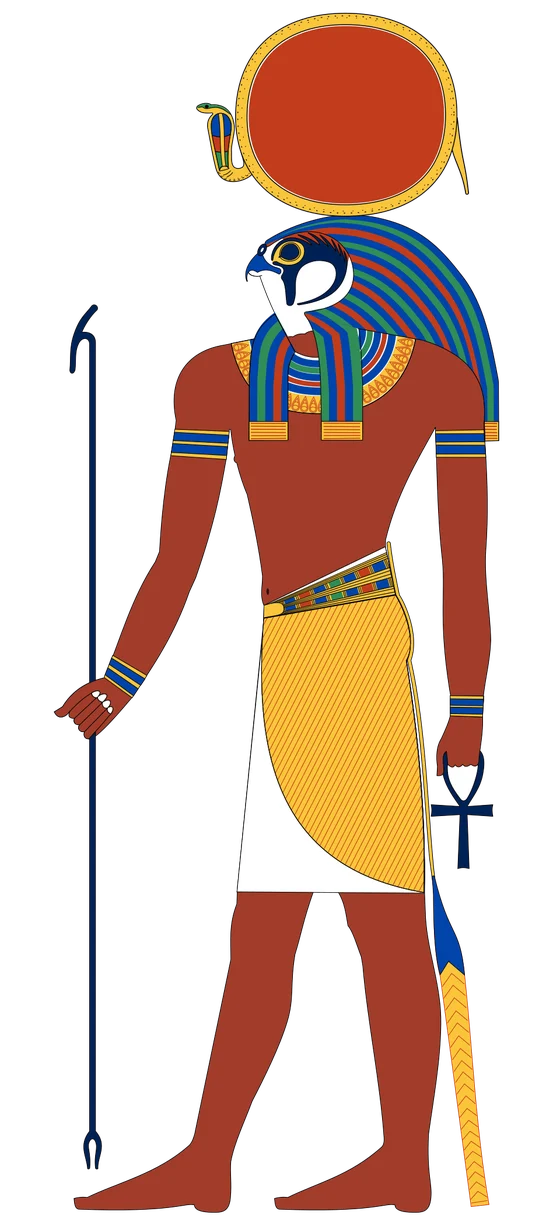
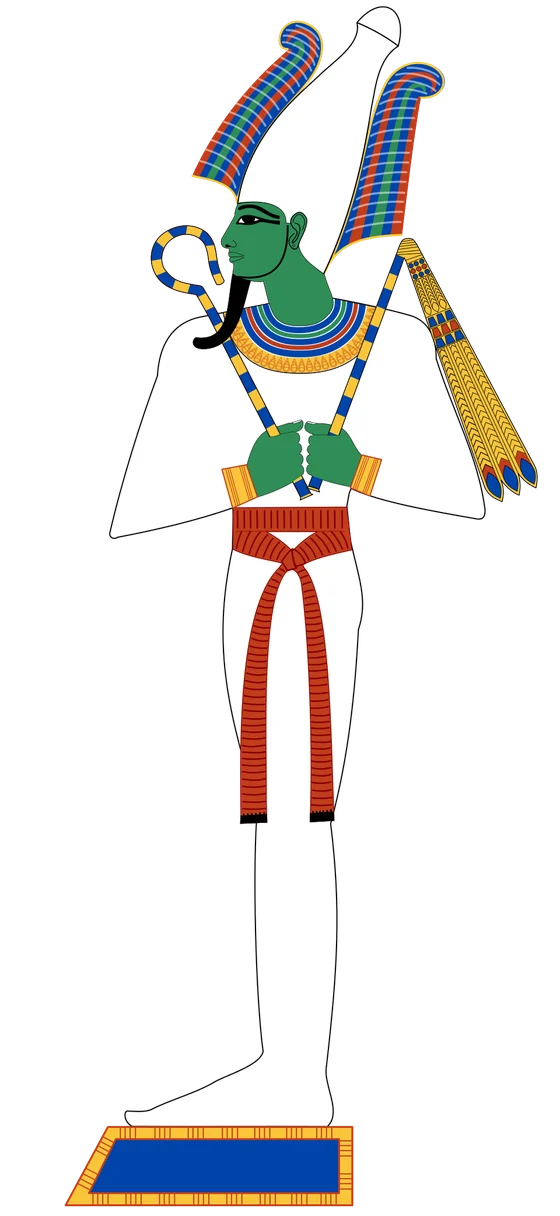
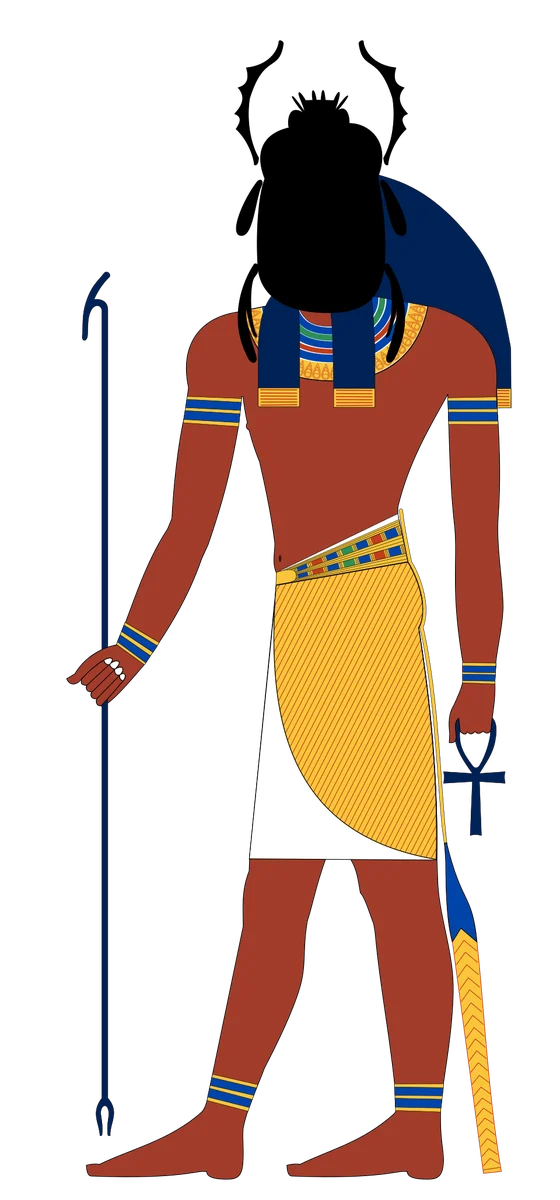
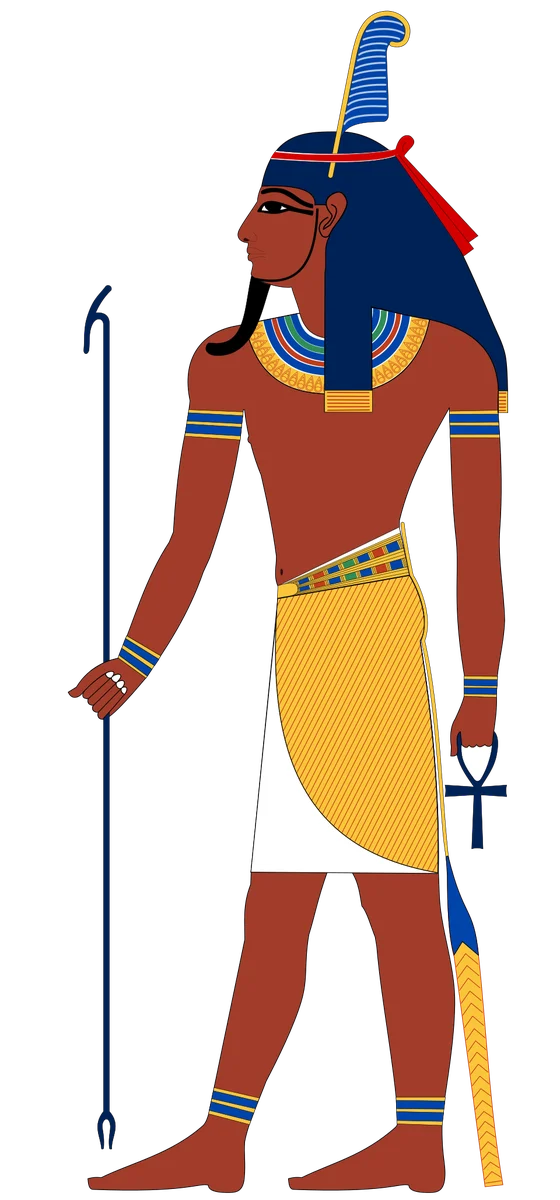
Modern vector interpretation of Egyptian deity iconography, based on historical representations; not a photograph or an original ancient painting. See the credited file description for shared iconography and artistic liberties.
Overview
The collection situates the creation text within a papyrus containing a work against Apep, explicitly calling him an enemy of Ra and Osiris. The accompanying ritual aims to repel disorder and hostile conditions by performing prescribed acts and recitations. The repetition matters: defeat must be ritually renewed. This evidence supports a dangerous divine adversary, while a full account of serpent iconography and later illustrations needs further specific objects or texts.
The papyrus’s rubrics and enemy names are written in red, and the edition places recited spells beside prescribed ceremonial actions. The adversary is therefore encountered through an enacted protective procedure as well as through narrative naming. Repeated opposition to the solar ruler connects the written enemy with the continuing work of ritual specialists.
A more explicit body appears in the opening incantation of the Metternich-stela texts translated in Budge’s 1912 collection. It addresses Apep as a winding, intestine-like serpent without arms or legs, with a long tail associated with a den. The speaker orders him back before Ra. Decapitation, destructive fire and cutting are invoked, while the scorpion goddess Serq’s spell restrains his strength. This is the language of a ritual intended to defeat an adversary, rather than a report of a captured animal or a single adventure with a final, irreversible ending.
The adjoining poison spell calls upon Horus’s effective speech and repeatedly commands the harmful substance to retreat or leave the afflicted person. Budge links this sequence to protection from bites. Its movement between a divine enemy and a human sufferer helps explain why Apep belongs in protective texts as well as accounts of cosmic conflict. The historical recitation documents a religious response to danger; it supplies no modern evidence that spoken words neutralize venom.
The creation account has a different relationship to the adversary. Budge’s introduction locates two creation versions inside the Book of Overthrowing Apep but observes that Apep is not named within the particular creation narrative he discusses. He proposes that recounting creation itself could have functioned as a potent utterance against the enemy. This is the editor’s explanation of the text’s placement, not a narrated episode in which Apep creates the world or a demonstrated genealogy linking him to every god in the surrounding collection.
Peter Dils’s modern edition identifies the opening text as Spell 1, on the stela’s front, lines 1–3. It renders an epithet as Ra’s umbilical cord and discusses alternatives involving entrails or an embryo. Its notes also treat the body and tail expressions as disputed. These readings prevent the older English anatomical wording from becoming an unquestioned biological description or a family-tree assertion.
Egyptian serpent imagery is not uniformly hostile. The Metropolitan Museum’s account of a snake-headed male statuette discusses protective serpent deities who oppose Apep. It offers Heneb only as a possible identity for that object and leaves other protective identities open. Neither the image’s snake head nor its museum classification makes it a portrait of Apep. This distinction matters when selecting illustrations and when comparing the adversary with beneficent divine serpents.
Origins & earliest records
The edition describes the papyrus’s titles, colored rubrics and ritual setting. Apep and Apophis are transliteration variants, so only one profile is staged. The Metternich stela adds an independently located inscribed witness, with its opening spell on front lines 1–3. These sources do not establish Apep’s first attestation or the beginning of the tradition.
Records & interpretation
The selected attestation is Creation introduction and Book of overthrowing Apep discussion in Budge’s translated collection. It documents a textual or ritual representation; commentary and later classical accounts are labeled where used. It does not establish zoological existence, a first oral telling, or a uniform belief shared by all Egyptians. Root read the complete opening Apep incantation and adjoining poison spell in Budge 1912, the complete relevant creation-introduction paragraphs, and Dils’s full Spell 1 with all four notes. The museum’s complete snake-headed statuette interpretation was read as a comparison, not used as an Apep identification. No independent translation from hieroglyphs or physical examination is claimed.
In the literature
“he is chained in one place whilst Ra inflicts upon him the blows”
History of Creation—B; paragraph beginning “[These are] the words of the god Neb-er-tcher, who said: "I…” · E. A. Wallis Budge
The descendants invoke the creator’s name against Apep, who is restrained under Aker’s ward while Ra punishes him.
Selected bibliography
Documented works and useful reading. This is not a list of every appearance.
- 01
Legends of the Gods: The Egyptian Texts
Selected witness: Creation introduction and Book of overthrowing Apep discussion. Historical translation and commentary; not an exhaustive bibliography.
- 02
Metternich stela — opening incantation against Apophis
Front lines 1–3, Spell 1, with four commentary notes. Modern interpretation compared with Budge’s opening incantation in the Metternich-stela section.
- 03
Legends of the Gods: The Egyptian Texts, edited with Translations
London,1912; historical English text edited by E.A.WallisBudge. Ancient narrative/ritual translation, separate from modern introduction and footnotes.
Family & connections
A source-supported family tree or inspiration record has not yet been compiled for this profile. Related reading below indicates a connection in subject matter, not a proven lineage or creative influence.
Located primary passages
Specific passages supporting details in this entry, grouped by their published witness.
Legends of the Gods: The Egyptian Texts
London,1912; historical English text edited by E.A.WallisBudge. Ancient narrative/ritual translation, separate from modern introduction and footnotes.
- The descendants invoke the creator’s name against Apep, who is restrained under Aker’s ward while Ra punishes him.
Specific ancient textual version in a historical English witness; names Uatchet/Nekhebet/Seb/Nu are historical renderings, not separate beings. Plutarch’s version and bracketed restorations must not be universalized. Ritual speech is literary evidence, not an instruction to perform healing or protective practices.
Encyclopedia background
An additional attributed reference, separate from the editorial profile above.
Read the open encyclopedia overview
Apophis (; from Ancient Greek: Ἄποφις, romanized: Ápophis), also known as Apep (Ancient Egyptian: 𓉻𓊪𓊪𓆙, romanized: ꜥꜣpp) or Aphoph (, Coptic: Ⲁⲫⲱⲫ, romanized: Aphōph) is the ancient Egyptian deity of chaos, darkness and fire, and is thus the opponent of light and Maat (order/truth). Ra was the bringer of light and hence the biggest opposer of Apophis, who was usually depicted as a giant snake or serpent.
Text from Wikipedia contributors, “Apophis”. CC BY-SA 4.0. Extracted introduction; formatting changed. Retrieved 5 October 2026. The source article may have changed since retrieval.
References
Sources supporting this profile. Linked pages have their own scope and editorial standards.
- Primary-text translation and historical commentaryLegends of the Gods — Creation introduction and Book of overthrowing Apep discussionResearch access: 2026-10-05
- Historical translation; complete located spells readBudge 1912: Metternich-stela section, I, opening Apep and poison incantationsResearch access: 2026-10-05
- Modern scholarly digital edition and interpretive alternativesPeter Dils: Metternichstele, Spruch 1, front lines 1–3 and notesResearch access: 2026-10-05
- Custodial interpretation of a possibly protective serpent deity; not an Apep portraitMetropolitan Museum: snake-headed male deity, object 30.8.255aResearch access: 2026-10-05
Image credits
Thematic illustrationApep
Modern vector interpretation of Egyptian deity iconography, based on historical representations; not a photograph or an original ancient painting. See the credited file description for shared iconography and artistic liberties.