Andvari
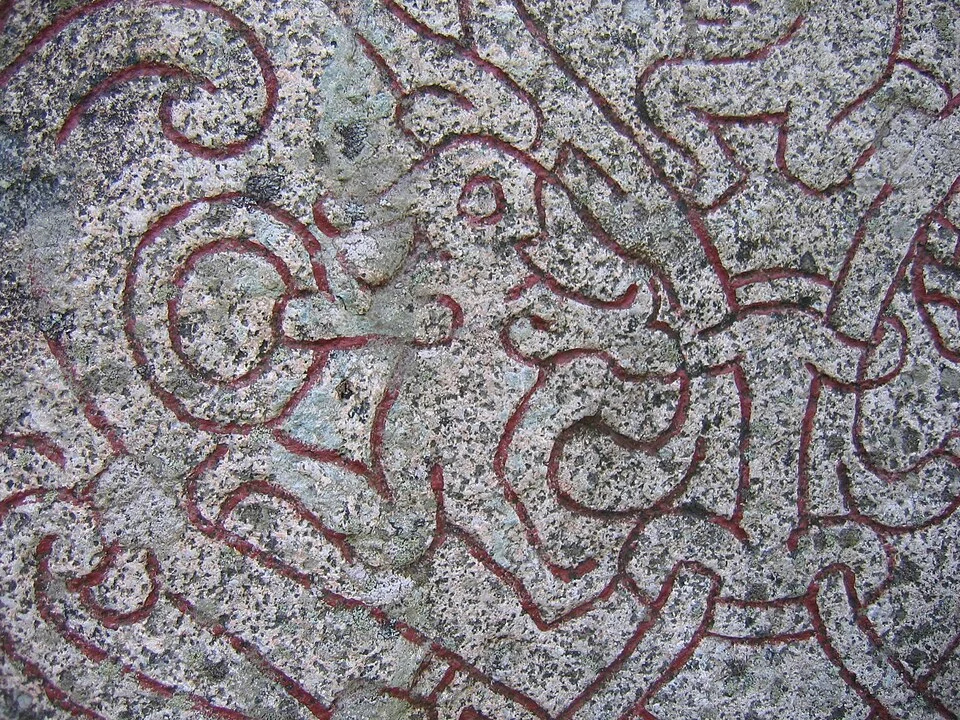
Photograph of a detail on the eleventh-century Dravle runestone U 1163, interpreted as a possible representation of Andvari with a large ring. The identification is interpretive, not secured by a naming inscription.
Overview
Loki seeks compensation after killing an otter who proves to be Hreiðmarr’s son. In the Land of the Black Elves, he finds the dwarf Andvari in fish form and demands all his gold as ransom. Andvari retrieves a great hoard from his rock but tries to conceal one ring. Loki notices and takes that as well, provoking a curse against its possessors.
The treasure fills and covers the otter’s skin, yet one exposed whisker forces Odin to surrender the ring he hoped to retain. Snorri’s subsequent narrative traces deaths and betrayals through later owners of the wealth. Andvari’s brief animal appearance matters because it makes capture possible; the selected prose calls him a fish without specifying the species sometimes supplied in other versions.
Völsunga saga XIV identifies the aquatic form more narrowly than the cited Edda passage: Andvari lives as a pike in Andvari’s waterfall and catches fish for food. In the account told by Regin, Loki borrows Rán’s net and captures that pike to obtain the ransom. Andvari’s verse names Oinn as his father and attributes his watery life to an ill-fated Norn. Those details belong to this version; they do not retroactively turn Brodeur’s unspecified fish into an explicitly named pike.
The dwarf surrenders the hoard and then the remaining ring. He withdraws into a hollow among the rocks and pronounces destruction on the ring and the rest of the gold. When the gods use it to cover the last exposed hair of the otter skin, Loki repeats a warning about Hreidmar and his son. Regin’s narrative subsequently describes Fafnir murdering Hreidmar and withholding the treasure. The sequence connects capture, coerced payment and the curse’s first familial consequences, rather than attributing the deaths to an ordinary property of gold.
Origins & earliest records
This profile follows Skáldskaparmál, sections XXXIX–XL, in Snorri Sturluson’s Prose Edda, composed around 1220 and translated here by Arthur Gilchrist Brodeur in 1916. The work explains poetic language using inherited narratives. Its composition date records a medieval witness, not the beginning of the subject’s oral history.
Records & interpretation
Located Edda and Völsunga saga passages document distinct narrative versions. The saga translation’s edition basis and identified poetic insertions remain distinguished from its prose.
In the literature
“the dwarf whose name is Andvare, and who lived as a fish, in the water.”
The Poetical Diction, “The Niflungs and Gjukungs”, paragraph beginning “The following is the reason…” · Rasmus Björn Anderson
Loki captures the dwarf who is living in fish form.
“that ring should be the bane of every one who possessed it.”
The Poetical Diction, “The Niflungs and Gjukungs”, paragraph beginning “The following is the reason…” · Rasmus Björn Anderson
Andvari curses the ring after Loki refuses to leave it with him.
Selected bibliography
Documented works and useful reading. This is not a list of every appearance.
- 01
Prose Edda: Skáldskaparmál, sections XXXIX–XL
Selected public-domain prose witness; chapter numbering follows the linked translation. Not an exhaustive bibliography.
- 02
The Story of the Volsungs, chapters XIV
Version compared with Brodeur’s Edda; translator-inserted Reginsmal bird songs explicitly identified for chapter XIX.
- 03
The Younger Edda
Chicago: Scott, Foresman and Company, 1901; translation copyright 1879, with translator’s preface dated September 1879.
Family, evolution & connections
Oinn (Volsunga saga XIV)
Within Regin’s account, the captured fish identifies himself as Andvari and names Oinn as his father in the verse spoken to Loki. That explicit wording supports a single paternal relationship in this translation. It does not provide a mother, siblings or a complete dwarf family, and the account’s pike form is not a reason to infer a biological fish pedigree.
Pikes (Esox)
Regin’s narrative places Andvari at the waterfall in a pike’s likeness before Loki catches him in a borrowed net. Animal Diversity Web provides the modern genus Esox for pikes, allowing a broad animal-reference connection. The saga translation does not securely identify an individual modern species, and this record neither infers northern pike specifically nor treats the dwarf’s form as scientifically observed transformation.
Located primary passages
Specific passages supporting details in this entry, grouped by their published witness.
Primary source witness
Chicago: Scott, Foresman and Company, 1901; translation copyright 1879, with translator’s preface dated September 1879.
- Loki captures the dwarf who is living in fish form.
- Andvari curses the ring after Loki refuses to leave it with him.
This documents Snorri’s literary account in Anderson’s translation, not zoological existence or a universal account of all Norse traditions.
Primary source witness
Rasmus Björn Anderson translation, Chicago: Scott, Foresman and Company, 1901; translation copyright 1879.
- Andvari tries to conceal a small ring from Loki.
- The dwarf explains why he wants to retain the wealth-renewing ring.
Version-specific detail in the translated literary narrative; not an earliest-attestation or real-fauna claim.
Encyclopedia background
An additional attributed reference, separate from the editorial profile above.
Read the open encyclopedia overview
In Norse mythology, Andvari (12th c. Old Norse: [ˈɑndˌwɑre]; "careful one") is a dwarf who lives underneath a waterfall and has the power to change himself into a pike (gedda) at will.
Andvari had a magical ring Andvaranaut, which helped him become wealthy. Using a net provided by Rán, Loki catches him as a pike and forces him to give up his gold and Andvaranaut. Andvari cursed the stolen gold which would destroy anyone who possessed it. After the deaths of Brynhild and Sigurd, Gunnar left Andvari's gold in a cave. Years later, Andvari discovered the cave and his lost gold, although his ring was lost forever.
In Richard Wagner's cycle of music dramas, Der Ring des Nibelungen, the character Alberich is a combination of Andvari and the character of Alberich from the Nibelungenlied.
Text from Wikipedia contributors, “Andvari”. CC BY-SA 4.0. Extracted introduction; formatting changed. Retrieved 5 October 2026. The source article may have changed since retrieval.
References
Sources supporting this profile. Linked pages have their own scope and editorial standards.
- Primary textThe Prose Edda: Skáldskaparmál XXXIX–XL (Brodeur translation)Research access: 2026-10-05
- Primary historical translated literary narrativeMorris and Magnússon: Völsunga saga, chapters XIVResearch access: 2026-10-05
Image credits
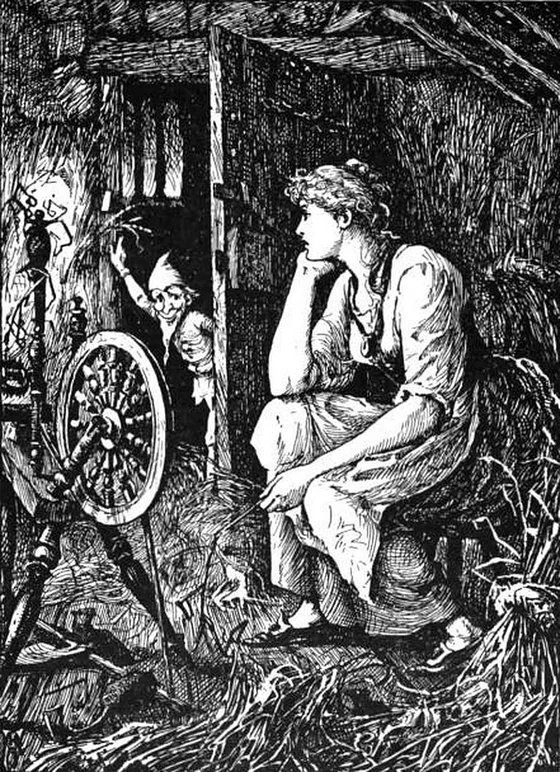
Historical illustrationAndvari
Photograph of a detail on the eleventh-century Dravle runestone U 1163, interpreted as a possible representation of Andvari with a large ring. The identification is interpretive, not secured by a naming inscription.