Ainu
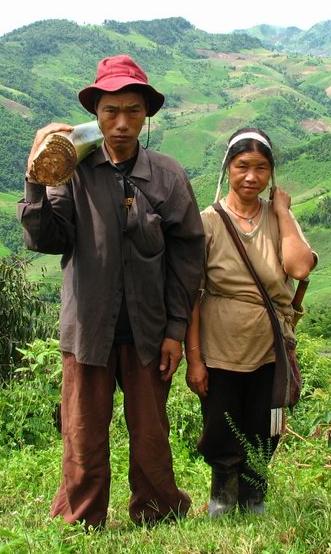
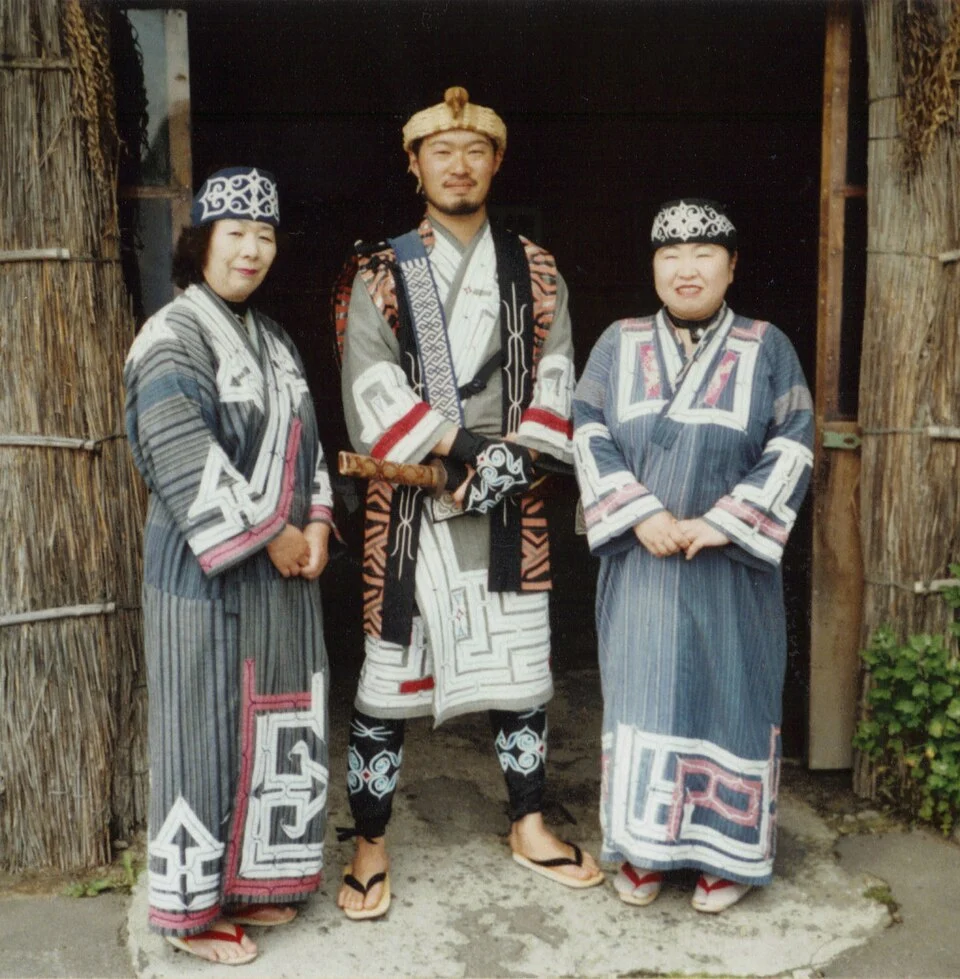
Image associated with the exact linked encyclopedia article; consult credited file description for its interpretation.
Overview
Ainu histories encompass communities in Hokkaido, northern Honshu, Sakhalin and the Kuril Islands, with changing boundaries and many local experiences. Historical livelihoods included fishing, hunting, gathering, farming and trade. Kotan communities, oral epics such as yukar, clothing, woodwork and relationships expressed through the concept of kamuy form important subjects in public cultural accounts. These subjects should be understood through Ainu voices and contexts rather than reduced to decorative motifs.
Assimilation and discrimination placed severe pressure on language and cultural transmission. Upopoy, the National Ainu Museum and Park, presents cultural learning and revitalisation as contemporary work. Museums can support this process, but living people are not defined by museum displays. Ainu artists, educators and communities develop new forms of expression while engaging with inherited knowledge and the history of their rights.
Upopoy’s public account shows how cultural continuity includes exchange. It describes garments made from local plant fibres and animal materials as well as traded cotton and silk. The same account places Ainu communities in contact with Wajin, Nivkh, Uilta, Ulchi, Itelmen and Aleut neighbours. Its language section distinguishes Ainu from Japanese despite some shared word-order patterns and notes transcription in Latin letters and adapted katakana. These examples concern materials, interaction and language; cultural transmission does not require an isolated or unchanging community.
Named publications also document Ainu authors addressing their own times. The National Ainu Museum’s 2023 literature exhibition marked the centenary of Chiri Yukie’s Ainu shin’yōshū, published in 1923. It placed that work alongside Batchelor Yaeko’s Wakaki utari ni (1931), the posthumous Kotan collection of Iboshi Hokuto’s writings (1930), and Moritake Takeichi’s Genshirin (1937). The exhibition used notebooks, photographs and other objects to connect literary expression with social conditions. These are separately attributed works, not interchangeable samples of one anonymous tradition; the selected bibliography records the museum’s identification without claiming a new reading of every book.
Upopoy itself opened on 12 July 2020. Its stated purposes include passing on and revitalising Ainu culture, with the museum and park providing spaces for learning and cultural activity. That opening dates a contemporary institution. It is not the beginning of Ainu history, and the institution’s account of its aims does not by itself measure their success for all communities.
History & identity
Ainu histories draw on oral traditions, archaeology and written evidence from relationships across northern East Asia. Archaeological labels cannot simply be substituted for modern ethnic identities. Historical documentation of Ainu communities, the formation of present institutions and legal recognition each concern different processes; none provides a single date for the beginning of Ainu people.
Sources & representation
Upopoy supplies public cultural descriptions and explains its role in revitalisation. Historical documents and collected artefacts require attention to the conditions under which they were made, translated or acquired. Regional histories differ, and a general museum introduction cannot replace community authority over language, restricted knowledge or representations of particular traditions.
Selected bibliography
Documented works and useful reading. This is not a list of every appearance.
- 01
About Upopoy
Selected institutional cultural account; not a complete bibliography.
- 02
Ainu Culture
Complete public culture page read; institutional overview, not a universal description of individual practice.
- 03
Ainu shin’yōshū (アイヌ神謡集)
Museum metadata; book not read.
- 04
Wakaki utari ni (若きウタリに)
Museum metadata; book not read.
- 05
Kotan: Iboshi Hokuto ikō (コタン 違星北斗遺稿)
Museum metadata; book not read.
- 06
Wakaki Ainu no shishū: Genshirin (若きアイヌの詩集 原始林)
Museum metadata; book not read.
- 07
Ainu Shinyōshū: author’s preface
Aozora transcription of Iwanami1978,35th impression2004; credits identify1923 parent publication.
Language & cultural connections
These connections link languages or specific cultural works and institutions; they do not establish biological ancestry or ethnic identity.
Shared human classification
Shared species classification of the human members of this community: Homo sapiens. This cultural identity is not a biological taxon, race, subspecies or separate evolutionary branch.
Ainu Association of Hokkaido and Hokkaido Ainu Center
The Association’s own centre page describes its management of the Hokkaido Ainu Center under commission from the prefectural government. Exhibitions, information materials and preservation training connect the institution with cultural transmission. This documents an institutional role in Hokkaido, not government over all Ainu people or inherited biological identity.
Located primary passages
Specific passages supporting details in this entry, grouped by their published witness.
Ainu Shinyōshū: author’s preface
Modernized digital transcription.
- Chiri fears losing inherited words and explains recording a small selection of stories remembered from an Ainu-speaking upbringing. She hopes readers will understand her community and expresses hope for its future. Her elegiac historical language is an author’s1922 perspective, not evidence that contemporary Ainu people disappeared.
Complete Japanese preface, signed1 March1922; digital edition credits.
Ainu-language songs, editorial additions and original1923 pages not inspected. No whole-collection or independent Ainu-translation claim.
Encyclopedia background
An additional attributed reference, separate from the editorial profile above.
Read the open encyclopedia overview
The Ainu (/ˈaɪnuː/) are an indigenous ethnic group who reside in northern Japan and southeastern Russia, including Hokkaido and the Tōhoku region of Honshu, as well as the land surrounding the Sea of Okhotsk, such as Sakhalin, the Kuril Islands, the Kamchatka Peninsula, and the Khabarovsk Krai. They have occupied these areas, known to them as "Ainu Mosir" (Ainu: アイヌモシㇼ, lit. 'the land of the Ainu'), since before the arrival of the modern Yamato and Russians. These regions are often referred to as Ezochi (蝦夷地) and its inhabitants as Emishi (蝦夷) in historical Japanese texts. Along with the Yamato and Ryukyuan ethnic groups, the Ainu people are one of the primary historic ethnic groups of Japan and are, along with the Ryukyuans and Bonin Islanders, one of the few ethnic minorities native to the Japanese archipelago.
Official surveys of the known Ainu population in Hokkaido received 11,450 responses in 2023, and the Ainu population in Russia was estimated at 300 in 2021. Unofficial estimates in 2002 placed the total population in Japan at 200,000 or higher, as the near-total assimilation of the Ainu into Japanese society has resulted in many individuals of Ainu descent having no knowledge of their ancestry.
The Ainu were subject to forced assimilation during the Japanese colonization of Hokkaido since at least the 18th century. Japanese assimilation policies in the 19th century around the Meiji Restoration included forcing Ainu peoples off their land. This, in turn, forced them to give up traditional ways of life such as subsistence hunting and fishing. Ainu people were not allowed to practice their religion and were placed into Japanese-language schools, where speaking the Hokkaido Ainu language was forbidden. In 1966, there were about 300 native Ainu speakers. In the 1980s, there were fewer than 100 native Ainu speakers, with only 15 using the language daily. The Hokkaido Ainu language is likely extinct today, as there remain no known native speakers. The other Ainu languages, Sakhalin Ainu and Kuril Ainu, were declared extinct in the 20th century. In recent years, there have been increasing efforts to revitalize the Hokkaido Ainu language.
Text from Wikipedia contributors, “Ainu people”. CC BY-SA 4.0. Extracted introduction; formatting changed. Retrieved 5 October 2026. The source article may have changed since retrieval.
References
Sources supporting this profile. Linked pages have their own scope and editorial standards.
- MuseumAbout UpopoyResearch access: 2026-10-05
- MuseumAinu Culture: language, materials and exchangeResearch access: 2026-10-05
- Museum exhibition catalogue pageAutari opitta: modern Ainu literature exhibition 2023Research access: 2026-10-05
Image credits
Reference illustrationAinu
Image associated with the exact linked encyclopedia article; consult credited file description for its interpretation.