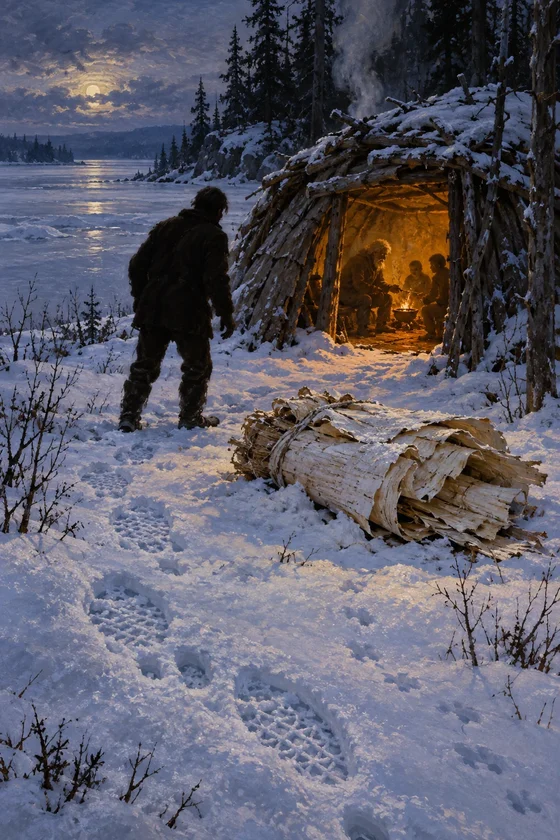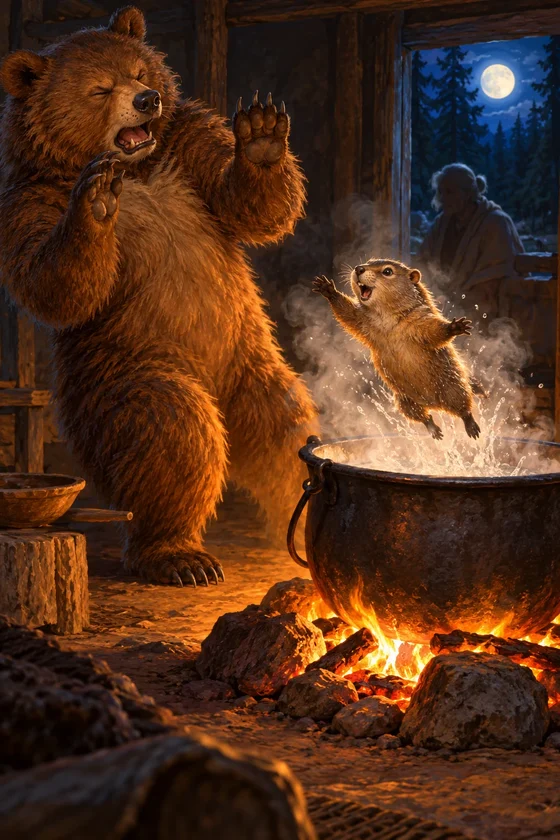
AI-generated interpretation of the speaking whale and listeners in Nancy Jeddore’s Whales and the Robbers, translated by Rand. The whale gathering and shore encounter follow the narrative. The partial visible party, whale appearance/species-like features, faces, unadorned wraps, coastline, season and moonlight are imagined; this is not ethnographic or zoological evidence.
AI-generated interpretation of the speaking whale and listeners in Nancy Jeddore’s Whales and the Robbers, translated by Rand. The whale gathering and shore encounter follow the narrative. The partial visible party, whale appearance/species-like features, faces, unadorned wraps, coastline, season and moonlight are imagined; this is not ethnographic or zoological evidence.
Overview
Seven young men and seven young women, one pair from each of seven towns, visit the shore and hear music they initially think comes from heaven. It is the sound of approaching whales. The men warn that listening may overwhelm the women, who flee into the woods as the whales approach. The men remain and speak with a whale that appears to lead the others. They understand it as a supernatural power able to grant requests. Each asks for a different gift: a beautiful wife, wisdom, strength, success, long life, magic or kingship. The whale promises them all, then withdraws.
The recipient seeking a wife marries one of the party, but the would-be king uses the promises dishonestly. A woman troubled by the whale music has been told she should marry someone named Wisdom. He appropriates that companion’s name and other recipients’ titles, exploiting a conversation she overhears to persuade her that he is the expected husband. After they marry, he takes her back to the shore. The music overpowers her and she falls dead. He responds callously, but the whale reappears and confirms that he will become king and have seven servants. At home he instead reports that the whale carried her away.
The story continues with his journey alongside the actual Wisdom, whose name the source also glosses as shrewdness or subtlety. Following that companion’s plan, he claims to be a ruler’s long-lost brother. Wisdom uses enchantment to make the ruler accept a false recollection. The newcomer gains a house, servants and a promised share of the kingdom. Their next plot deliberately loses the ruler’s daughter in a forest. Wisdom then stages her rescue after securing a promise of marriage. The narrative treats these men as schemers, rather than making the whale’s gift evidence of their virtue.
They finally predict an attack, naming a barn fire as its warning. Wisdom sets the fire himself; while the ruler tries to save livestock, the pair steal what they can carry and flee. The ruler supposes they died in the blaze, and the account ends without their punishment or another intervention by the whale. Nancy Jeddore told this version on10February1871 and said she had learned it and other stories from her mother. Rand’s separate natural-history comments about whales and birds remain collector commentary. The beautiful sound, death, promises and deceptive pursuit of power belong to this complete recorded narrative.
Origins & earliest records
Rand, Legends of the Micmacs, LXXIX, The Whales and the Robbers, pp416–423. Nancy Jeddore,10February1871, learned from her mother. Posthumous1894 English collection edited by Helen L. Webster.
Records & interpretation
Complete historical translated narrative and attached notes. No individual whale species, measured sound or verified royal biography supplied; the opening supernatural encounter and later human fraud are distinct parts of one telling.
Selected bibliography
Documented works and useful reading. This is not a list of every appearance.
- 01
Legends of the Micmacs, LXXIX: The Whales and the Robbers
Complete pp416–423, all attached notes and source attribution; prefacev–ix. No splitting of gifted men into new supernatural identities.
Family & connections
A source-supported family tree or inspiration record has not yet been compiled for this profile. Related reading below indicates a connection in subject matter, not a proven lineage or creative influence.
References
Sources supporting this profile. Linked pages have their own scope and editorial standards.
- Primary historical translated collectionRand1894, The Whales and the RobbersResearch access: 2026-10-27
Image credits
AI-generated illustrationAI-generated interpretation of the speaking whale and listeners in Nancy Jeddore’s Whales and the Robbers, translated by Rand. The whale gathering and shore encounter follow the narrative. The partial visible party, whale appearance/species-like features, faces, unadorned wraps, coastline, season and moonlight are imagined; this is not ethnographic or zoological evidence.
AI-generated interpretation of the speaking whale and listeners in Nancy Jeddore’s Whales and the Robbers, translated by Rand. The whale gathering and shore encounter follow the narrative. The partial visible party, whale appearance/species-like features, faces, unadorned wraps, coastline, season and moonlight are imagined; this is not ethnographic or zoological evidence.