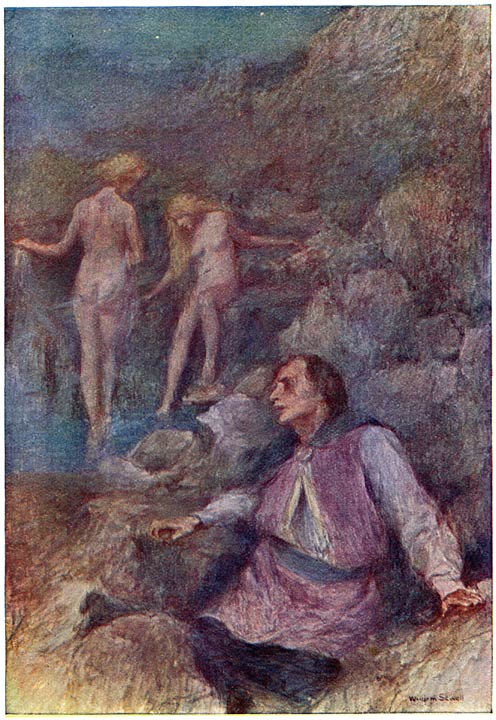
Vile bathing at the healing spring in Justice and Injustice, William Sewell’s illustration
Vile bathe at the healing spring in Justice and Injustice while the prince listens nearby. This is a particular tale scene, distinct from the named Raviyoyla encounter.
Overview
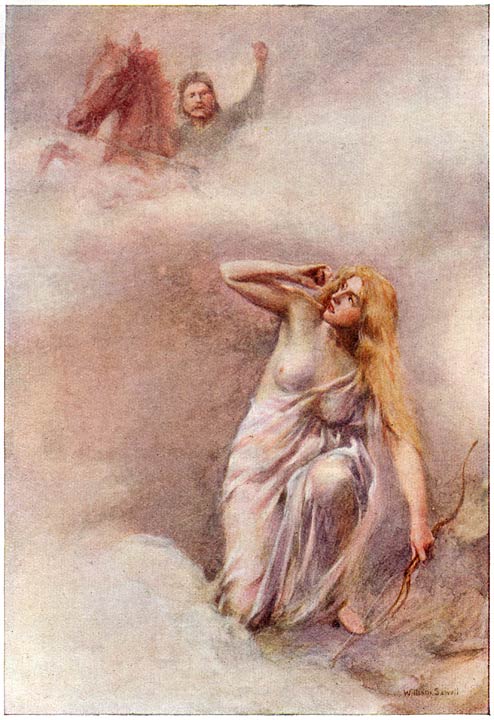
Petrovitch calls a single being Vila or Veela and the plural Vile or Veele. His literary overview describes eternally young women with flowing golden hair and fine white gauze clothing. Sweet singing voices, dancing rings, bows and arrows, mountain heights, forests and water places recur in the selected account. They may aid heroes, enter sworn sibling relationships or form families, but disturbed dances and threats can bring retaliation.
His overview attributes weather influence, foresight and snake or swan transformations to them, while individual episodes establish narrower particular abilities. Raviyoyla’s arrows and healing herbs belong to a named encounter; a prophetic companion belongs to Marko’s ending. Petrovitch’s proposed equation with Greek nymphs is his comparative argument, not proof that every local Vila account descends unchanged from one classical type.
Origins & earliest records
Woislav M. Petrovitch, Hero Tales and Legends of the Serbians, Chapter II: The Veele, pp. 16–18. The inspected English volume lists first publication August 1914 and reprints through December 1921. Local source chains and alternative narratives remain attributed.
Records & interpretation
Relevant complete primary section and connected encounter read, with printed locators retained. Descriptive titles used for unnamed subjects. Comparison with classical mythology and claims about whole populations remain the author’s dated interpretations.
In the literature
“not by any means invulnerable”
Chapter II, The Veele, p.17; vulnerability · Woislav M. Petrovitch
Petrovitch gives Veela/Vila singular and Veele/Vile plural, describing youthful female figures with golden hair, singing, dancing and sometimes bows. They may help heroes yet can be harmed or become hostile. His comparisons to Greek nymphs and earlier writers are collector interpretations, not independently inspected proof of an unchanged ancient identity.
Selected bibliography
Documented works and useful reading. This is not a list of every appearance.
- 01
Hero Tales and Legends of the Serbians, Chapter II: The Veele, pp. 16–18
Specific narrator/contributor attribution belongs to Pavilion footnote, not automatically every story in the book.
- 02
Hero Tales and Legends of the Serbians
Woislav M. Petrovitch, Hero Tales and Legends of the Serbians, London: George G. Harrap; selected December1921 reprint, first August1914 publication explicitly printed. Complete selected Pavilion, Prince Marko and the Veela, and Death of Prince Marko episodes, plus full Veele and Horse Sharatz introductory accounts independently read. Selected original English prose, no modern translation.
Family & connections
A source-supported family tree or inspiration record has not yet been compiled for this profile. Related reading below indicates a connection in subject matter, not a proven lineage or creative influence.
Located primary passages
Specific passages supporting details in this entry, grouped by their published witness.
Hero Tales and Legends of the Serbians
Woislav M. Petrovitch, Hero Tales and Legends of the Serbians, London: George G. Harrap; selected December1921 reprint, first August1914 publication explicitly printed. Complete selected Pavilion, Prince Marko and the Veela, and Death of Prince Marko episodes, plus full Veele and Horse Sharatz introductory accounts independently read. Selected original English prose, no modern translation.
- Petrovitch gives Veela/Vila singular and Veele/Vile plural, describing youthful female figures with golden hair, singing, dancing and sometimes bows. They may help heroes yet can be harmed or become hostile. His comparisons to Greek nymphs and earlier writers are collector interpretations, not independently inspected proof of an unchanged ancient identity.
Chapter II, The Veele, pp.16–18; named forms and collector overview
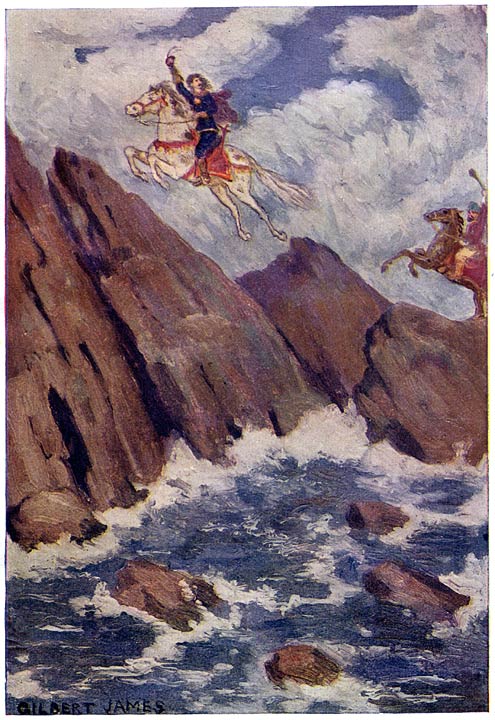
- The named Raviyoyla episode shows her injuring a singer, being pursued and struck down, then gathering herbs to restore him after Marko’s threats. Her brother-in-God request concerns a spiritual relationship, not biological siblinghood. The book’s separate general snake/swan transformation claim is not silently inserted into this episode, which shows flight.
Chapter IV, Prince Marko and the Veela, pp.102–105; specific witness beyond overview
Original Serbian witness not independently inspected; compiler comparisons and variant endings attributed. No sacred formulas excerpted.
References
Sources supporting this profile. Linked pages have their own scope and editorial standards.
- Primary textPetrovitch primary section: Chapter II: The Veele, pp. 16–18Research access: 2026-10-05
Image credits
Historical illustrationVile bathing at the healing spring in Justice and Injustice, William Sewell’s illustration
Vile bathe at the healing spring in Justice and Injustice while the prince listens nearby. This is a particular tale scene, distinct from the named Raviyoyla encounter.