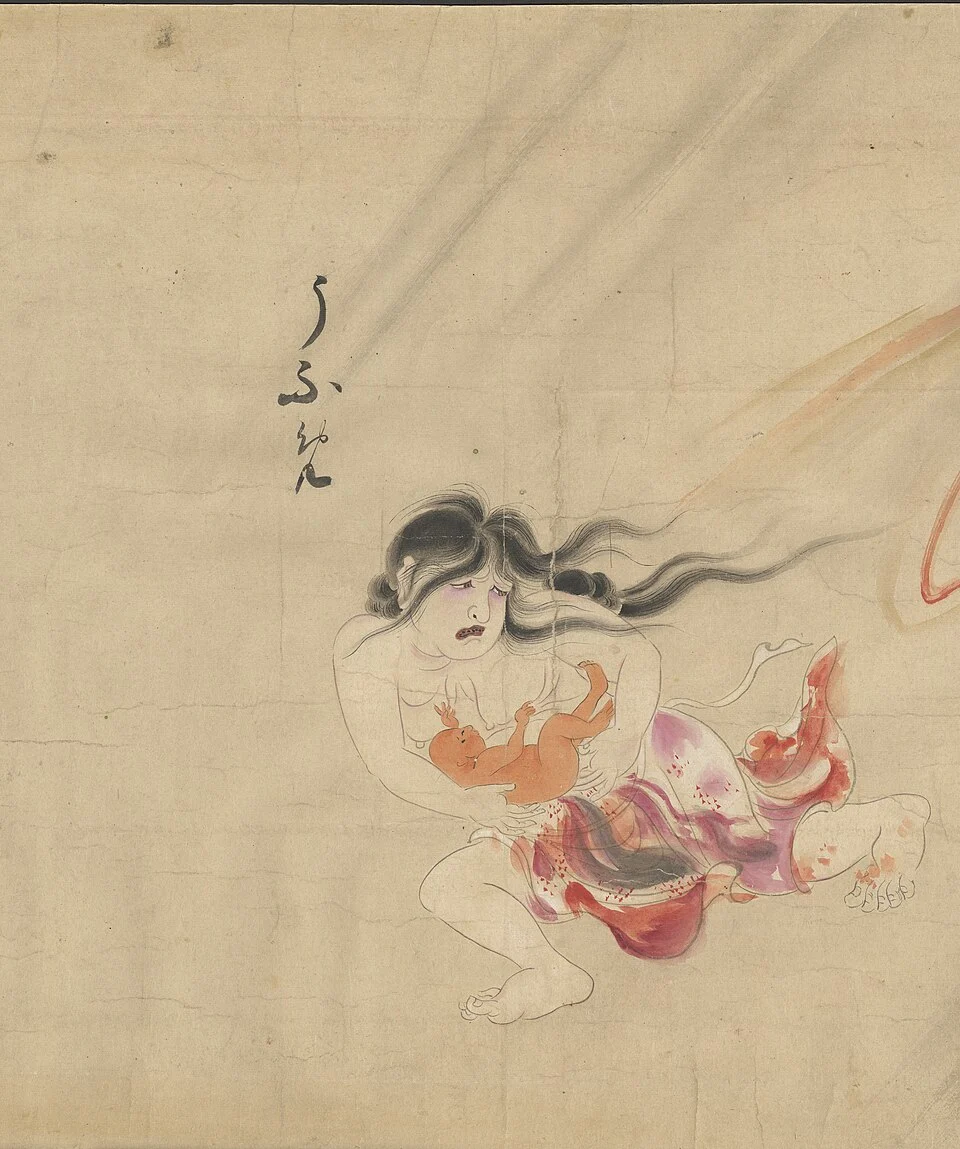
Ubume
Image associated with the exact linked encyclopedia article; consult credited file description for its interpretation.
Overview
Ubume traditions concern a woman who dies in connection with childbirth yet remains involved with her child. In many stories she appears to a passer-by carrying an infant and asks for help or transfers the burden. The figure joins fear with vulnerability: the encounter can be unsettling without making the mother a simple predator. Names and written characters also connect Japanese accounts with Chinese bird-associated traditions.
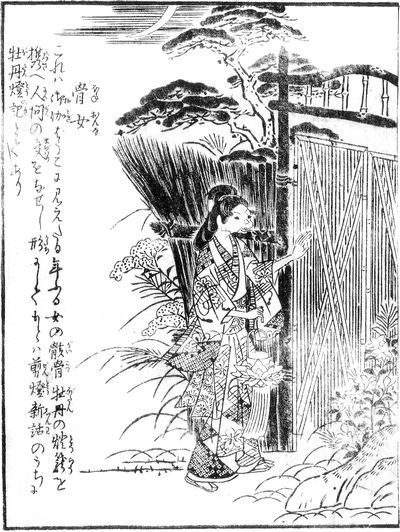
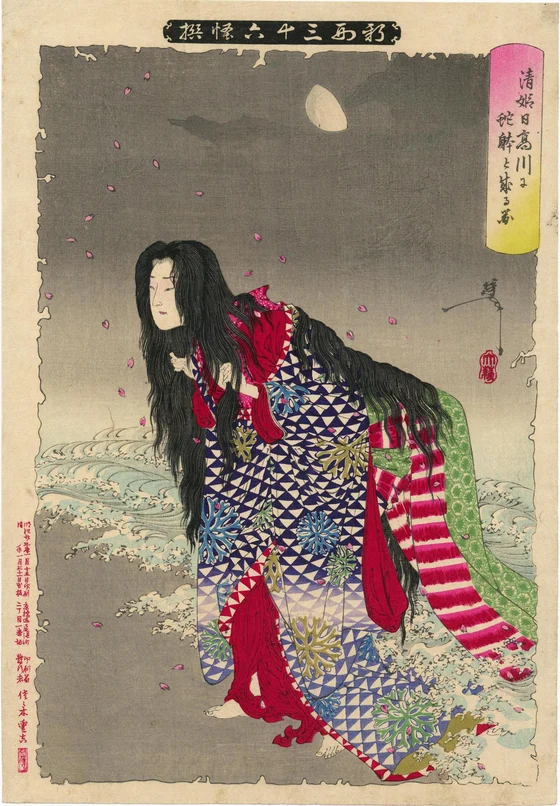
Pictures and stories do not always agree on anatomy, and some variants turn the apparent child into another object. Those incidents belong to particular accounts rather than to a checklist of compulsory traits. Sekien's representation and older illustrated scrolls provide material witnesses to the image's circulation. This entry emphasizes maternal obligation and the unstable boundary between living and dead, while avoiding a claim that all regional ubume narratives share one origin.
Origins & earliest records
Selected illustrated witness: Toriyama Sekien's Gazu Hyakki Yagyō (1776). This is an attestation of the named representation, not a claim that the belief began in that year.
Records & interpretation
Historical prints and textual references establish an imagined being and its representation. The linked contextual article distinguishes the pictured form from regional accounts; these sources do not establish zoological existence.
Selected bibliography
Documented works and useful reading. This is not a list of every appearance.
- 01
Gazu Hyakki Yagyō
Selected historical witness; individual illustration now checked in the separately linked primary scan. This edition is not a claim of the earliest oral attestation.
Family & connections
A source-supported family tree or inspiration record has not yet been compiled for this profile. Related reading below indicates a connection in subject matter, not a proven lineage or creative influence.
Primary records and illustrations
Gazu Hyakki Yagyō
Volume 2, Yang (陽); NDL 1805 edition bound in catalog record 百鬼夜行 3巻拾遺3巻. [1]. NDL canvas 20, left page of photographed opening
Printed 姑獲鳥, with reading; a long-haired woman holds a small child beside water under diagonal rain. Printed name and illustration inspected together. Canvas numbering identifies the digitized opening, not an original printed page number.
The NDL opening places Ubume on the left page, opposite the vertically extended body of an unrelated creature. Her long hair trails across a bent upper body, and she carries a small child against her front. Slanting strokes of rain cross the upper field, while broad looping lines describe water around her feet. A low bank and vegetation give the figure a setting rather than leaving her as an isolated emblem. The printed label 姑獲鳥 and accompanying reading identify the image. These visible choices emphasize an adult carrying an infant through wet terrain. The plate supplies visual evidence for that maternal association, but does not itself establish the outcome of any encounter or the woman's biography.
Encyclopedia background
An additional attributed reference, separate from the editorial profile above.
Read the open encyclopedia overview
Ubume (Japanese: 産女) (also ubumedori (姑獲鳥) or ubumetori (産女鳥)) are Japanese yōkai, ghosts of women who died in childbirth, but may have borne a child alive.
The creature is equivalent to the Chinese Guhuoniao (Chinese: 姑獲鳥, "wench bird") but local Japanese folklore has been blended into the legend.
Throughout folk stories and literature the identity and appearance of ubume varies. However, she is most commonly depicted as the spirit of a woman who has died during childbirth. Passersby will see her as a normal-looking woman carrying a baby. She will typically try to give the passerby her child then disappears. When the person examines the child in his arm, he discovers it to be a bundle of leaves or large rock.
Text from Wikipedia contributors, “Ubume”. CC BY-SA 4.0. Extracted introduction; formatting changed. Retrieved 5 October 2026. The source article may have changed since retrieval.
References
Sources supporting this profile. Linked pages have their own scope and editorial standards.
- Primary illustrated book / national-library recordNocturnal Procession of the Hundred Demons — historical editionResearch access: 2026-10-05
- National library / primary illustration contextTORIYAMA Sekien’s Illustrated Night Parade of the Demon HordeResearch access: 2026-10-05
- Secondary referenceUbume — contextual overview and bibliographyResearch access: 2026-10-05
- Primary illustrated plate / institutional digitizationGazu Hyakki Yagyō — directly inspected NDL canvas 20, left page of photographed openingResearch access: 2026-10-05
Image credits
Reference illustrationUbume
Image associated with the exact linked encyclopedia article; consult credited file description for its interpretation.