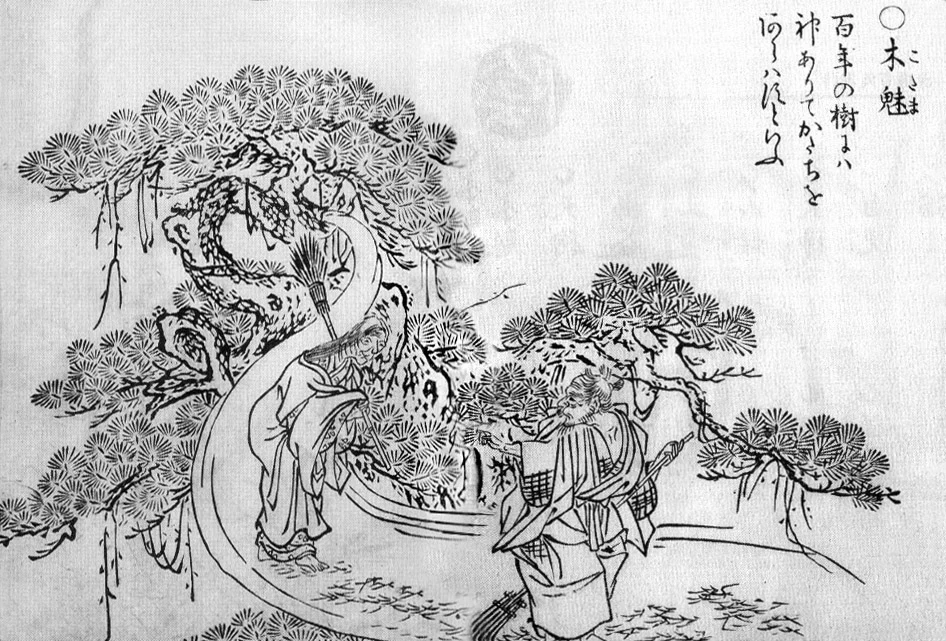
Kodama
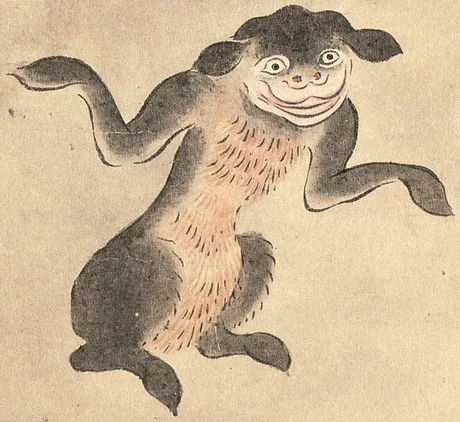
Image associated with the exact linked encyclopedia article; consult credited file description for its interpretation.
Overview
Kodama are spirits associated with trees, particularly old or remarkable trees whose presence marks a place as more than ordinary woodland. The name can refer both to an inhabitant and to the tree that shelters it. Accounts connect tree spirits with echoes, but the familiar animated-film image of a small white figure is a particular modern representation, not a standard historical anatomy.
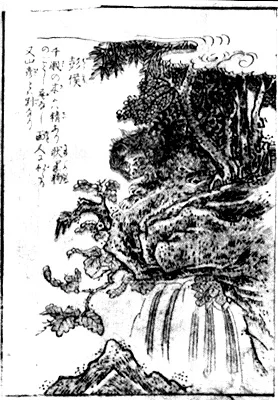
Sekien pictures aged human figures near trees rather than prescribing a single species of woodland creature. This matters because tree veneration, verbal traditions and illustrated monster books overlap without being interchangeable. Cutting or mistreating an inhabited tree can bring misfortune in reported traditions; that belief documents relations between people and a landscape rather than establishing a botanical disease or an observable animal.
A useful comparison appears in Hearn’s1894 “In a Japanese Garden,” section6, under the distinct term Ki-no-o-bake. Discussing beliefs about enoki and drooping willows, he explains that the tree itself need not change shape or move. Instead, an apparition leaves it, commonly in the form of a beautiful woman, stays nearby, seldom speaks and withdraws into the trunk or foliage if approached. The distinction supplies a specific account of a tree and its apparent inhabitant, rather than making every animated tree an ambulatory humanoid. Hearn does not call these beings Kodama in this passage, so Ki-no-o-bake is not added as an interchangeable name.
Hearn also reports that cutting certain trees makes them bleed and that their uncanny qualities increase with age. His discussion moves from those beliefs to a willow-wife narrative and then to ancient enoki trees honoured as residences of Kojin, with shrines and prayers placed before them. These are different relations between a tree, an apparition and a named divinity; the text does not establish that Kojin is a kind of Kodama. Hearn’s comparisons with Greek dryads and a broader theory of tree-souls remain his interpretive framework, distinct from Sekien’s directly inspected illustration.
Origins & earliest records
Selected illustrated witness: Toriyama Sekien's Gazu Hyakki Yagyō (1776). This is an attestation of the named representation, not a claim that the belief began in that year.
Records & interpretation
Historical prints and textual references establish an imagined being and its representation. The linked contextual article distinguishes the pictured form from regional accounts; these sources do not establish zoological existence.
Selected bibliography
Documented works and useful reading. This is not a list of every appearance.
- 01
Gazu Hyakki Yagyō
Selected historical witness; individual illustration now checked in the separately linked primary scan. This edition is not a claim of the earliest oral attestation.
- 02
Glimpses of Unfamiliar Japan, Second Series — In a Japanese Garden
HostedI/originalXVI: all14sections and40endnotes read; particular section identified in evidence.
Family & connections
A source-supported family tree or inspiration record has not yet been compiled for this profile. Related reading below indicates a connection in subject matter, not a proven lineage or creative influence.
Primary records and illustrations
Gazu Hyakki Yagyō
Volume 1, Yin (陰); digitized Smithsonian Libraries copy, 1805 edition. IIIF canvas index 9 (zero-based); GazuHyakkiyagyo1Tori_0010.jp2
Named 木魅; aged robed figures among pine trees. The image continues on the following canvas. Visual inspection of the digitized plate and its printed label; image URL is copied from the actual IIIF manifest, not a guessed leaf reference. Complete Hearn1894 In a Japanese Garden§6/all40notes compared: distinct Ki-no-o-bake term, tree remains while apparition departs; no inferred synonym/Kojin identity. https://www.gutenberg.org/cache/epub/8133/pg8133.html#id00017
Encyclopedia background
An additional attributed reference, separate from the editorial profile above.
Read the open encyclopedia overview
Kodama (木霊, 木魂 or 木魅) are spirits in Japanese folklore that inhabit trees. The term is also used to denote a tree in which a kodama supposedly resides. The phenomenon known as yamabiko, when sounds make a delayed echoing effect in mountains and valleys, is sometimes attributed to this kind of spirit and may also be referred to as "kodama".
Text from Wikipedia contributors, “Kodama (spirit)”. CC BY-SA 4.0. Extracted introduction; formatting changed. Retrieved 5 October 2026. The source article may have changed since retrieval.
References
Sources supporting this profile. Linked pages have their own scope and editorial standards.
- Primary illustrated book / national-library recordNocturnal Procession of the Hundred Demons — historical editionResearch access: 2026-10-05
- National library / primary illustration contextTORIYAMA Sekien’s Illustrated Night Parade of the Demon HordeResearch access: 2026-10-05
- Secondary referenceKodama — contextual overview and bibliographyResearch access: 2026-10-05
- Primary illustrated plate / institutional digitizationGazu Hyakki Yagyō — directly inspected IIIF canvas index 9 (zero-based); GazuHyakkiyagyo1Tori_0010.jp2Research access: 2026-10-05
- Historical English essay, reported beliefs and literary narrativesHearn, complete In a Japanese GardenResearch access: 2026-10-05
Image credits
Reference illustrationKodama
Image associated with the exact linked encyclopedia article; consult credited file description for its interpretation.