A sourced illustration has not yet been added. This gap is included in the coverage record.
Overview
In Book VI, Trisiras addresses Ravana as his father and urges him to stop grieving after Kumbhakarna’s death. He praises the king’s surviving weapons and strength, then offers to fight Rama himself. His assurances help renew Ravana’s confidence before the princes leave the city.
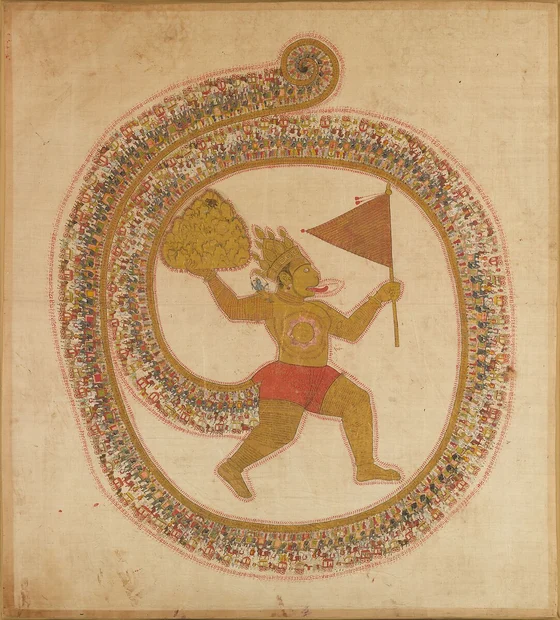
Following Narantaka’s death, Trisiras joins Devantaka and Mahodara against Angada and strikes the vanara’s forehead with three arrows. He shoots apart the mountain peak Nila throws and wounds Nila with further arrows. When he attacks Hanuman, his spear is caught and broken, but his sword wounds the vanara’s chest. Hanuman knocks him down and uses the fallen sword to sever his crowned heads. Griffith explicitly calls him three-faced and triple-necked in this episode; this is the Book VI prince, not an automatic identification of every epic figure sharing the name.
Origins & earliest records
South Asian epic religious narrative
Records & interpretation
Directly read historical English epic witness; translator’s abridgements explicitly identified where used.
Selected bibliography
Documented works and useful reading. This is not a list of every appearance.
- 01
The Ramayan of Valmiki
VI.69–70; title-page edition range, not epic composition date.
Family & connections
A source-supported family tree or inspiration record has not yet been compiled for this profile. Related reading below indicates a connection in subject matter, not a proven lineage or creative influence.
Primary records and illustrations
The Ramayan of Valmiki, Griffith translation
Hosted complete edition, title-page range 1870–1874. VI.69–70
Complete relevant passage read in downloaded Gutenberg HTML. Translator’s prose abridgement distinguished from translated verse. Public-domain historical translation; no image claimed.
References
Sources supporting this profile. Linked pages have their own scope and editorial standards.
- Historical primary epic translationGriffith, Ramayan — VI.69–70Research access: 2026-10-05
Image credits
A sourced illustration has not yet been added. This gap is included in the coverage record.