Tlaltecuhtli
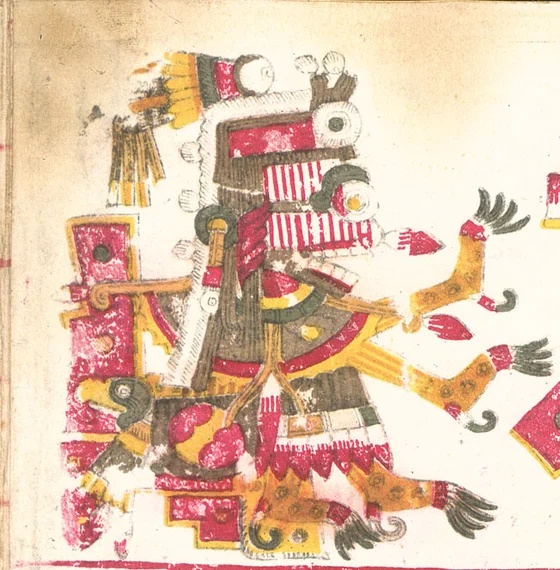
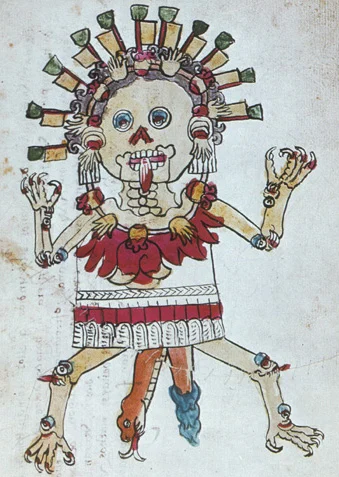
Image associated with the exact linked encyclopedia article; consult credited file description for its interpretation.
Overview
INAH presents Tlaltecuhtli under a name translated as Lord or Lady of the Earth and describes a power that both generates life and consumes it. The deity's religious significance therefore exceeds the threatening teeth and mouths that can dominate modern monster illustrations. Gendered representations vary, and a particular female image should not make every historical use of the name identical.
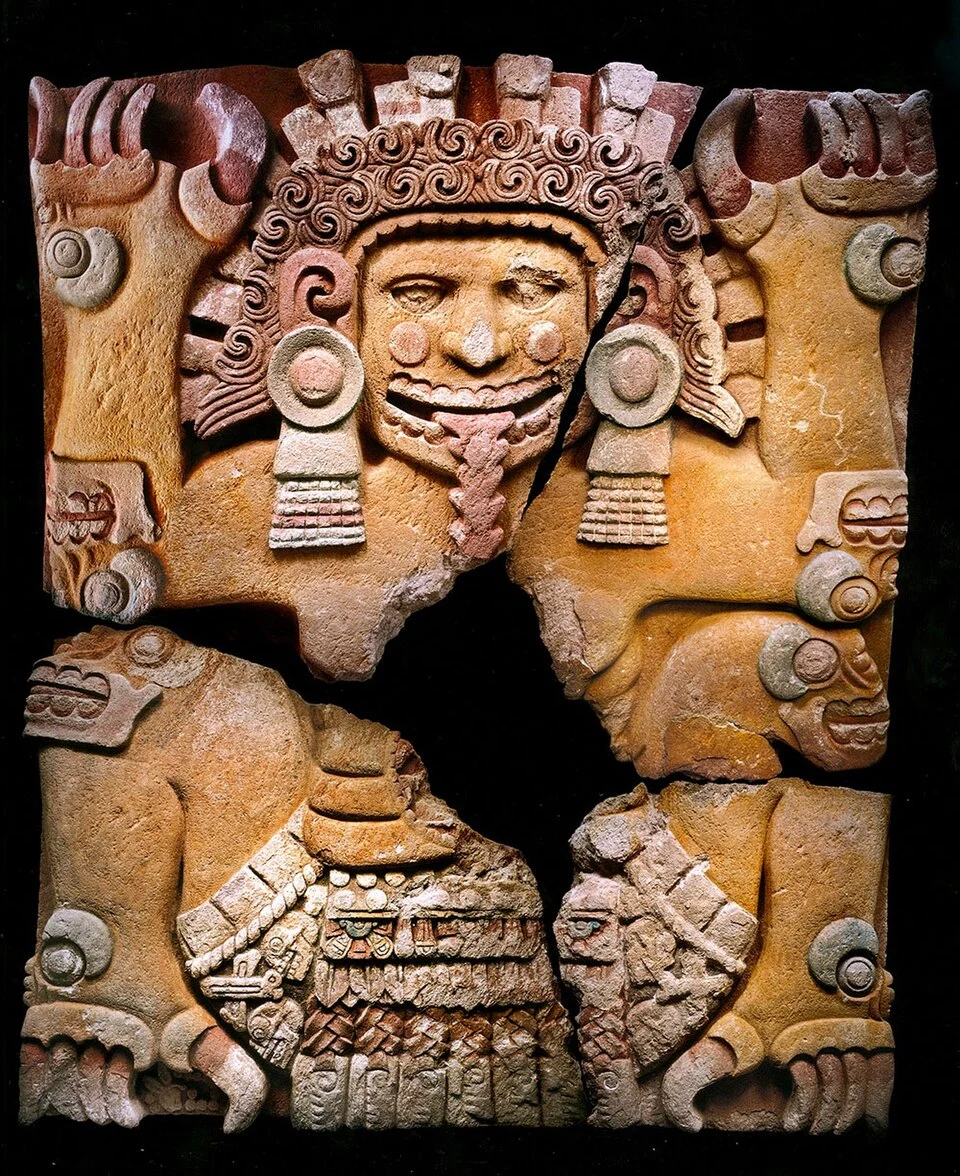
The monumental relief discovered in 2006 gives the profile a substantial material witness. María Barajas Rocha's conservation study identifies the female manifestation, its bodily posture and surviving painted surface, while connecting the object with the Templo Mayor setting. Conservation research asks what was carved and painted and how it can be stabilised. Those questions complement cosmological interpretation but do not turn an excavated sculpture into a directly observed being or establish the first moment of worship.
A textual comparison appears in hymn IV of Brinton’s 1890 edition of Nahuatl sacred songs. The sixth stanza and its Nahuatl gloss contain tonan tlaltecutli, placing the name beside a maternal address. Brinton paraphrases the surrounding passage as an earth goddess sustaining wild creatures in uncultivated country, and reads the close as extending her generosity to plants and fish. This supplies a historically published interpretation of nourishment alongside the consuming aspect in the museum account; it is not evidence that the particular Templo Mayor relief illustrates this hymn.
The edition requires care. Brinton calls the hymn’s addressee Teteoinan or Toçi in his commentary, while the text contains several divine terms and difficult images. He warns in the preface that his English versions are tentative paraphrases and may diverge from the Nahuatl gloss. The maternal language is therefore retained as a source-specific occurrence rather than proof that all these names always denote a single deity. Brinton reports basing his text and gloss on the Madrid Sahagún manuscript, with variants from the Florentine copy. The 1890 publication date belongs to this edition, not to the composition of the hymn or the beginning of Tlaltecuhtli’s worship.
Origins & earliest records
The relief was discovered on 2 October 2006; its original placement belongs to a Mexica construction phase associated with the ruler Ahuízotl. Discovery and conservation dates concern an artefact's modern history, not the deity's origin. The profile does not infer a first cult, first narrative or uniform gender from one surviving representation.
Records & interpretation
Barajas Rocha's conservation study supports the discovery, archaeological placement, female manifestation and investigation of polychromy. INAH's museum and public interpretation supply the earth-deity framing. Physical evidence can establish properties of a relief and its context; its cosmological interpretation still requires historical sources, and excavation does not itself verify supernatural events. The complete hymn IV and its apparatus provide a separate textual witness to maternal earth language and Brinton’s nourishment interpretation; manuscript identity claims remain qualified.
Selected bibliography
Documented works and useful reading. This is not a list of every appearance.
- 01
Tlaltecuhtli
Verified specialist monograph; selected reading rather than a claimed full direct reading.
- 02
El relieve monumental de la diosa Tlaltecuhtli del Templo Mayor: estudio para la estabilización de su policromía
Intervención conservation study; publication metadata and relevant passages checked.
- 03
Rig Veda Americanus: Sacred Songs of the Ancient Mexicans, with a Gloss in Nahuatl
Complete hymn IV, Teteuynan ycuic, with Nahuatl gloss, English paraphrase and notes; complete preface and introduction. Stanza6 includes tonan tlaltecutli. Brinton’s interpretation is explicitly provisional; no direct codex inspection claimed.
Family & connections
A source-supported family tree or inspiration record has not yet been compiled for this profile. Related reading below indicates a connection in subject matter, not a proven lineage or creative influence.
Encyclopedia background
An additional attributed reference, separate from the editorial profile above.
Read the open encyclopedia overview
Tlaltecuhtli (Classical Nahuatl Tlāltēuctli, Nahuatl pronunciation: [t͡ɬaːl.teːkʷ.t͡ɬi]) is a pre-Columbian Mesoamerican deity worshipped primarily by the Mexica (Aztec) people. Sometimes referred to as the "earth monster," Tlaltecuhtli's dismembered body was the basis for the world in the Aztec creation story of the fifth and final cosmos. In carvings, Tlaltecuhtli is often depicted as an anthropomorphic being with splayed arms and legs. Considered the source of all living things, she had to be kept sated by human sacrifices which would ensure the continued order of the world.
In the creation of the Earth, the gods did not tire of admiring the cosmic ocean, no oscillations, no movements, but Tezcatlipoca and Quetzalcoatl realized creation needed dry land that could be inhabited. And for this, they defeated Cipactli, making her into the world.
That primordial leviathan became known, over time, as Tlaltecuhtli, 'ruler of the earth' according to several post-conquest manuscripts that survey Mexica mythology and belief systems, such as the Histoyre du méchique, Florentine Codex, and Codex Bodley, both compiled in the sixteenth century.
Text from Wikipedia contributors, “Tlaltecuhtli”. CC BY-SA 4.0. Extracted introduction; formatting changed. Retrieved 5 October 2026. The source article may have changed since retrieval.
References
Sources supporting this profile. Linked pages have their own scope and editorial standards.
- MuseumINAH — Tlaltecuhtli: Señor o Señora de la tierraResearch access: 2026-10-05
- ResearchBarajas Rocha — Conservation of the monumental reliefResearch access: 2026-10-05
- MuseumINAH Museo del Templo Mayor — Tlaltecuhtli galleryResearch access: 2026-10-05
- Primary textBrinton1890: hymn IV and its Nahuatl glossResearch access: 2026-10-05
Image credits
Reference illustrationTlaltecuhtli
Image associated with the exact linked encyclopedia article; consult credited file description for its interpretation.