Cipactli
Image associated with the exact linked encyclopedia article; consult credited file description for its interpretation.
Overview
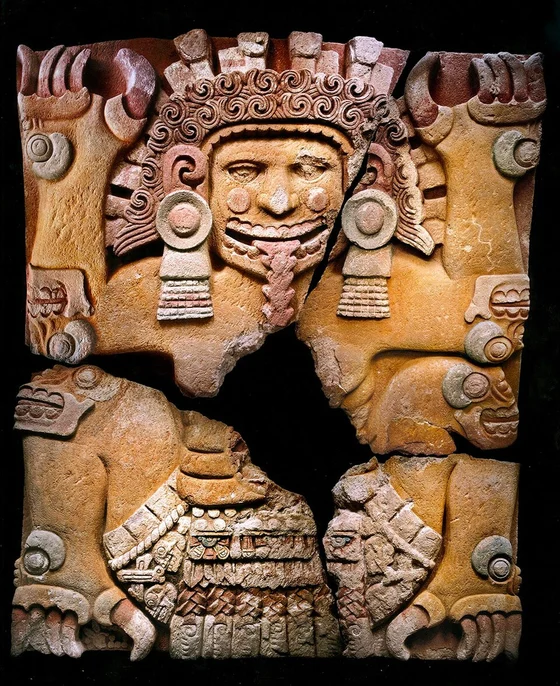
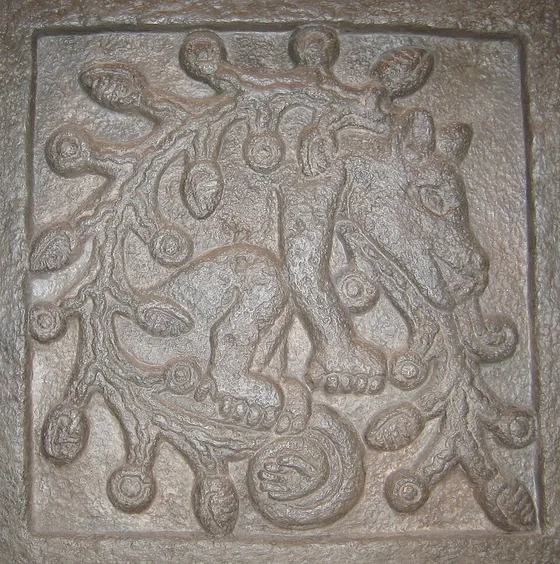
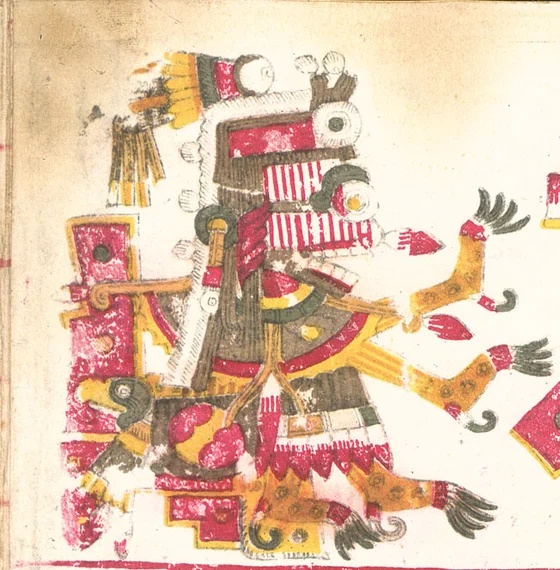
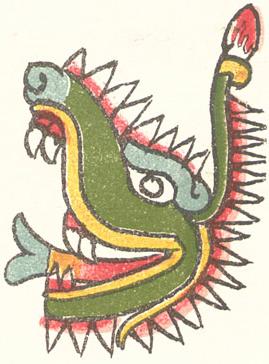
Cipactli appears as a primordial earth being and as the first image in the twenty-day sign sequence. Thomas Athol Joyce's 1914 synthesis describes a monstrous head, with manuscript forms bearing legs or fins. His comparisons with alligator and swordfish record competing historical identifications. In the creation narrative he summarizes, the earth is made from Cipactli, and the uneven terrain corresponds to the scaly projections of its back. Joyce also gives 1 Cipactli as the narrative date of creation. INAH's museum interpretation describes the caimanlike being floating in primordial waters before the gods transform it into land. Spiny, eye-marked ornaments on the sculpture discussed by the museum evoke this earth-associated imagery.
The day image belongs to a precise calendrical pattern. Twenty signs advance alongside numbers one through thirteen, producing 1 Cipactli, 2 Ehecatl and subsequent combinations; the same pairing returns after 260 days. Joyce's illustrated sign list is drawn from the Fejérváry-Mayer manuscript. His table from Vaticanus A assigns Tonacatecuhtli to the thirteen-day period beginning with 1 Cipactli, while his account associates the sign with fruitfulness. He distinguishes this divinatory cycle from the 365-day seasonal calendar and records differences in patron assignments between manuscript traditions and Sahagún. These details explain why an earth-being image also belongs in a practical system for naming and interpreting days.
Origins & earliest records
Older pictorial and narrative traditions are preserved through colonial manuscripts and subsequent scholarship. Joyce's 1914 book is the inspected historical synthesis, and INAH supplies contemporary museum interpretation. Neither establishes the first oral appearance of Cipactli. The creation date 1 Cipactli belongs to the narrative and calendrical system rather than supplying a modern archaeological date.
Records & interpretation
Joyce's chapter on the calendar supports the variable manuscript anatomy, earth-creation account and first day sign. INAH's discussion of caiman-related imagery provides a modern institutional parallel. The evidence concerns iconography and religious narrative, not a fossil species; resemblance does not establish that every depiction shares one exact anatomical model or meaning.
Selected bibliography
Documented works and useful reading. This is not a list of every appearance.
- 01
Mexican Archaeology: An Introduction to the Archaeology of the Mexican and Mayan Civilizations of Pre-Spanish America
Chapter 3, calendar discussion; historical scholarship with outdated terminology kept attributed.
- 02
Sacerdotes sembradores
Museum interpretation connecting caiman imagery, primordial earth and the Cipactli calendar sign.
- 03
Museo Nacional de Antropología: selected sculpture interpretation, record 386
Institutional discussion of spiny, eye-marked ornaments evoking primordial caimanlike Cipactli; inspected indexed text, direct page access denied.
Family & connections
A source-supported family tree or inspiration record has not yet been compiled for this profile. Related reading below indicates a connection in subject matter, not a proven lineage or creative influence.
Encyclopedia background
An additional attributed reference, separate from the editorial profile above.
Read the open encyclopedia overview
Cipactli (Classical Nahuatl: Cipactli "crocodile" or "caiman") was the first day of the Aztec divinatory count of 13 X 20 days (the tonalpohualli) and Cipactonal "Sign of Cipactli" was considered to have been the first diviner. In Aztec cosmology, the crocodile symbolized the earth floating in the primeval waters. According to one Aztec tradition, Teocipactli "Divine Crocodile" was the name of a survivor of the flood who rescued himself in a canoe and again repopulated the earth. In the Mixtec Vienna Codex (Codex Vindobonensis Mexicanus I), Crocodile is a day associated with dynastic beginnings.
In Aztec mythology, Cipactli was a primeval sea monster, part crocodilian, part fish, and part toad or frog. Always hungry, every joint on its body was adorned with an extra mouth. The deity Tezcatlipoca sacrificed a foot when he used it as bait to draw the monster nearer. He and Quetzalcoatl created the earth from its body.
Karl A. Taube has noted that among the Formative-period Olmec and the pre-Hispanic Maya peoples, crocodilians were identified with rain-bringing wind, probably because of the widespread belief that wind and rain clouds are "breathed" out of cave openings in the earth. A series of Olmec-style basreliefs from Chalcatzingo in the state of Morelos portrays crocodilians breathing rain clouds from their upturned mouths. Portable green stone Olmec sculptures depict crocodilians in similar positions, indicating that they are probably also breathing.
In the Maya tzolk'in, the day Cipactli corresponds to Imix. In the Mayan Popol Vuh, the name of the earthquake demon, Zipacna, apparently derives from Cipactli. Sipakna is the demon Sipak of 20th century Highland Maya oral tradition. In Migian, Cipactli is Quanai.
In other versions, Cipactli is called Tlaltecuhtli, a deity referred to as the "earth monster".
Text from Wikipedia contributors, “Cipactli”. CC BY-SA 4.0. Extracted introduction; formatting changed. Retrieved 5 October 2026. The source article may have changed since retrieval.
References
Sources supporting this profile. Linked pages have their own scope and editorial standards.
- Primary textMexican Archaeology — Chapter 3Research access: 2026-10-05
- MuseumINAH — Sacerdotes sembradoresResearch access: 2026-10-05
- MuseumINAH Museo Nacional de Antropología: Cipactli imagery in sculpture, record 386Research access: 2026-10-05
Image credits
Reference illustrationCipactli
Image associated with the exact linked encyclopedia article; consult credited file description for its interpretation.