Ahuizotl
Image associated with the exact linked encyclopedia article; consult credited file description for its interpretation.
Overview
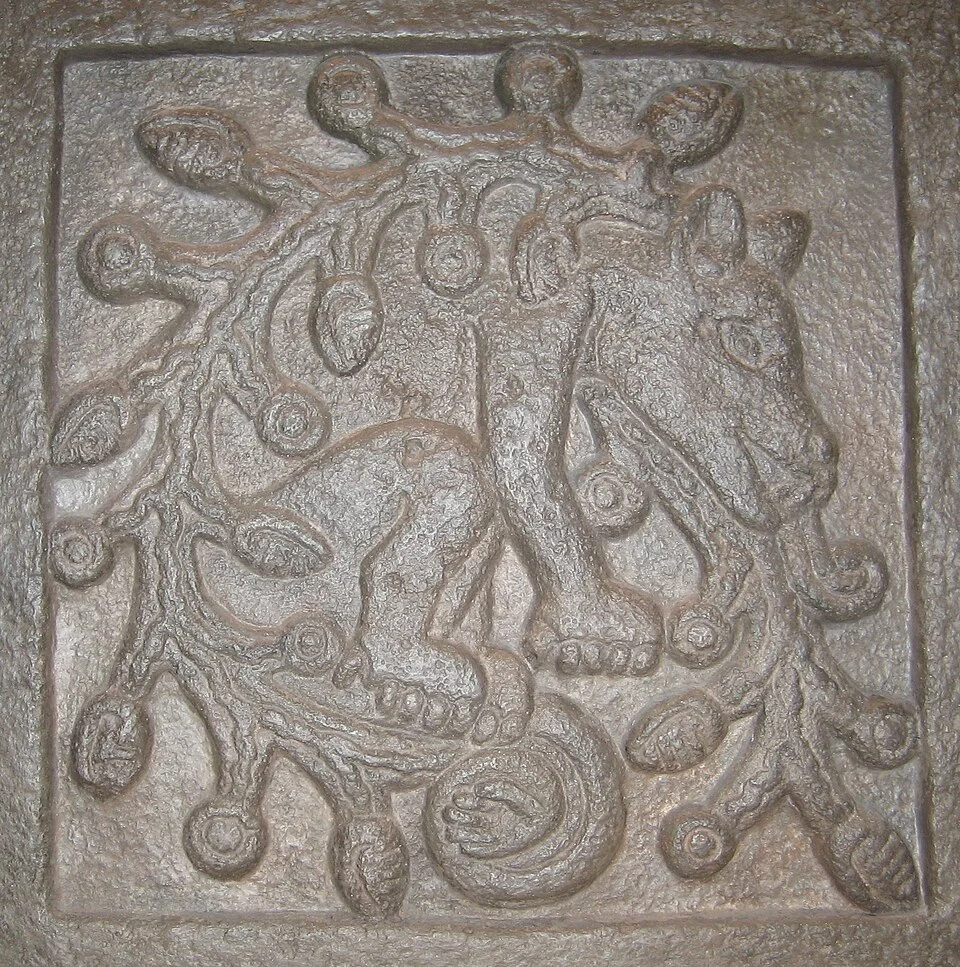
Sahagún’s Book XI gives the ahuizotl short, smooth fur, pointed ears, a glossy black body and grasping extremities, with an additional hand at the end of a long tail. It inhabits deep water and springs. When someone approaches the shore, the tail-hand pulls them underwater; waves break, foam rises and fish and frogs crowd the surface. Several days later the body returns without eyes, teeth or nails, bruised but otherwise without wounds. The creature has two deliberate lures: it gathers fish and frogs where an eager fisher will cast a net, or sits near the water crying like a child so that someone comes to help. These actions belong to the particular sixteenth-century account preserved in the 1830 printing, rather than to every later portrayal.
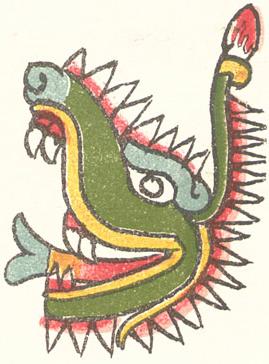
The drowned person receives religious care because the Tlaloques, rain deities, have taken them into their company. Officiants recover the body and carry it on a reed-adorned bier, with flute music, to a water-related oratory. The account gives two possible reasons for the death: the person’s goodness, or the deities’ anger at their possession of precious stones. Relatives expect prosperity through the deceased, yet also fear that another family member may drown or die by lightning to join them. A separate episode tells of an older woman who captures an ahuizotl in her water jar and covers it with her huipil. Village leaders order her to release it because it is a subject and companion of the Tlaloques. Museum interpretation also identifies the tail-hand creature in the name glyph of the ruler Ahuítzotl.
Origins & earliest records
Late Postclassic imagery and the ruler Ahuítzotl’s name glyph, associated with his reign of 1486–1502, establish historical uses of the creature’s image. Sahagún and Nahua collaborators recorded a fuller animal account in the sixteenth century. Its selected printed witness is volume III, dated 1830 on its title page; the archive’s generic 1829 metadata does not date that volume correctly.
Records & interpretation
Book XI, chapter IV, paragraph 2, printed pages 205–207, supplies the anatomy, lures, funeral observance and captured-creature episode. The museum provides a separate object and royal-name interpretation. Sahagún’s Christian vocabulary for sacred places and religious officials is a translation layer; this profile describes their roles rather than repeating those labels as exact Nahua categories.
In the literature
“es de tamaño como un perrillo”
BookXI chapterIV paragraphII, printed205, opening bodily description
The text describes a small-dog-sized, black, smooth aquatic being with pointed ears, monkeylike extremities and a handlike tail end. It seizes shoreline visitors and pulls them underwater, stirring waves and animals. Later recovered bodies lack eyes, teeth and nails, an injury pattern attributed to the creature within the account.
Selected bibliography
Documented works and useful reading. This is not a list of every appearance.
- 01
Ahuítzotl, el espinoso del agua
Selected museum research account; literature is not exhaustive.
- 02
Historia general de las cosas de Nueva España, tomo III
Book XI, chapter IV, paragraph 2, pp. 205–207; original Spanish narrative inspected in the John Carter Brown Library scan. Selected witness, not complete literature.
Family & connections
A source-supported family tree or inspiration record has not yet been compiled for this profile. Related reading below indicates a connection in subject matter, not a proven lineage or creative influence.
Located primary passages
Specific passages supporting details in this entry, grouped by their published witness.
Primary source witness
Bernardino de Sahagún and Nahua collaborators, Historia general de las cosas de Nueva España, tomoIII, edited by Carlos María de Bustamante; México:Imprenta del ciudadano Alejandro Valdés,1830 as printed on selected title, despite generic1829Archive catalogue date. BookXI chapterIV paragraphII, printed205–207; original Spanish John Carter Brown Library scan.
- The text describes a small-dog-sized, black, smooth aquatic being with pointed ears, monkeylike extremities and a handlike tail end. It seizes shoreline visitors and pulls them underwater, stirring waves and animals. Later recovered bodies lack eyes, teeth and nails, an injury pattern attributed to the creature within the account.
BookXI chapterIV paragraphII; Printed205–206, form and drowning account
- The narrative links the dead with the Tlaloques and a paradisal destination, offering both favourable and punitive explanations of their selection. Relatives find consolation but fear another drowning or lightning death. These are recorded interpretations, not factual confirmation of supernatural causes or equivalence to all later water-spirit beliefs.
BookXI chapterIV paragraphII; Printed206–207, religious interpretation of victims
- When lacking victims, the being is said to gather fish and frogs that attract fishermen. An alternative lure imitates a crying child at the shore, drawing someone close enough for the tail-hand to seize. These strategies remain distinct from a direct attack on an already nearby visitor.
BookXI chapterIV paragraphII; Printed207, two deceptive lures
- An old woman reportedly catches the creature in a water jar and shows it to the town’s authorities. They declare the capture wrong because it is subject and friend to the Tlaloques, and order its return. This episode complicates an account reduced solely to invulnerable predation; the story names no individual woman or town.
BookXI chapterIV paragraphII; Printed207, old woman’s capture and ordered return
Whole named subsection205–207 read in OCR and all three printed pages visually inspected. Later editor’s spelling and royal-name footnote separate; no prayers, ceremonial formulas or ritual instructions reproduced. Historical statements about drownings and religious destinations are attributed beliefs, not verified zoology.
Encyclopedia background
An additional attributed reference, separate from the editorial profile above.
Read the open encyclopedia overview
The ahuizotl (from the Classical Nahuatl: āhuitzotl for "spiny aquatic thing", a.k.a. "water dog") is a legendary creature in Aztec mythology. It is said to lure people to their deaths. The creature was taken as an emblem by the ruler of the same name, and was said to be a "friend of the rain gods". The ahuizotl is most likely a water opossum, which possesses dexterous hands "like a raccoon's or a monkey's", as well as a prehensile tail (the hand most likely represents this prehensile nature), waterproof marbled black and grey fur, and small pointed ears.
The conquistador Hernán Cortés once reported to the King of Castile that one of his men had been killed by an ahuizotl.
The name of the revolutionary anti-porfirist periodical El Hijo del Ahuizote (The Son of the Ahuizote) is in reference to the ahuízotl.
Text from Wikipedia contributors, “Ahuizotl (mythology)”. CC BY-SA 4.0. Extracted introduction; formatting changed. Retrieved 5 October 2026. The source article may have changed since retrieval.
References
Sources supporting this profile. Linked pages have their own scope and editorial standards.
- MuseumAhuítzotl, el espinoso del aguaResearch access: 2026-10-05
- ResearchLos animales en la mirada de SahagúnResearch access: 2026-10-05
- ResearchHistoria general, tomo III (1830), Book XI.IV.2, pp. 205–207Research access: 2026-10-05
Image credits
Reference illustrationAhuizotl
Image associated with the exact linked encyclopedia article; consult credited file description for its interpretation.