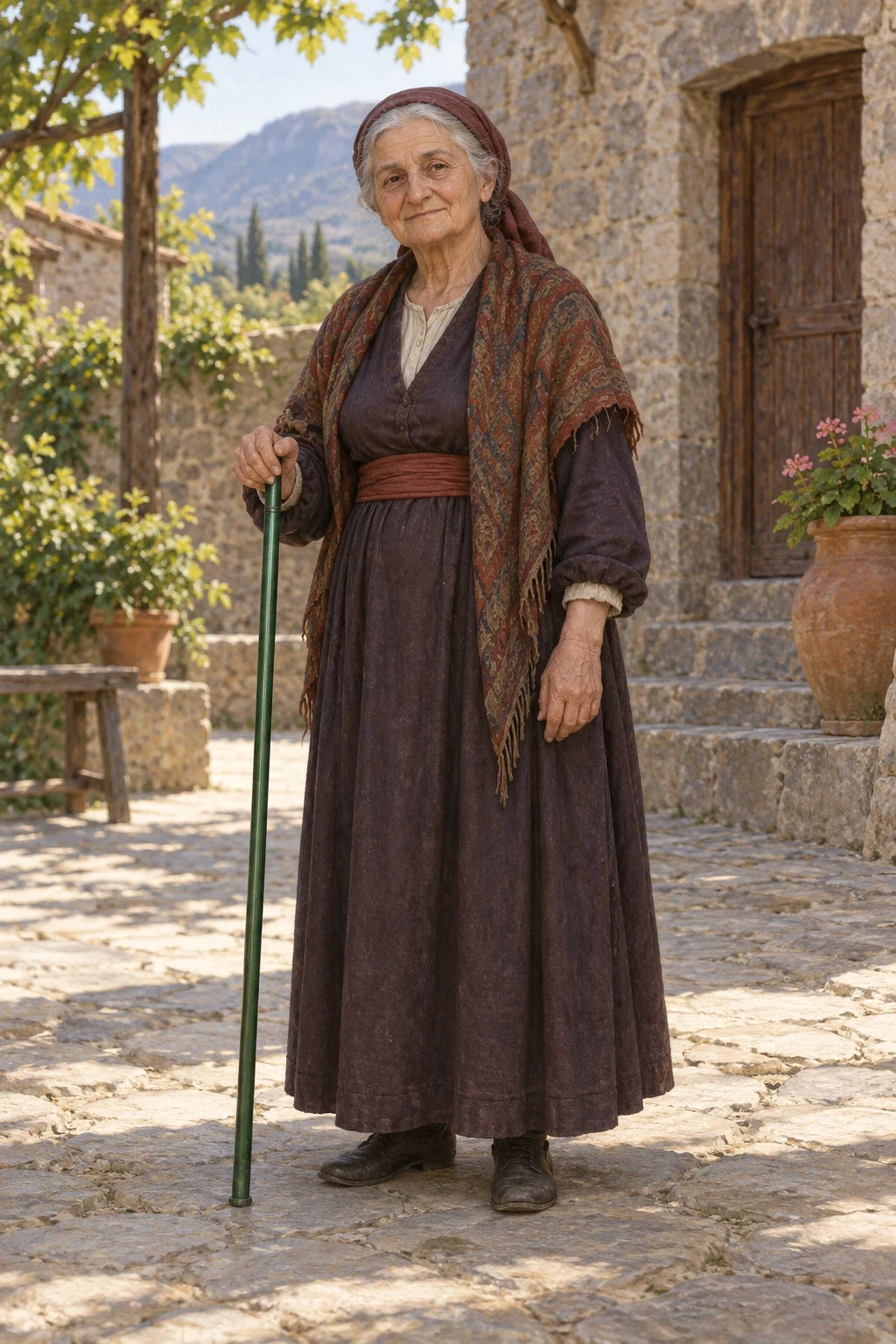
Portrayal of The Foster-Mother with the Green Steel Rod.
AI-generated portrayal from the historical narrative. Human appearance, clothing and courtyard are interpreted; the green steel rod is specified in the tale.
Overview
In Macler’s La canne d’acier, an old woman has adopted an orphan and supplied his food and clothes. He falls in with bad companions, and her hope that marriage will make him responsible fails: he beats his wife and child. The woman urges him to work and warns that she will turn him into a donkey. When he threatens to strike her as well, she hits him with a green steel rod and the transformation takes effect. Another man takes the donkey home and uses him to carry loads. The animal form lasts seven years, ending when its skin wears away and he becomes human again.
His return brings no change of conduct. After he resumes his abuse and threatens the woman again, she uses the same rod to turn him into a wolf. Neighbours and dogs drive him into the mountains. Seven years later he sheds that skin, returns home and begins beating his family once more. The third transformation makes him a black corbeau, which flies away calling. The French word is retained as a broad black-corvid description here rather than evidence for a scientifically identified bird species. The story does not show a third seven-year recovery.
The transformed man communicates his plight to his former companions, who approach the woman intending to strangle her. She first tries to advise them; when they refuse, she changes them into black corvids too. They join their companion in a band. The ending explains the birds’ bad reputation through the former men’s misconduct, an etiological conclusion within the tale rather than an account of real bird behaviour. The woman is neither named nor given a separate origin, lineage or permanent supernatural species. Her distinguishing power belongs to this particular domestic narrative and its green steel implement.
Origins & earliest records
Tale VIII in Macler’s 1905 French translation of Armenian collected tales; the footnote identifies Hamov Hodov, p. 187, as its antecedent.
Records & interpretation
Complete La canne d’acier, pp. 80-83, including all three transformations, companions’ threat and concluding bird explanation; complete preface and Addenda retained.
Selected bibliography
Documented works and useful reading. This is not a list of every appearance.
- 01
Contes arméniens
VIII, La canne d’acier, pp. 80-83; Armenian antecedent cited at p. 187. French translation and selected source context retained; no direct Armenian collation.
Family & connections
A source-supported family tree or inspiration record has not yet been compiled for this profile. Related reading below indicates a connection in subject matter, not a proven lineage or creative influence.
References
Sources supporting this profile. Linked pages have their own scope and editorial standards.
- Historical French translation of collected Armenian narrativesMacler, Contes arméniens (1905), original French textResearch access: 2026-10-18
Image credits
AI-generatedPortrayal of The Foster-Mother with the Green Steel Rod.
AI-generated portrayal from the historical narrative. Human appearance, clothing and courtyard are interpreted; the green steel rod is specified in the tale.