Simurgh
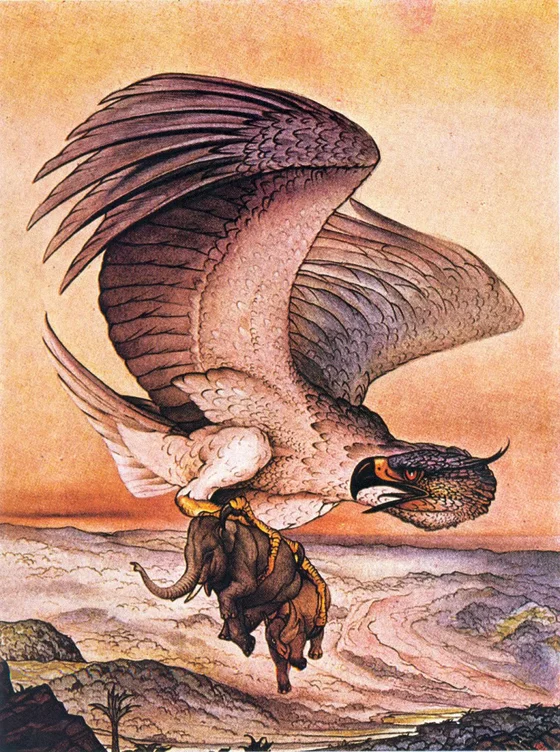
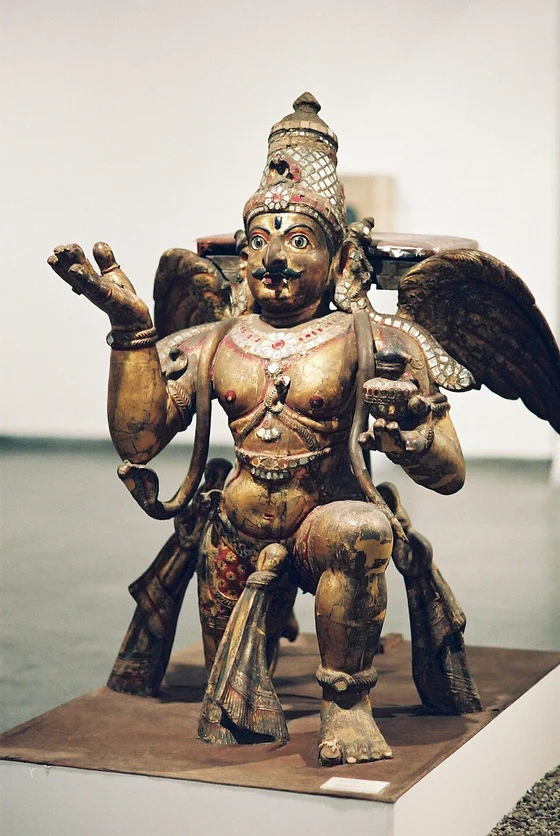
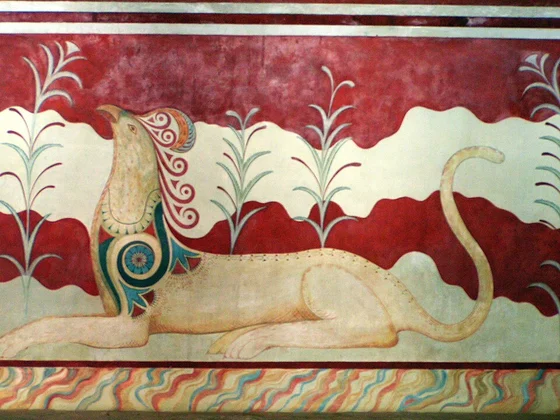
Image associated with the exact linked encyclopedia article; consult credited file description for its interpretation.
Overview
In Zāl’s story, the Simurgh cares for a child abandoned because of his unusual appearance. Her later assistance connects bird and human across generations, including help around Rostam’s birth and crisis. The relationship makes her a source of nurture and knowledge rather than merely a vast animal to be defeated.
Persian manuscript painters gave these episodes distinctive visual settings and rich avian forms. Other uses of the name, including spiritual allegory and an adversarial bird in another epic episode, should be examined separately. The Berlin museum’s illustrated account offers one route into the Zāl and Rostam material without implying that every Iranian bird tradition shares that exact biography or appearance.
A different protective encounter appears in the Bakhtiari section of D. L. R. and E. O. Lorimer’s Persian Tales, published in 1919. In “The Merchant of Isfahan and His Faithless Wife,” a young traveller rests beneath a chenar tree. He sees a dragon climbing toward a nest, throws a stone that kills it and falls asleep. The narrator explains that a dragon has eaten the Simurgh’s young in previous years. Their mother returns with food, mistakes the sleeping man for the recurring predator and fetches a large stone on her wing to kill him. Her chicks spread their wings over his head and explain his rescue. She discards the stone, feeds them and shades the traveller while he sleeps.
The grateful Simurgh offers him aid, then explains the danger awaiting him in Isfahan: the merchant whose secret he wishes to investigate kills those who hear it. She supplies a feather and tells him to request leave to pray on the roof after hearing the answer. Burning the feather will summon her. He climbs onto her wings, and the narrative makes their flight to the merchant’s castle nearly immediate. After hearing the merchant’s account, he follows the instructions, lights the feather and is carried away before his threatened execution.
She returns him to the foot of the tree and sends him onward to his own country, where he fulfils his marriage condition. This episode combines maternal protection, a dangerous initial mistake, repayment for a rescue, advice and a summoning feather. The earlier epic story of Zāl remains a distinct witness: the Lorimer traveller is unnamed and is not automatically identified as that epic child. The book labels the tale Bakhtiari, while this printed section gives no individual narrator’s name. Hilda Roberts’s listed illustration facing page 238 belongs to this retelling; its pixels have not been inspected here.
Origins & earliest records
Ferdowsi completed the Shāhnāmeh around 1010, drawing on earlier Iranian narrative material. That date marks an epic composition, not the beginning of every tradition behind the Simurgh. A surviving record dates its documentation, not the beginning of an oral tradition; earlier transmission cannot be timed precisely from this witness alone.
Records & interpretation
Epic text and illustrated manuscripts document the bird’s narrative relationships and visual interpretation. The paintings are evidence of literary reception; they do not establish zoological observations of the described being. This is evidence for cultural expression and recorded interpretation, rather than a zoological specimen or independently verified supernatural event.
Selected bibliography
Documented works and useful reading. This is not a list of every appearance.
- 01
Shāhnāmeh, the stories of Zāl and Rostam
Selected relevant primary or ethnographic work; the online source below is separate.
- 02
Persian Tales, Bakhtiari XXXVI: The Merchant of Isfahan and His Faithless Wife, pp. 236–243
Title page and complete original digitized OCR tale read; Hilda Roberts illustration listed but not visually inspected.
Family, evolution & connections
Simurgh and her nestlings - Lorimer XXXVI
The nest rescue and maternal address on pp. 237-238 of the complete 1919 English telling.
Scroll sideways to see all branches. With a keyboard, focus the tree and use the arrow keys.
- Simurgh (mother in this telling)
- Unnamed young birds in her nest (count unstated)
One maternal branch records the nestlings collectively. No father, offspring count, names or sexes are supplied. The human traveller is a rescuer and beneficiary, not another child. This Bakhtiari collected version remains distinct from the Shahnameh’s Zal episode.
The unnamed nestlings in Lorimer’s Bakhtiari XXXVI
The young birds explicitly address the Simurgh as mother after a traveller kills the dragon threatening their nest. Their count, names and father are unstated. The adult rewards the rescuer; he is not adopted as another nestling or identified with Zal.
Encyclopedia background
An additional attributed reference, separate from the editorial profile above.
Read the open encyclopedia overview
The simurgh (; Persian: سیمرغ; also spelled senmurv, simorgh, simorg, simurg, simoorg, simorq or simourv) is a benevolent bird in Iranian mythology and literature. It bears some similarities with mythological birds from different origins, such as the phoenix (Persian: ققنوس quqnūs) and the humā (Persian: هما). The figure can be found in all periods of Iranian art and literature and is also evident in the iconography of Georgia, medieval Armenia, the Eastern Roman Empire, and other regions that were within the realm of Persian cultural influence.
Text from Wikipedia contributors, “Simurgh”. CC BY-SA 4.0. Extracted introduction; formatting changed. Retrieved 5 October 2026. The source article may have changed since retrieval.
References
Sources supporting this profile. Linked pages have their own scope and editorial standards.
- MuseumMuseum of Islamic Art, Berlin: A painting from the ShahnamehResearch access: 2026-10-05
- Primary collected textLorimer 1919, complete Bakhtiari XXXVIResearch access: 2026-10-05
Image credits
Reference illustrationSimurgh
Image associated with the exact linked encyclopedia article; consult credited file description for its interpretation.