A sourced illustration has not yet been added. This gap is included in the coverage record.
Overview
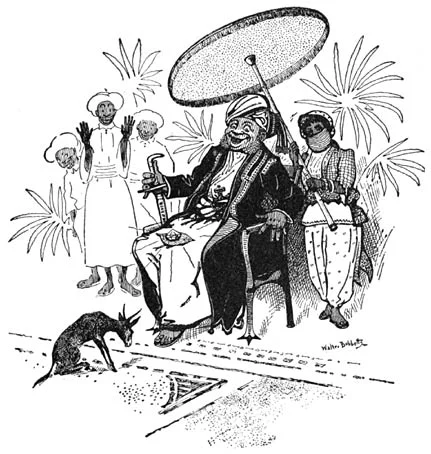
A gazelle seeking a grand home for its master reaches an imposing house occupied by an old woman. She warns that the town's owner is a wonderfully large snake, whose arrivals raise wind and dust like a storm. He comes every other day at noon, eats from the pots she prepares and then drinks before leaving. The snake possesses seven heads and a sword compared to lightning, and has overcome much stronger visitors. The gazelle nevertheless obtains the weapon and waits inside while the woman fears that the attempted challenge will kill them both.
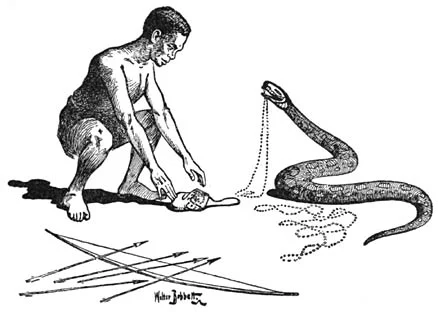
After eating, the snake smells an unfamiliar presence. The woman explains it as scent she has applied to herself, allowing the hidden fighter to keep its position near the doorway. As each head enters, the gazelle cuts it off. Only after repeated losses does the owner complain that someone has come to scratch him. When six heads have fallen, he unfolds his coils in rage and raises so much dust that the gazelle and woman cannot see each other. The seventh head is cut off as it enters, and the exhausted victor faints. After the woman revives it, she shows rooms holding wealth, provisions, servants and people long imprisoned, which become available to the gazelle's master.
Origins & earliest records
Steere's preface p. ix identifies Masazo, his cook and house steward, as the teller of Sultan Darai. The selected 1870 book prints Swahili and an English translation; no independent date or first origin is assigned to this embedded encounter. Bateman’s 1901 Zanzibar Tales, VII, Haamdaanee, pp. 99–151, names the corresponding seven-headed owner Neeoka Mkoo; its complete episode pp. 127–135 was separately read. This later witness is consolidated here, not counted as another serpent.
Records & interpretation
Complete snake encounter within Sultan Darai read in Wikisource and checked against the digitized 1870 bilingual volume, selected pp. 91-99. Seven heads, storm-like approach, doorway decapitation, coils and captive rooms are explicit. Full Bateman VII pp. 99–151 read, including corresponding snake scene127–135 and the later gazelle death/ingratitude ending. Same alternate-day noon visits, cook, unfamiliar scent, own sword and seven doorway severings support cross-edition consolidation. The cook’s claimed remote hearing remains her warning.
Selected bibliography
Documented works and useful reading. This is not a list of every appearance.
- 01
Swahili Tales - Sultan Darai
Selected snake encounter pp. 91-99; narrator credit preface p. ix.
- 02
Zanzibar Tales
VII, whole pp. 99–151; seven-headed serpent episode pp. 127–135, illness/burial/return ending pp. 139–151.
- 03
Zanzibar Tales: Told by Natives of the East Coast of Africa
Chicago: A. C. McClurg & Co., 1901; translated from Swahili by George W. Bateman. Title, copyright leaf and complete To My Readers pp. 5–9, dated 1 August 1901, independently read.
Family & connections
A source-supported family tree or inspiration record has not yet been compiled for this profile. Related reading below indicates a connection in subject matter, not a proven lineage or creative influence.
Located primary passages
Specific passages supporting details in this entry, grouped by their published witness.
Zanzibar Tales: Told by Natives of the East Coast of Africa
Chicago: A. C. McClurg & Co., 1901; translated from Swahili by George W. Bateman. Title, copyright leaf and complete To My Readers pp. 5–9, dated 1 August 1901, independently read.
- Neeoka Mkoo’s seven heads are severed.
VII, Haamdaanee, complete pp. 99–151; serpent encounter pp. 127–135
Narrators individually unnamed. Bateman’s provenance statement is a published claim, not independently verified transmission or independence from Steere; no original Swahili collation, medicinal claim or universal zoological assertion.
References
Sources supporting this profile. Linked pages have their own scope and editorial standards.
- Collected primary narrative in translationSultan Darai - seven-headed snake encounterResearch access: 2026-10-05
- Digitized primary editionSteere 1870 bilingual volume and prefaceResearch access: 2026-10-05
- Historical collected tale in English translationBateman 1901: complete Haamdaanee taleResearch access: 2026-10-05
Image credits
A sourced illustration has not yet been added. This gap is included in the coverage record.