A sourced illustration has not yet been added. This gap is included in the coverage record.
Overview
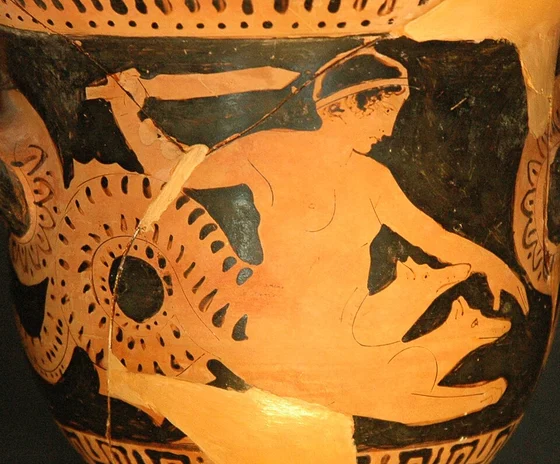
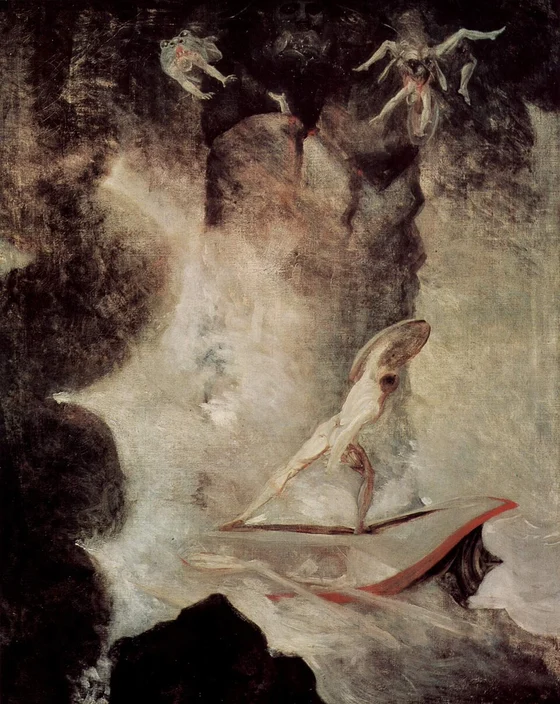
Aelian classifies the scolopendra among the largest sea monsters and reports a form alarming even when washed ashore. The account gives it conspicuous hairs extending from its nostrils and a flattened tail resembling a crayfish’s. Its upper body can appear above the water. These comparisons describe unfamiliar anatomy through more familiar animals and ships, rather than supplying a modern diagram of one securely identified species.
Rows of feet along its sides appear to row the creature through the sea, while its movement produces a gentle sound. Aelian attributes these observations to people knowledgeable about marine matters and states his confidence in their reports. That distinction preserves the passage’s chain of testimony. The name also belongs to modern centipede classification, but the shared word does not make this ship-sized marine account a biological description of that genus. Suggested whale explanations remain interpretations requiring evidence beyond the text.
Origins & earliest records
Aelian’s On Animals XIII.23, written around the early third century CE, supplies the selected account. The author reports marine experts rather than describing his own encounter with a captured specimen. This is an attestation of an imperial Greek written account, not a date for the first oral maritime story.
Records & interpretation
The inspected passage supports the ship comparison, nostril hairs, flattened tail and multiple rowing feet. It also identifies the reported observers and Aelian’s response to them. Such testimony is evidence for the written tradition; it does not independently verify a measured body, an identified species or every feature of the narration.
Selected bibliography
Documented works and useful reading. This is not a list of every appearance.
- 01
On Animals XIII.23
Selected primary passage inspected; publication and transmission dates are distinguished from oral origins.
Family & connections
A source-supported family tree or inspiration record has not yet been compiled for this profile. Related reading below indicates a connection in subject matter, not a proven lineage or creative influence.
Encyclopedia background
An additional attributed reference, separate from the editorial profile above.
Read the open encyclopedia overview
Sea monsters are beings from folklore believed to dwell in the sea and are often imagined to be of immense size. Marine monsters can take many forms, including sea dragons, sea serpents, or tentacled beasts. They can be slimy and scaly and are often pictured threatening ships or spouting jets of water. The definition of a "monster" is subjective; further, some sea monsters may have been based on scientifically accepted creatures, such as whales and types of giant and colossal squid.
Text from Wikipedia contributors, “Sea monster”. CC BY-SA 4.0. Extracted introduction; formatting changed. Retrieved 5 October 2026. The source article may have changed since retrieval.
References
Sources supporting this profile. Linked pages have their own scope and editorial standards.
- Primary textOn Animals XIII.23Research access: 2026-10-05
Image credits
A sourced illustration has not yet been added. This gap is included in the coverage record.