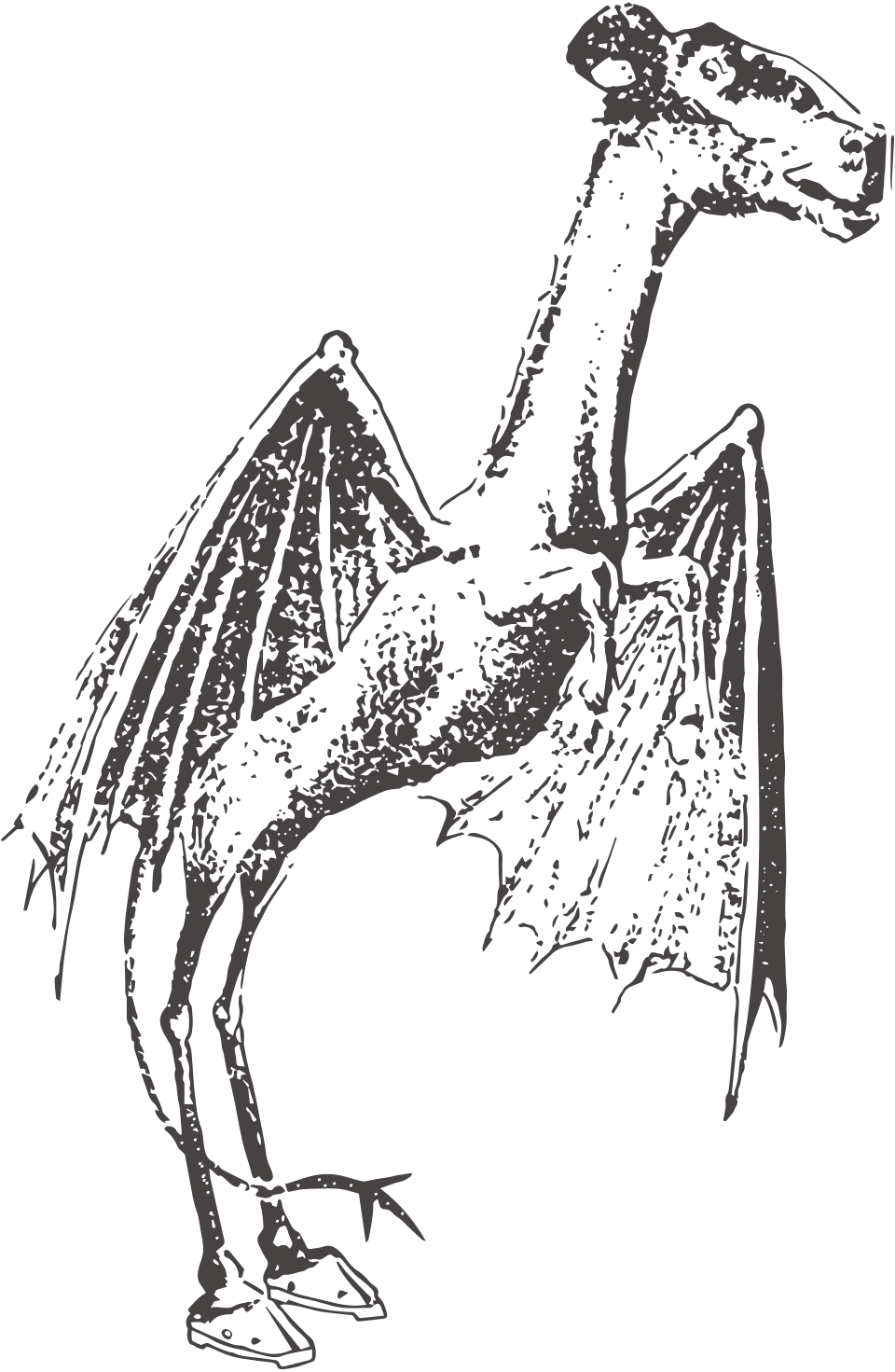
A sourced illustration has not yet been added. This gap is included in the coverage record.
Overview
Beckwith’s collection includes a nighttime encounter in which a traveler becomes caught between frightening beings. A note identifies Rolling Calf through fiery eyes, flames and a chain whose noise creates terror. These memorable sensory features distinguish the selected creature from an ordinary calf even when the familiar animal name is retained.
The account’s spoken rhythm and comic resolution show that a frightening being can participate in an entertaining story. The notes also place Rolling Calf within the broader duppy repertoire. It should therefore be read both as a locally meaningful supernatural presence and as a character in performed narratives, without imposing a single definitive backstory on every Jamaican version.
The complete 1924 sketch makes the order of events important. A traveler strikes a horse, the horse pursues him and he runs under a bridge, where he steps on Rolling Calf. The calf complains about being frightened rather than hurt. The horse likewise objects to being called a brute rather than to the blow itself. A collector’s footnote supplies the fiery eyes, flames issuing from the nostrils and terrifying chain rattle; those anatomical details are not delivered as the traveler’s own description in the spoken exchange.
Black Roadways records a markedly different appearance from George Parkes. His being resembles a hornless goat and may be black, white or spotted. A short chain hangs from a collar, the eyes glow red, and the tail curls over its back. One front foot resembles a horse’s hoof and the other a human foot; the hind feet are goat-like. Beckwith also reports its goat-like smell. This attributed mixed anatomy should not be silently replaced by a standard illustration of a large bull.
Beckwith then quotes or summarizes Banbury’s broader range of animal forms: cat, dog, hog, goat, horse and bull. In that account a brindled cat is especially dangerous, and the being can grow from a smaller animal’s size to that of a horse or bull. These are changes of supernatural appearance in a collector’s account. They do not supply species, fossil ancestry or a biological family tree connecting the named animals.
The author herself flags a possible combination of stories. Parkes describes the being fleeing, returning to the same spot and harming a person with its breath; Beckwith suspects he has combined Rolling Calf with Three-foot Horse. She does not erase that uncertainty. Her chapter says Rolling Calf fears the moon, whereas Three-foot Horse is associated with dangerous moonlit encounters. The contrast is evidence that the two figures should not automatically be treated as synonyms.
The chapter also preserves humorous moon encounters. In one, the fleeing calf falls into a brook and complains about a sprained foot; in another, it pleads with the moon not to fall on or trouble it. Such scenes sit beside accounts of serious danger. The figure can frighten travelers and also be frightened itself, which gives narrators different possibilities without requiring separate species for each tone.
For Beckwith’s contemporaries, the creature was understood as an animal form taken by particularly dangerous duppies. Her collected explanations associate that fate with several kinds of dead people and also describe an obeah practitioner directing one against somebody. It may inhabit cottonwood roots, bamboo, caves or abandoned houses, then follow sugar wagons for molasses or enter cattle pens. These are reported beliefs about origin, habitat and action, not verified accusations against living practitioners.
The same chapter explains rolling as a local expression for roaming, an explanation Beckwith says she was given. It cites earlier advice attributed to Rampini and Banbury concerning knives or whips, but their complete original discussions have not been independently examined for this expansion. The 1924 footnote and the 1929 composite chapter thus provide two located witnesses, with identifiable differences and acknowledged uncertainty, rather than an exhaustive account of every Jamaican telling.
Origins & earliest records
Directly inspected publication witnesses: the 1924 Jamaica Anansi Stories sketch VIII and footnote, and Black Roadways (1929), especially pp.99–101. Beckwith cites earlier writers, but those citations alone do not establish a verified first-ever attestation or the age of oral transmission.
Records & interpretation
Complete 1924 sketch and footnote, plus complete Black Roadways chapter VII, pp.88–103, read in digitized text. The Parkes anatomy, Banbury reports and Beckwith’s proposed conflation with Three-foot Horse are explicitly separated. Earlier source books remain indirect here; no zoological existence claim follows from these narratives.
Selected bibliography
Documented works and useful reading. This is not a list of every appearance.
- 01
Jamaica Anansi Stories, Duppy Stories VIII and note
Complete VIII and footnote read; the comic encounter and the collector’s anatomical note are distinguished.
- 02
Black Roadways: A Study of Jamaican Folk Life — Rolling-calf discussion
Focused discussion pp.99–101, read within complete chapter VII, pp.88–103. Earlier Banbury/Rampini material is known here through Beckwith.
Family & connections
A source-supported family tree or inspiration record has not yet been compiled for this profile. Related reading below indicates a connection in subject matter, not a proven lineage or creative influence.
References
Sources supporting this profile. Linked pages have their own scope and editorial standards.
- Primary textJamaica Anansi Stories, Duppy Stories VIII and noteResearch access: 2026-10-05
- Primary textBlack Roadways (1929): Rolling-calf, pp.99–101Research access: 2026-10-05
Image credits
A sourced illustration has not yet been added. This gap is included in the coverage record.