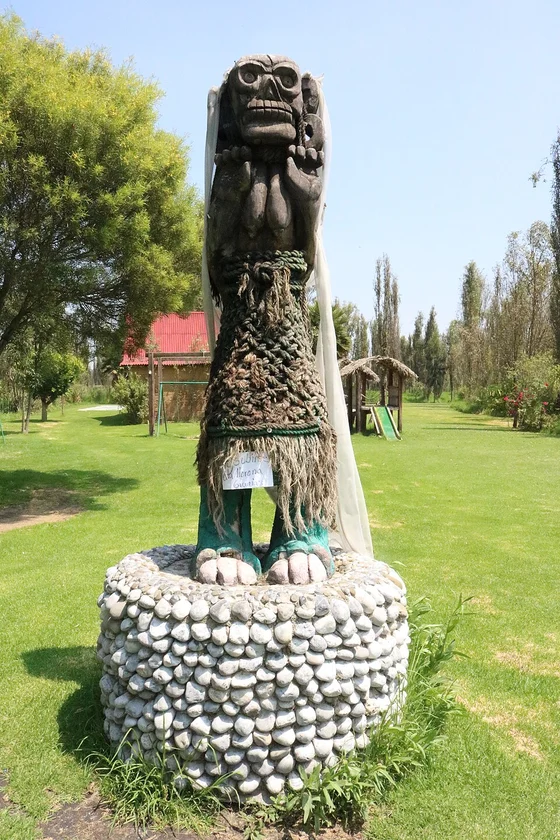
A sourced illustration has not yet been added. This gap is included in the coverage record.
Overview
Duppy is a living Jamaican term with meanings wider than one illustrated ghost. Beckwith’s collected stories include startling teeth, night travel and spirits whose actions can become comic as well as threatening. The encounter’s telling often matters as much as its purported event, especially when a misunderstanding or repeated line creates the climax.
Anansi collections can include duppy narratives because storytelling repertoires overlap rather than occupy sealed categories. That association does not make every ghost story an Anansi adventure. The selected texts preserve specific Jamaican voices through a collector’s transcription and editing; contemporary uses and beliefs deserve additional community interpretation instead of being defined entirely by an early twentieth-century anthology.
The five short Duppy Stories numbered IV–VIII in Jamaica Anansi Stories use different comic situations. In IV, a traveler mistakes fiery teeth for a light, is frightened away and unknowingly complains to the same being farther along the road. Its second grin repeats the shock. In V, two spirits taste molasses dripping from a sugar dray. The driver strikes with his whip and sends them fleeing with a protest about already having died once. The line is the story’s joke, not a general rule about how every duppy can be killed.
The next two sketches make spirits social rather than merely predatory. One pair warms itself at a fire while gossiping about Cubba’s marriage and clothes; another group admires the moon and argues about speaking correctly, unaware of a human listener outside. VIII brings in Rolling Calf and a pursuing horse. The traveler’s intrusion frightens the calf, while the horse complains about an insult. The beings themselves become offended and alarmed. These are distinct sketches within the collection, not episodes in the biography of one named ghost.
Black Roadways gives a broader account drawn from Beckwith’s four Jamaican visits between 1919 and 1924 and from earlier writers. Its foreword names Wilfrid Bonito, Simon Falconer and George Parkes as major contributors. The spirit-world chapter distinguishes dreams, waking apparitions and invisible presences. Some accounts describe the dead visiting their families without hostile intent; others emphasize mischievous or dangerous appearances. Beckwith challenges Banbury’s proposed derivation of duppy from door peep rather than accepting it as an established etymology.
The chapter associates appearances with cottonwood roots, bamboo clumps and nighttime roads, while also recording a midday period of activity. Parkes describes riders facing their horses’ tails. Other reports give the dead burial clothes or their familiar living appearance, with feet that fail to touch the ground, abrupt disappearance or an unusual voice serving as clues. Animal forms can recur ahead of a traveler after apparently being passed. These details are attributed reports collected together; they need not all describe the same apparition.
Household relations matter as much as appearance. Beckwith records warnings spoken before throwing water out at night, drinks left for family spirits and precautions about doorways. Some protective practices vary even among her contributors: one man wears red, while Parkes thinks that red attracts spirits and blue repels them. Rice or other small objects may delay a pursuing or entering spirit through counting. These are documented customs and explanations, not instructions whose supernatural effectiveness has been demonstrated.
A complete story supplied by an old headman at Flamstead concerns Robert Walker of Good Hope. A spirit impersonating his wife draws him toward dangerous ground. Dead relatives intervene twice; on the second occasion an older woman hides him in a stone hole while the spirits fight. Living neighbors rescue him, and a duppy-catcher later displays a bottle containing something like a fly. The teller insists that he witnessed parts of the affair. Beckwith prints that testimony and her explanatory inferences, which do not independently confirm that the wife-like figure or the protective dead were physically present.
Different explanations of the self also coexist. Wilfrid describes a good companion spirit and a troublesome one that wanders during sleep; old Hannah distinguishes the lingering shadow from both the body and the soul that goes to heaven. Sam Thompson supplies a drawing of an organized underground society seen in a dream. Beckwith explicitly does not know how widely that last idea is held. It therefore remains a named individual’s account, rather than a universal Jamaican underworld.
The historical volume frames its contributors through the racial and class hierarchies of its period. Its own foreword limits the population it tries to describe, even though some later statements generalize broadly. Reading the named testimony alongside those limits helps preserve Jamaican voices without adopting the collector’s judgments as the compendium’s categories. Contemporary interpretations, earlier publications cited by Beckwith and further regional testimony remain separate research work.
Origins & earliest records
The inspected witnesses are Beckwith’s Jamaica Anansi Stories (1924), Duppy Stories IV–VIII, and Black Roadways (1929), based on four visits between 1919 and 1924 and earlier printed accounts. These dates locate collection and publication; they do not establish the beginning of the term or the tradition.
Records & interpretation
Complete selected 1924 sketches IV–VIII and their Rolling Calf footnote read; complete Black Roadways foreword and chapter VII, pp.88–103, read in the digitized text. Named reports, dream narratives, jokes and the collector’s interpretations are distinguished. Earlier authorities cited in that chapter have not all been independently read.
Selected bibliography
Documented works and useful reading. This is not a list of every appearance.
- 01
Jamaica Anansi Stories, Duppy Stories
Selected printed pp.180–181: complete sketches IV–VIII and the Rolling Calf footnote read in transcription; no new narrator attribution inferred from inaccessible general notes.
- 02
Black Roadways: A Study of Jamaican Folk Life — The Spirit World
Complete chapter VII, printed pp.88–103, and foreword. Distinguishes collected testimony, earlier printed reports and author interpretation.
Family & connections
A source-supported family tree or inspiration record has not yet been compiled for this profile. Related reading below indicates a connection in subject matter, not a proven lineage or creative influence.
Encyclopedia background
An additional attributed reference, separate from the editorial profile above.
Read the open encyclopedia overview
Duppy is a word of African origin commonly used in various Caribbean Islands, including The Bahamas, Barbados and Jamaica, meaning ghost or spirit. The word is sometimes spelled duffy.
It is both singular and plural. Much of Caribbean folklore revolves around duppy. Duppy are generally regarded as malevolent spirits who bring misfortune and woe on those they set upon. They are said to mostly come out and haunt people at night, and people from around the islands claim to have seen them. The "Rolling Calf" (a scary creature said to have chains around its body), "Three footed horse", and "Ol' Hige" are examples of the more malicious spirits.
In many of the islands of the Lesser Antilles, duppy are known as jumbies. Barbados also uses the word duppy and it holds the same meaning as it does in Jamaica. It is also used in Multicultural London English, meaning to "kill" someone/something.
Text from Wikipedia contributors, “Duppy”. CC BY-SA 4.0. Extracted introduction; formatting changed. Retrieved 5 October 2026. The source article may have changed since retrieval.
References
Sources supporting this profile. Linked pages have their own scope and editorial standards.
- Primary textJamaica Anansi Stories, Duppy StoriesResearch access: 2026-10-05
- Primary textBlack Roadways (1929): foreword and complete chapter VIIResearch access: 2026-10-05
Image credits
A sourced illustration has not yet been added. This gap is included in the coverage record.