Jersey Devil
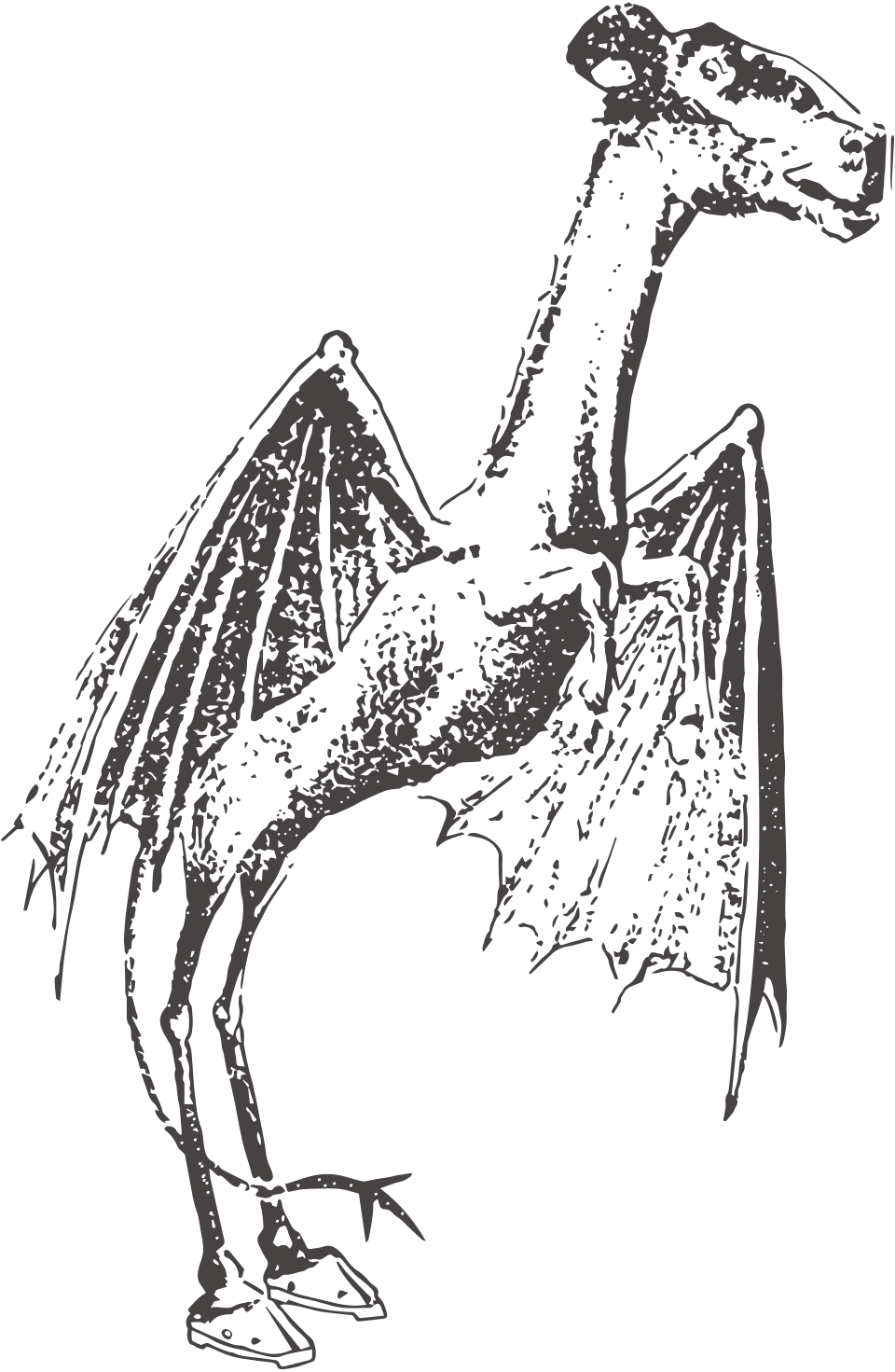
Image associated with the exact linked encyclopedia article; consult credited file description for its interpretation.
Overview
The best-known account makes the creature the unwanted thirteenth child of Mother Leeds, transformed at birth and escaping into the darkness. Descriptions commonly combine hooves, a horse-like head and wings, but witnesses and retellings disagree. The Pinelands Commission presents the legend as a regional story rather than a fixed anatomical description.
Newspaper scares, local storytelling and sports or tourism imagery have extended its public life. Some modern retellings even make the being a guardian of the Pinelands. That shift shows why the creature should be understood through changing narrative uses; a story set in 1735 does not by itself establish that the legend was written or told in precisely that form in 1735.
Origins & earliest records
The Mother Leeds story places events in the colonial period, while later reports and publications document circulation. A legendary event date must be distinguished from the date of its first surviving attestation. A surviving record dates its documentation, not the beginning of an oral tradition; earlier transmission cannot be timed precisely from this witness alone.
Records & interpretation
The commission’s public account documents motifs and variant depictions, with selected folklore studies providing further history. Reports of a frightening encounter are cultural evidence and require independent evaluation before any zoological conclusion. This is evidence for cultural expression and recorded interpretation, rather than a zoological specimen or independently verified supernatural event.
Selected bibliography
Documented works and useful reading. This is not a list of every appearance.
- 01
The Jersey Devil
Selected relevant primary or ethnographic work; the online source below is separate.
Family, evolution & connections
Legend family: Mother Leeds and the Jersey Devil
Only the mother and thirteenth-child relationship in the Commission’s retelling.
Scroll sideways to see all branches. With a keyboard, focus the tree and use the arrow keys.
- Mother Leeds
Explicit parentage in the named source witness. The other children are not individually described here and are omitted. Father and historical identities are not reconstructed. A legend’s family is distinct from verified human genealogy.
Mother Leeds (Pinelands Commission version)
The Commission’s educational retelling identifies the creature as Mother Leeds’s thirteenth child. It does not name a father. This is a narrated origin in one version, not a verified historical birth or a family tree of the actual Leeds family.
Encyclopedia background
An additional attributed reference, separate from the editorial profile above.
Read the open encyclopedia overview
In South Jersey and Philadelphia folklore in the United States, the Jersey Devil, also known as the Leeds Devil, is a legendary creature, or cryptid, said to inhabit the forests of the New Jersey Pine Barrens in South Jersey. The creature is often described as a flying biped with hooves, but there are many variations. The common description is that of a bipedal kangaroo-like or wyvern-like creature with a horse- or goat-like head, leathery bat-like wings, horns, small arms with clawed hands, legs with cloven hooves, and a forked or barbed tail. It is also said that it has a strange elongated body and a thick tail. It has been reported to move quickly and is often described as emitting a high-pitched "blood-curdling scream".
Text from Wikipedia contributors, “Jersey Devil”. CC BY-SA 4.0. Extracted introduction; formatting changed. Retrieved 5 October 2026. The source article may have changed since retrieval.
References
Sources supporting this profile. Linked pages have their own scope and editorial standards.
- ReferenceNew Jersey Pinelands Commission: The Legend of the Jersey DevilResearch access: 2026-10-05
Image credits
Reference illustrationJersey Devil
Image associated with the exact linked encyclopedia article; consult credited file description for its interpretation.