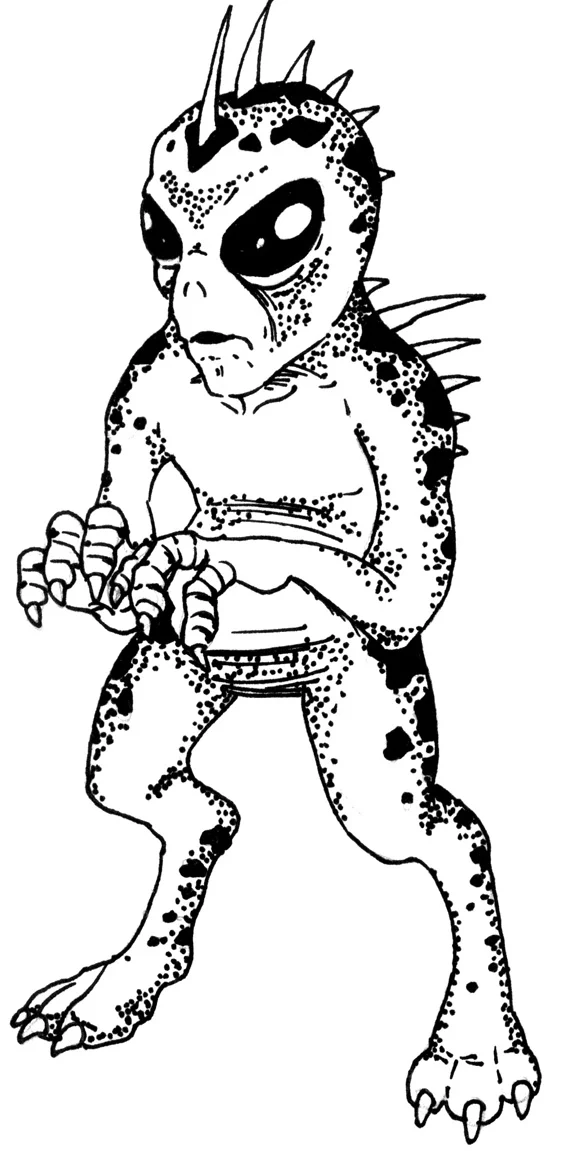
Chupacabra illustration by LeCire
Modern artistic interpretation of the reported cryptid, not a zoological photograph. Creator released the illustration into the public domain worldwide on the original file record.
Overview
Early widely publicized Puerto Rican descriptions portrayed a strange upright or spiny creature accused of attacking livestock. Later mainland accounts often identified a hairless canid as the same being. That shift matters: a modern photograph of an unusual-looking dog does not match every early narrative simply because both are given the name chupacabra.
Investigators have examined eyewitness memory, media influence and ordinary animal explanations, while storytellers and artists have developed a lively contemporary legend. An entry should separate the history of reporting from claims about livestock injuries or the identity of a recovered carcass. The legend’s cultural reality is clear even when a particular supernatural or unknown-species explanation is unsupported.
Origins & earliest records
Well-documented modern reporting centers on Puerto Rico in 1995, with later geographical and visual changes. Claims of an unchanged centuries-old chupacabra are not established by the selected investigation. A surviving record dates its documentation, not the beginning of an oral tradition; earlier transmission cannot be timed precisely from this witness alone.
Records & interpretation
Radford’s investigation documents interviews, media and changing descriptions. Physical animal remains require independent veterinary identification; a legendary label or reported bloodlessness does not establish a new species. This is evidence for cultural expression and recorded interpretation, rather than a zoological specimen or independently verified supernatural event.
Selected bibliography
Documented works and useful reading. This is not a list of every appearance.
- 01
Tracking the Chupacabra: The Vampire Beast in Fact, Fiction, and Folklore
Selected relevant primary or ethnographic work; the online source below is separate.
Family & connections
A source-supported family tree or inspiration record has not yet been compiled for this profile. Related reading below indicates a connection in subject matter, not a proven lineage or creative influence.
Encyclopedia background
An additional attributed reference, separate from the editorial profile above.
Read the open encyclopedia overview
The chupacabra or chupacabras (Spanish pronunciation: [tʃupaˈkaβɾas], literally meaning 'goat-sucker', from Spanish: chupa, 'sucks', and cabras, 'goats') is a legendary creature, or cryptid, in the folklore of parts of the Americas. It is said to prey on livestock, particularly goats, although reports also attribute attacks to sheep, chickens and other domesticated animals. According to accounts, the chupacabra kills its victims by puncturing the neck and consuming their blood, a characteristic that gave rise to its enduring association with vampirism.
Descriptions of the creature vary considerably by region. In Puerto Rico and much of Hispanic America, it is commonly portrayed as reptilian or extraterrestrial-looking, about the size of a small bear, and with a distinctive row of spines extending from the neck to the base of the tail. In contrast, reports from the Southwestern United States typically describe the creature as a hairless, canine animal with pronounced fangs.
The first widely publicized sightings and descriptions of the chupacabra emerged in Puerto Rico in 1995. Since then, alleged encounters have been reported throughout the Americas, ranging from Maine to Chile, as well as in countries outside the region, including Russia and the Philippines. However, these reports remain anecdotal and have not been supported by verifiable evidence. Investigations of purported sightings in northern Mexico and the Southern United States have instead identified the animals involved as canids afflicted by severe mange.
Text from Wikipedia contributors, “Chupacabra”. CC BY-SA 4.0. Extracted introduction; formatting changed. Retrieved 5 October 2026. The source article may have changed since retrieval.
References
Sources supporting this profile. Linked pages have their own scope and editorial standards.
- ReferenceBenjamin Radford: Slaying the VampireResearch access: 2026-10-05
Image credits
Exact subjectChupacabra illustration by LeCire
Modern artistic interpretation of the reported cryptid, not a zoological photograph. Creator released the illustration into the public domain worldwide on the original file record.