Raven (Haida)
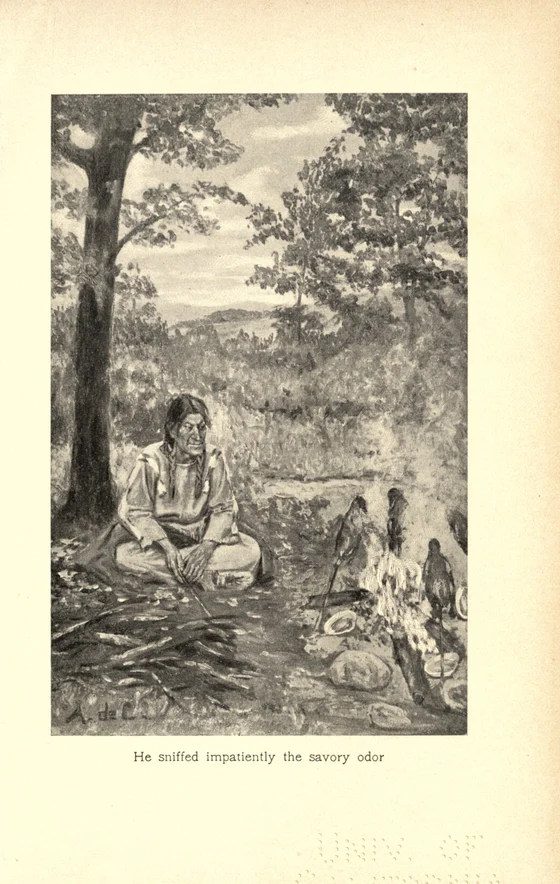
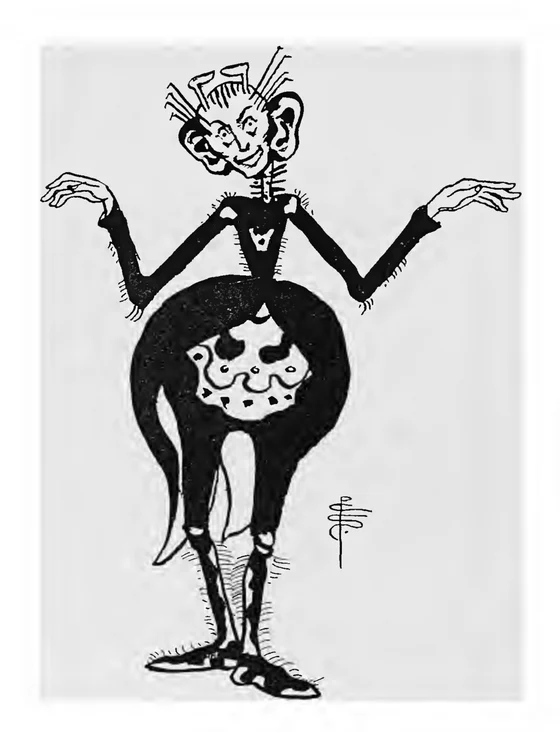
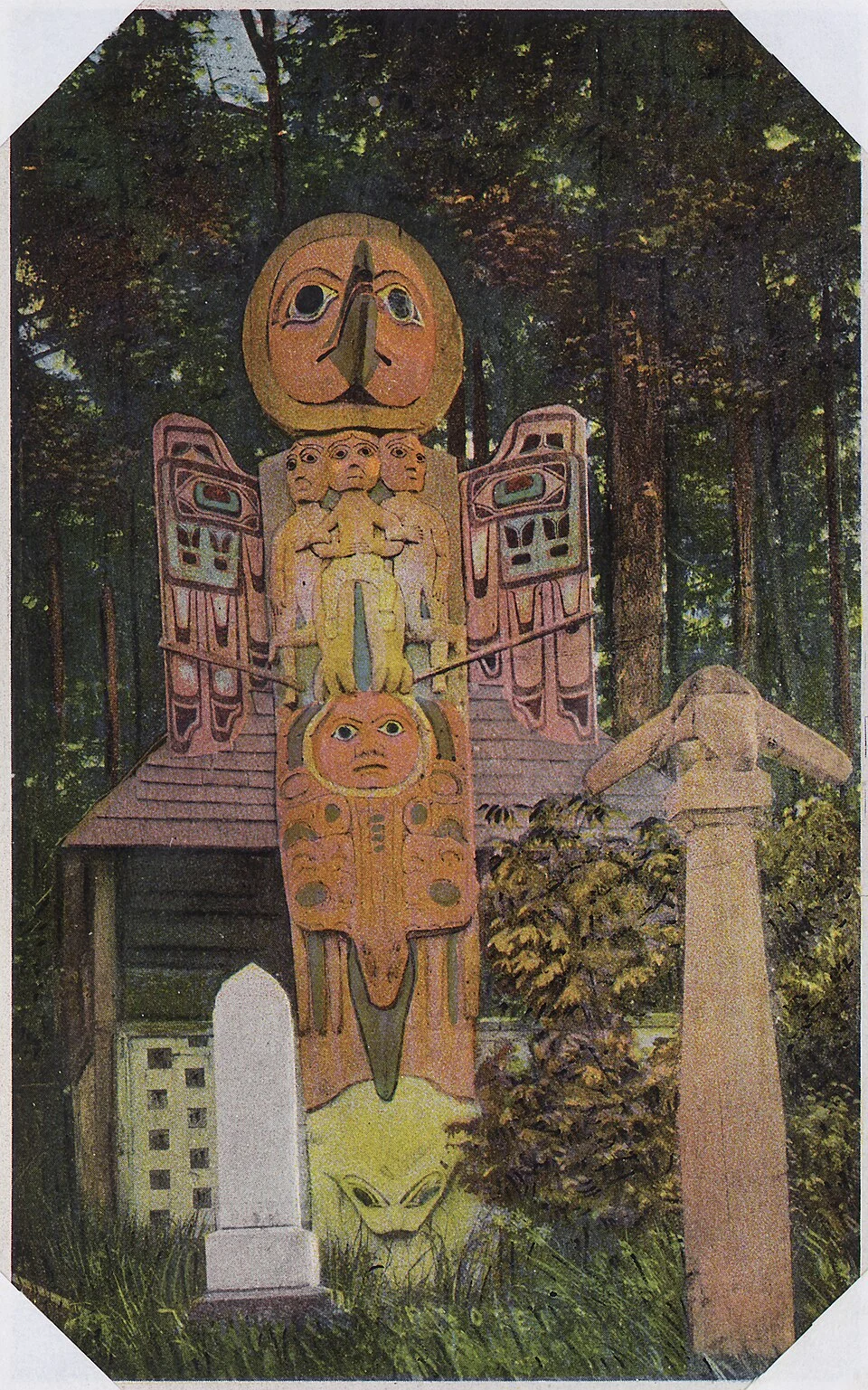
Image associated with the exact linked encyclopedia article; consult credited file description for its interpretation.
Overview
Raven is more than the ordinary bird in Haida narrative. He acts within social relationships, makes consequential changes and can pursue his own appetite with startling ingenuity. The tension between world-changing acts and self-interested behavior gives individual stories a range that the single English label trickster cannot completely capture.
Swanton’s Skidegate collection preserves named narratives and the work of Haida storytellers through translation. It should be read with attention to who told each account and to the limitations of the collector’s presentation. Publicly circulated stories offer a route into the tradition, but a printed anthology does not authorize access to every family-owned account or ceremonial context.
The opening of Raven Traveling places him above a flooded world, searching for somewhere to settle. The printed text itself signals changes of narrator: a Loon and Nankîlslas episode supplied by Job Moody interrupts the main telling before John Sky’s account resumes. Raven subsequently enters the sky country and slips into the skin of a chief’s daughter’s child. His concealed night journeys explain a disturbing mystery there: he has been eating the eyes of sleeping people. Half-Rock Woman watches him, reveals the deception and brings about his expulsion. He is lowered from the sky in a cradle rather than simply flying down as an ordinary bird.
A Grebe next directs him to an old man beneath the sea. The descent uses kelp and a two-headed stone pole. Inside nested boxes Raven sees objects with different colors and appearances, accompanied by an ambiguous declaration identifying one with himself. The old man provides objects and instructions connected with the emergence of land and vegetation. The order in the instructions and the subsequent performance does not line up neatly; Swanton’s note also comments on the order. This edition therefore supports a world-making episode with a textual complication, rather than one confidently reconstructed sequence for every Haida telling.
Appetite immediately complicates those transformations. Raven arranges a salmon-catching barrier but falls asleep. Crows eat his catch and put salmon remains between his teeth, so that he believes their claim that he has already eaten. When he spits at them, their previously white plumage becomes black. The episode makes the color change a consequence of a particular quarrel. It does not state a biological relationship between Raven and the crows, or explain the ancestry of all modern corvid species.
The Beaver household sequence begins with another deception: Raven presents himself as bereaved and receives food and shelter. Salmon, berries and meat appear from behind a screen, where he discovers a lake, a house and a fish trap. While the household is away, he rolls up the lake and carries it with the structures under his arm. The beavers pursue him and gnaw through successive trees in which he takes refuge. Their pursuit finally ends when they decide to obtain another lake. Raven unrolls his stolen lake inland; he retains the house and fish trap to teach their construction to people.
A later water episode uses a different object and partner. Raven frightens Eagle away from a basket of water with a branch, steals the basket and takes flight. Their feather clothing is explicitly part of the action. Water spills during Eagle’s pursuit and becomes salmon streams; Raven distributes what remains, including a lake at the head of the Skeena. This basket theft follows the Beaver lake episode, but the objects and actors remain separate. Swanton’s accompanying note discusses the story-name used for Eagle and a counterpart in a Masset telling, showing why names cannot simply be transferred between regional versions.
For another theft Raven takes the form of a small needle at a drinking place. A chief’s daughter swallows it and becomes pregnant. The resulting child repeatedly cries for access to a box containing the light or moon, and for an enlarged smoke hole. Once he obtains what he wants, he escapes through that opening with the light. This birth is distinct from his earlier entry into an already existing child’s skin in the sky village; combining them would erase two different transformations within the printed sequence.
The intervening food episodes include a deception involving Cormorant, a journey to the owner of eulachon and their distribution at the Nass. They return the narrative to Raven’s recurring interest in obtaining food. At the end of the selected opening sequence, he bargains with fishermen by showing them a little light. A dog disputes how much moonlight is needed. Raven chews and spits fragments into the sky, then breaks the moon and throws a half upward; the text explicitly connects this action with the sun as well. Its own sequence of gestures is retained without supplying an unmentioned scientific explanation for the celestial bodies.
Swanton’s introductory account dates his Skidegate work to the winter of 1900–1901 and identifies Henry Moody as interpreter. The compilation note to Raven Traveling names John Sky of the People born at Skedans as the principal teller, Walter McGregor as the source of a substantial west-coast section, and additional contributors Abraham, Tom Stevens and Job Moody. A separately appended version associated with Charles Edenshaw and Franz Boas has its own transmission history. These names describe the making of a composite printed chapter; they are not a single collective narrator, and the appended version is outside the detailed reading summarized here.
Origins & earliest records
Specific witness: John R. Swanton’s 1905 Bureau of American Ethnology Bulletin 29, based on work at Skidegate in winter 1900–1901. The book names Haida narrators and interpreter Henry Moody. This dates a collection and its publication, not the beginning of Raven traditions.
Records & interpretation
Detailed reading covers the introduction, pp.5–6; the opening Raven Traveling sequence, pp.110–118, through the celestial-body episode; relevant notes; and the chapter’s compilation/provenance note. The complete long Raven cycle and appended Edenshaw version have not been exhaustively read for this expansion. This is evidence for attributed narratives, not independently verified supernatural events or zoological behavior.
Selected bibliography
Documented works and useful reading. This is not a list of every appearance.
- 01
Haida Texts and Myths, Skidegate Dialect
Selected primary witness; not an exhaustive bibliography.
- 02
Haida Texts and Myths — Raven Traveling, opening sequence
Detailed scope pp.110–118, through the celestial-body episode. This is a located part of a much longer composite chapter.
- 03
Haida Texts and Myths — introduction and Raven compilation notes
Introduction pp.5–6 and chapter provenance pp.146–147; consulted for fieldwork, interpreter and narrator attribution, not as another independent oral telling.
Family, evolution & connections
Narrative adoptive family: Qîñgi in Raven Traveling
The adoption announced on page 123 and the ensuing father references on pages 124–125.
Scroll sideways to see all branches. With a keyboard, focus the tree and use the arrow keys.
- Qîñgi (adoptive father)
Explicit adoption plus narrator and character identification of Qîñgi as father. Adoptive relationship only. The earlier already-born child whose skin Raven enters is not treated as Raven’s biological birth. Other episodes, names and tellings are not harmonized. Historical transcription follows Swanton’s selected witness; contemporary Haida authority is not displaced by this collector edition.
Qîñgi (adoptive father in Raven Traveling)
The protagonist announces that Qîñgi will adopt him; the ensuing episode repeatedly calls Qîñgi his father. The tree therefore records adoption in this telling. It does not merge the earlier occupied-child-skin household with a biological Raven origin.
Flood-tide-woman (occupied-child household in Raven Traveling)
Raven enters the skin of an already-born child. The subsequent household calls Flood-tide-woman the boy’s mother. That narrative role is preserved without claiming she biologically gave birth to Raven or equating all Raven birth episodes.
Great-breakers (household uncle in Raven Traveling)
Flood-tide-woman is stated to be Great-breakers’s sister; he calls the accompanying boy his nephew. Because Raven has occupied a child’s skin, this is an episode-specific household relationship, not proof of his biological ancestry.
References
Sources supporting this profile. Linked pages have their own scope and editorial standards.
- Primary textHaida Texts and Myths, Skidegate DialectResearch access: 2026-10-05
Image credits
Reference illustrationRaven (Haida)
Image associated with the exact linked encyclopedia article; consult credited file description for its interpretation.