Qilin
Image associated with the exact linked encyclopedia article; consult credited file description for its interpretation.
Overview
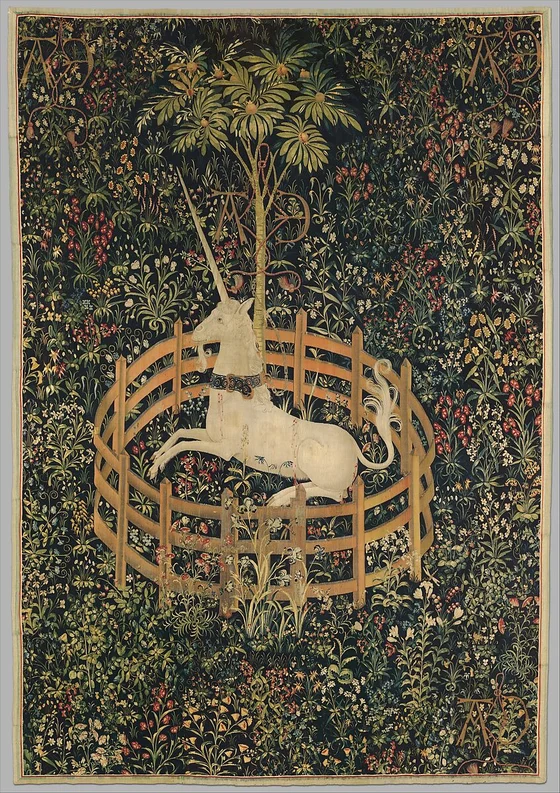
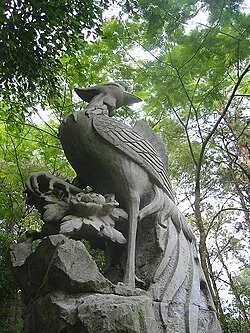
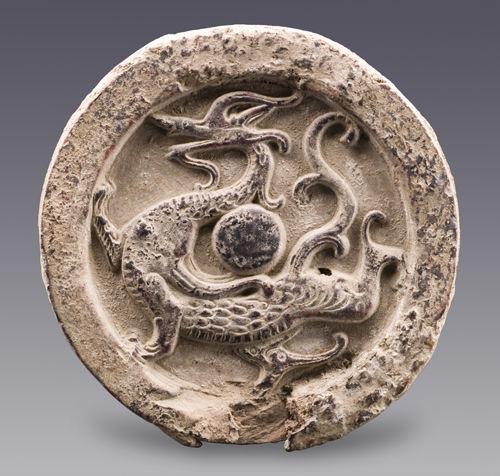
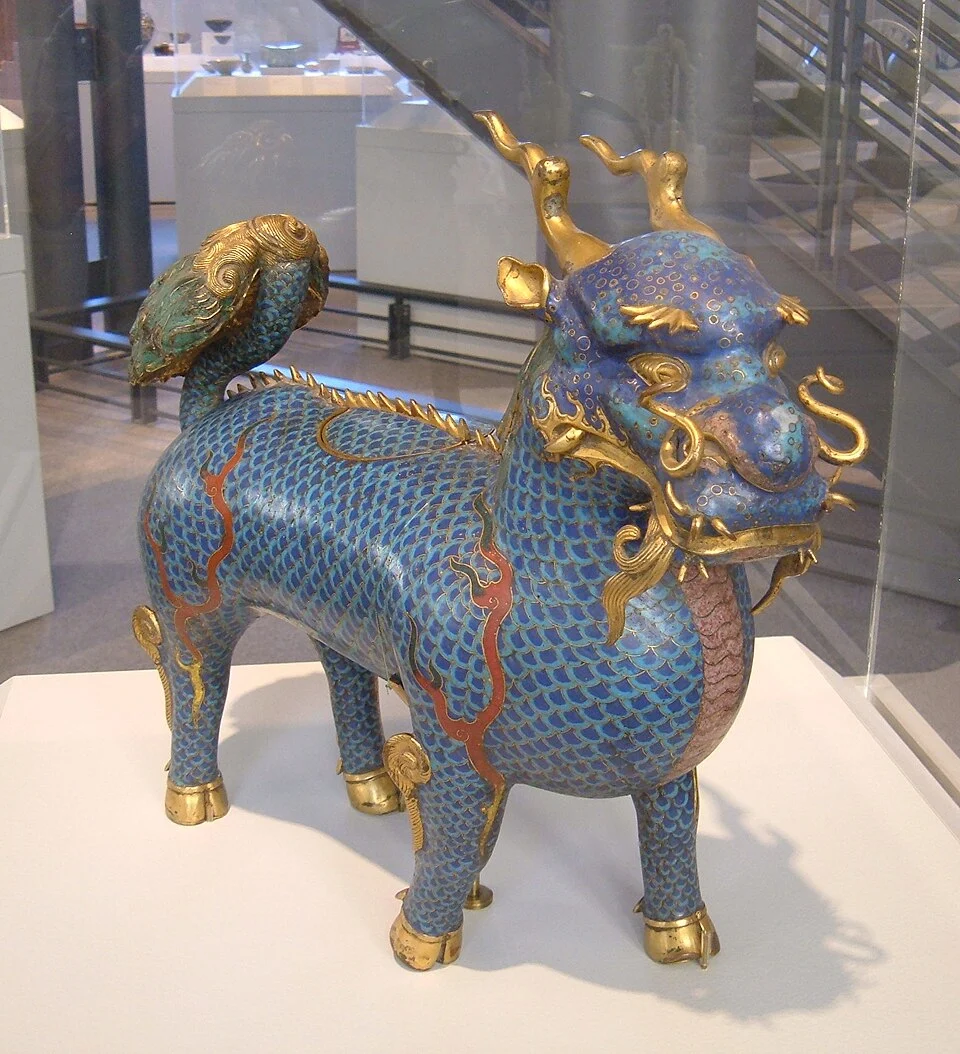
Qilin representations vary, combining features associated with deer, hooves, horns, scales or a dragonlike head. The creature’s importance often rests on the exceptional circumstances of its appearance. Calling it a Chinese unicorn can help an unfamiliar reader recognize rarity, but that comparison hides differences in appearance, moral associations and history.
The arrival of a giraffe at the Ming court produced a famous interpretation through the language of qilin. This is a documented encounter between a real animal and an existing auspicious category, not proof that giraffes originated every qilin story. The episode shows how court politics, wonder and visual interpretation can converge around a traditional being.
The Met’s Giraffe with Two Keepers, object 47.18.21, illustrates the later life of that court interpretation. Its catalog identifies an anonymous Qing-dynasty painting on silk, not the original 1414 presentation scene. The museum connects the Bengal gift to Yongle with court praise interpreting the giraffe as an auspicious qilin and an emblem of diplomatic success. It describes changes in this later version: Shen Du’s celebratory inscription is omitted, the animal’s spots become geometric hexagons, and the keepers are altered. Those differences make the painting useful for comparing transmission and visual revision, rather than treating it as an unmodified eyewitness image. The history concerns a real giraffe interpreted through an existing cultural category; it does not identify all qilin narratives with giraffes.
A Korean material witness gives a different setting. The National Museum of Korea identifies Deoksu 3063, a Goryeo celadon incense burner 17.6 cm high, as having a girin ornament on its lid. The catalogue places it among burners using both actual animals and composite creatures as finials. Citing the Gaoli tujing, it connects animal-lidded incense burners with official palace rites. That citation concerns the class of ceremonial objects; it does not independently prove this particular burner was used in a named ceremony. The regional girin label and ceramic function remain explicit alongside the Chinese painting witness.
Origins & earliest records
The Classic of Poetry contains an early lin reference, while later texts and images develop the being’s portrayal. The Ming giraffe episode is a later historical interpretation, not an origin date. A surviving record dates its documentation, not the beginning of an oral tradition; earlier transmission cannot be timed precisely from this witness alone.
Records & interpretation
The Met’s scholarly study examines actual art and documentary evidence about a giraffe interpreted as qilin. The real giraffe and the auspicious being are related interpretively but remain distinct claims. This is evidence for cultural expression and recorded interpretation, rather than a zoological specimen or independently verified supernatural event. The complete National Museum of Korea Deoksu 3063 record was read; catalogue interpretation distinguished from direct Gaoli tujing collation.
Selected bibliography
Documented works and useful reading. This is not a list of every appearance.
- 01
Classic of Poetry, Lin zhi zhi
Selected relevant primary or ethnographic work; the online source below is separate.
- 02
Celadon Incense Burner with Girin Decoration, Deoksu 3063
Catalogue read; Gaoli tujing citation mediated through museum. No image reuse rights or unseen anatomical details inferred.
Family, evolution & connections
Giraffe
The Met explains that the giraffe presented to the Yongle emperor in 1414 was associated with the auspicious qilin, and that giraffe imagery influenced rank-badge design. This is a documented historical identification, not proof that the entire qilin tradition began with giraffes. Earlier mythical identities and later artistic versions remain separately attributable.
Encyclopedia background
An additional attributed reference, separate from the editorial profile above.
Read the open encyclopedia overview
The qilin (English: chee-LIN; Chinese: 麒麟; pinyin: qílín) is a legendary hooved chimerical creature that appears in Chinese mythology, and is said to appear with the imminent arrival or death of a sage or illustrious ruler. Qilin are a specific type of the lin mythological family of one-horned beasts. The qilin also appears in the mythologies of other Chinese-influenced cultures.
Text from Wikipedia contributors, “Qilin”. CC BY-SA 4.0. Extracted introduction; formatting changed. Retrieved 5 October 2026. The source article may have changed since retrieval.
References
Sources supporting this profile. Linked pages have their own scope and editorial standards.
- MuseumThe Met: The Giraffe as the Mythical Qilin in Chinese ArtResearch access: 2026-10-05
- Museum / primary object recordMetropolitan Museum: Giraffe with Two Keepers, Qing dynasty,47.18.21Research access: 2026-10-05
- Museum / primary object recordNational Museum of Korea, Celadon Incense Burner with Girin Decoration, Deoksu 3063Research access: 2026-10-05
Image credits
Reference illustrationQilin
Image associated with the exact linked encyclopedia article; consult credited file description for its interpretation.