Patupaiarehe
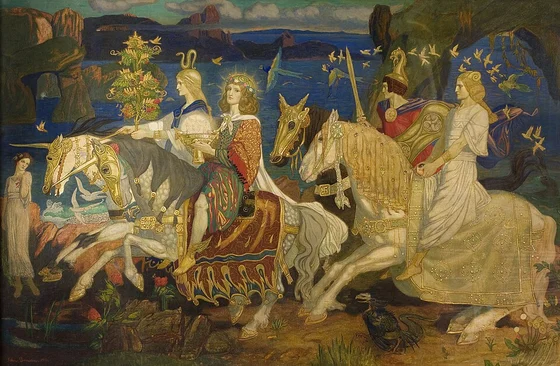
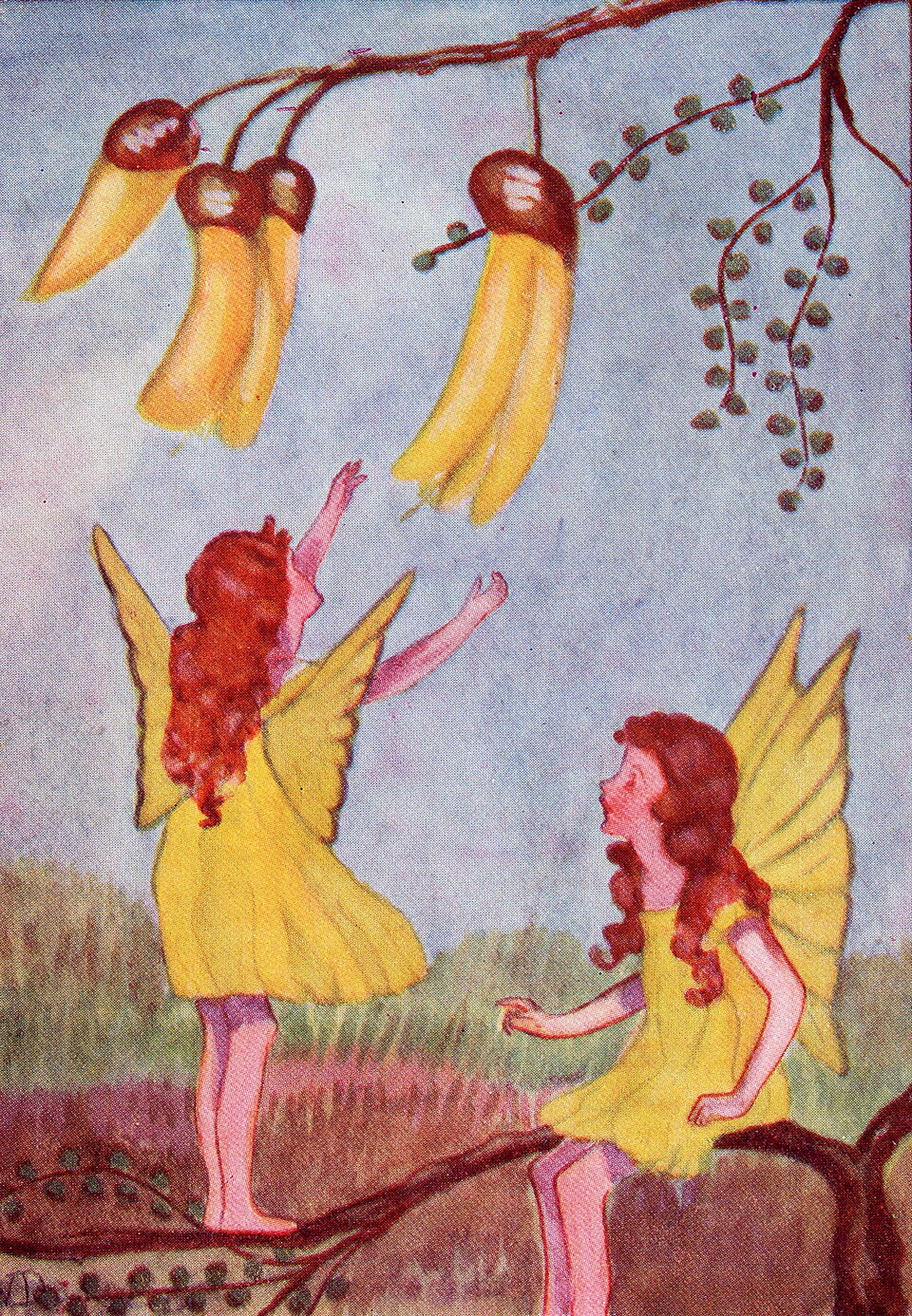
Image associated with the exact linked encyclopedia article; consult credited file description for its interpretation.
Overview
Public Māori accounts place patupaiarehe in forests and on mist-covered heights, but Martin Wikaira distinguishes the descriptions of different communities. Tūhoe accounts describe small beings; Whanganui stories describe giants, while other traditions give them human stature. Mohi Tūrei of Ngāti Porou described varied skin colours. Their fair or reddish hair and changing descriptions belong to supernatural narratives, rather than evidence of biological ancestry. Some settlements are made from mist, others from supplejack vine.
Wikaira cites the Ngāti Maru elder Hoani Nahe’s 1894 recollection of three named groups: Ngāti Kura, Ngāti Korakorako and Ngāti Tūrehu. Kinship, named chiefs, dwellings and territorial relationships give the beings a social presence. Accounts associate them with raw forest foods, flax-stalk canoes, flax clothing and flute playing; cooked food is offensive to them. They are active at twilight, at night or under protective mist. These details are selected attributed accounts, rather than one uniform description across Māori traditions. The English comparison fairy only approximates their supernatural identity.
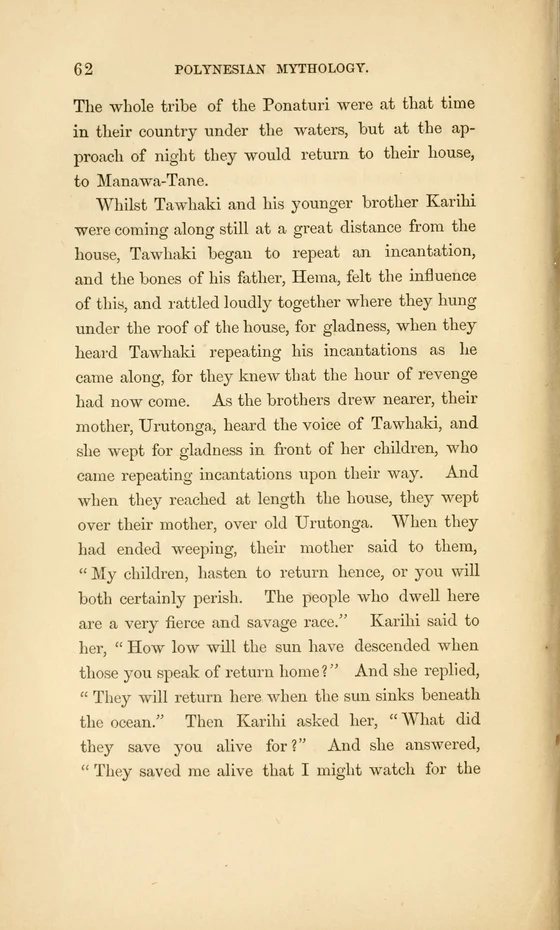
Grey’s Kahukura narrative places a fishing party at Rangiaowhia. Kahukura detects nocturnal visitors from discarded fish entrails and unusual traces, returns at night and joins their haul unnoticed because his fair complexion resembles theirs. He deliberately delays the company with slipping fish strings until daylight reveals his human face. They flee, abandoning a rush net and canoes made from flax stems. He uses the net as a pattern and teaches its stitch to his children. In this account the dawn exposes the intruder and prompts flight; it does not kill the community as daylight does the Ponaturi of Grey’s separate Tāwhaki narrative.
Grey’s Te Kanawa account describes a different meeting at Puke-more in Waikato. Voices of men, women and children approach a hunting party’s fire. The visitors withdraw when it burns brightly and return when it dims, looking curiously at Te Kanawa without attacking. He hangs his ornaments on a stick as an offering. They pass the ornaments’ shadows among themselves and disappear with those shadows, leaving the actual objects behind. Te Kanawa leaves the mountain the next morning. A footnote names Te Wherowhero as the source for the remembered concluding verse of their song and states that he did not recall the whole song. This is a precise attribution for that fragment, not proof that every part of the narrative was supplied by the same named narrator.
Origins & earliest records
Cowan’s 1921 journal article records Māori narrators, and Wikaira’s modern account distinguishes regional descriptions. The written record preserves several traditions rather than one standardized creature. A surviving record dates its documentation, not the beginning of an oral tradition; earlier transmission cannot be timed precisely from this witness alone.
Records & interpretation
Wikaira’s public Māori scholarship distinguishes regional communities and named recollections. Grey’s separately located Kahukura and Te Kanawa narratives add fishing craft, daylight recognition and an encounter involving the shadows of ornaments; the latter attributes its incomplete song fragment to Te Wherowhero.
Selected bibliography
Documented works and useful reading. This is not a list of every appearance.
- 01
The Patu-paiarehe: Notes on Maori Folk-tales of the Fairy People
Selected relevant primary or ethnographic work; the online source below is separate.
- 02
Polynesian Mythology: The Art of Netting Learned by Kahukura from the Fairies, pp. 209–211
Complete netting account: Kahukura delays the fishing party until daylight, obtains their abandoned rush net and teaches its stitch to his children.
- 03
Polynesian Mythology: Te Kanawa’s Adventure with a Troop of Fairies, pp. 212–214
Complete selected account; Te Wherowhero footnote attribution applies specifically to the song fragment.
Family & connections
A source-supported family tree or inspiration record has not yet been compiled for this profile. Related reading below indicates a connection in subject matter, not a proven lineage or creative influence.
Encyclopedia background
An additional attributed reference, separate from the editorial profile above.
Read the open encyclopedia overview
Patupaiarehe are supernatural beings (he iwi atua) in Māori mythology that are described as pale to fair skinned with blonde hair or red hair, usually having the same stature as ordinary people, and never tattooed. They can draw mist to themselves, but tend to be nocturnal or active on misty or foggy days as direct sunlight can be fatal to them. They prefer raw food and have an aversion to steam and fire.
Patupaiarehe can be hostile to humans, especially those who intrude on their lands. They are believed to live in deep forests and hilly or mountainous regions, in large guarded communities, though their buildings and structures are invisible to human eyes.
The music of their kōauau and pūtōrino (bugle flutes), along with their singing of waiata occasionally reveals their presence on foggy days. The music of the Patupaiarehe is described as 'sweeter' than the music that Māori could play. According to most traditions, the Māori are able to converse with them.
Another little-known term for patupaiarehe was pakehakeha, which has been suggested as a possible origin of the word pākehā, used to refer to Europeans. It has been theorised that when the first European explorers clashed with Ngāti Tūmatakōkiri (of the Kurahaupō) in mid-December 1642, the iwi may have interpreted the newcomers as patupaiarehe.
Text from Wikipedia contributors, “Patupaiarehe”. CC BY-SA 4.0. Extracted introduction; formatting changed. Retrieved 5 October 2026. The source article may have changed since retrieval.
References
Sources supporting this profile. Linked pages have their own scope and editorial standards.
- ReferenceMartin Wikaira: Patupaiarehe and ponaturi (Te Ara)Research access: 2026-10-05
- Primary historical collected narrative transcriptionGrey: The Art of Netting Learned by Kahukura from the FairiesResearch access: 2026-10-05
- Primary historical collected narrative transcriptionGrey: Te Kanawa’s Adventure with a Troop of FairiesResearch access: 2026-10-05
Image credits
Reference illustrationPatupaiarehe
Image associated with the exact linked encyclopedia article; consult credited file description for its interpretation.