Onocentaur
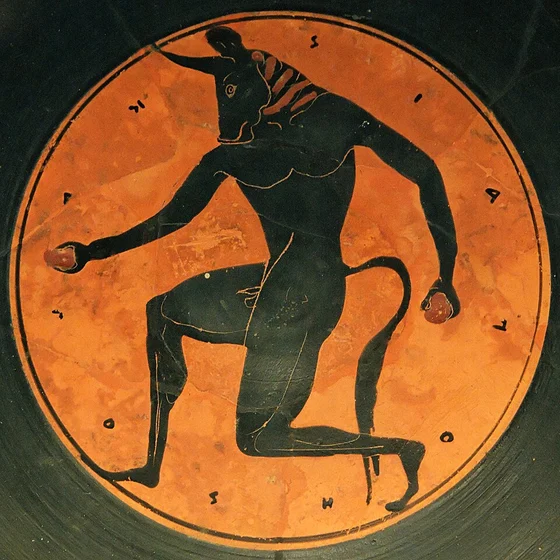
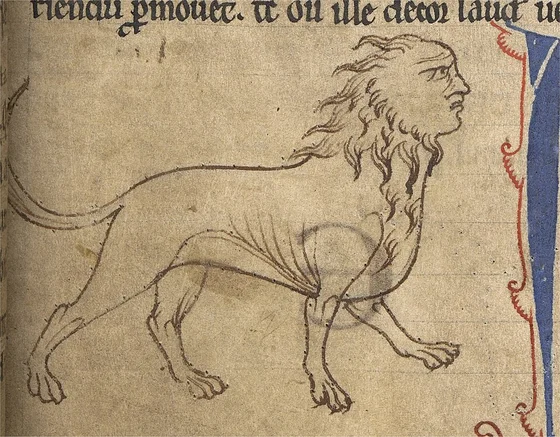
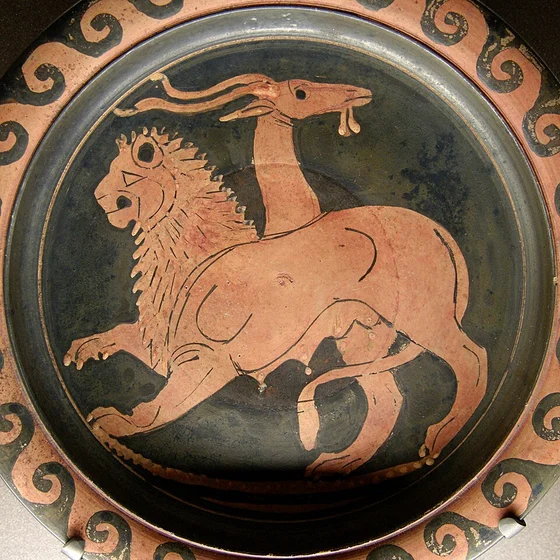
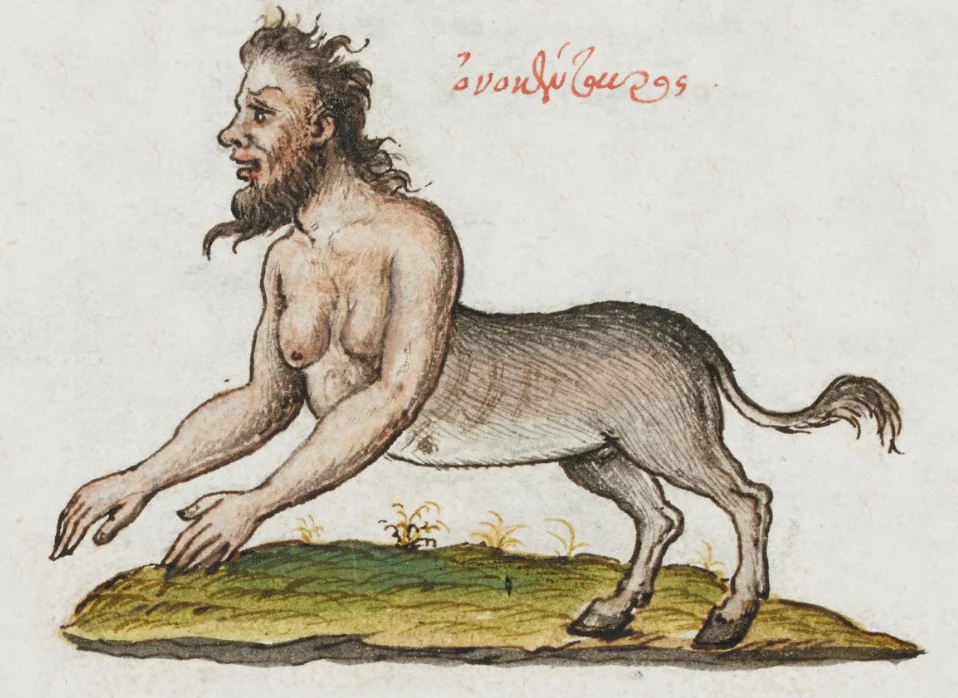
Image associated with the exact linked encyclopedia article; consult credited file description for its interpretation.
Overview
Aelian introduces the creature through a report he has heard. Its face, chest, arms and hands resemble a human’s, while the lower body and hind legs resemble an ass. When speed is needed, the forelimbs act as feet; when it handles an object, the same limbs become hands. This alternation gives the composite body a functional description rather than only an unusual shape.
The account also says the creature refuses captivity and food, dying rather than enduring servitude. That statement belongs to the author’s portrayal of temperament, not to a documented behavioural study. The comparison with centaurs frames how Aelian expects his readers to understand it. This profile concerns that described creature; it does not classify real human populations through an ancient monstrous category or treat all later ass-centaur symbolism as one unchanged account.
Origins & earliest records
The selected passage is Aelian’s On Animals XVII.9, from the early third centuryCE. The writer marks the description as something heard and names reported authorities. Those qualifications remain part of the witness. This record does not establish the origin of the broader composite-being tradition or prove direct observation by Aelian.
Records & interpretation
The excerpt supports the ass-human form, dual use of hands and refusal of confinement as attributed claims. Its explicit reporting language is evidence of transmission, not a guarantee of accuracy. The account is neither a zoological specimen description confirmed independently nor a basis for treating any actual people as part-animal.
Selected bibliography
Documented works and useful reading. This is not a list of every appearance.
- 01
On Animals XVII.9
Selected inspected passage; original-work dates are distinguished from later translation and transmission.
Family & connections
A source-supported family tree or inspiration record has not yet been compiled for this profile. Related reading below indicates a connection in subject matter, not a proven lineage or creative influence.
References
Sources supporting this profile. Linked pages have their own scope and editorial standards.
- Primary textOn Animals XVII.9Research access: 2026-10-05
Image credits
Reference illustrationOnocentaur
Image associated with the exact linked encyclopedia article; consult credited file description for its interpretation.