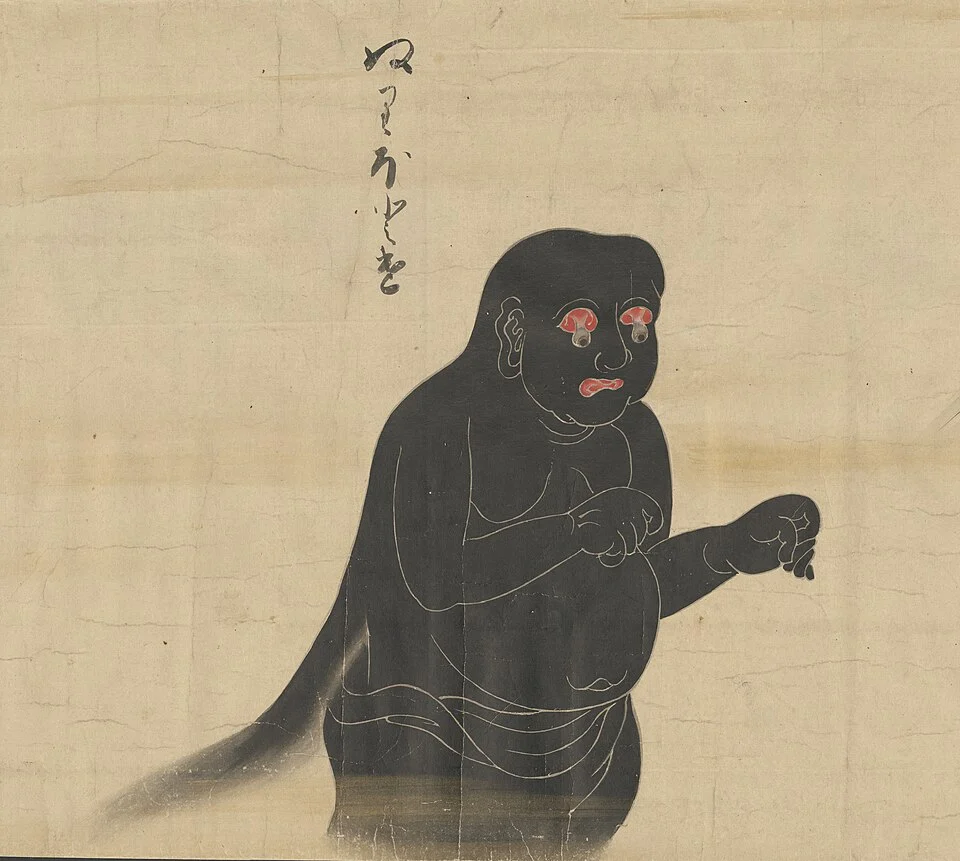
Nuribotoke
Image associated with the exact linked encyclopedia article; consult credited file description for its interpretation.
Overview
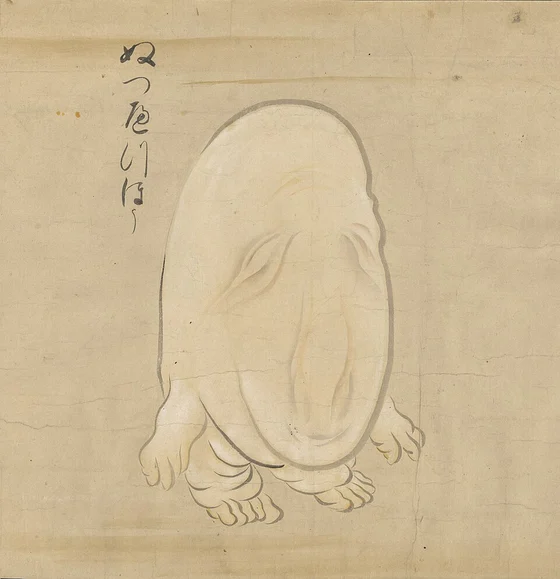
Nuribotoke is depicted as a dark, bloated humanoid with eyes hanging from their sockets. The name is often translated through lacquer and Buddha, but its religious vocabulary should not be taken to mean that the figure is a canonical Buddhist deity. Historical illustrations provide a startling bodily design, sometimes with additional hair or tail-like features that differ between witnesses. Those differences belong to the visual record.
Sekien and earlier monster scrolls attest the image without supplying a comprehensive explanation of its behaviour. Later stories about household altars, dancing or deceptive teaching are separate layers and need their own support. The entry therefore describes the hanging eyes and dark body while keeping the original role uncertain. It does not construct a fixed afterlife status or infer a universal ritual prohibition merely from the character's name and corpse-like appearance.
Origins & earliest records
Selected historical witness: Gazu Hyakki Yagyō (1776) by Toriyama Sekien. The linked library record identifies a surviving printed edition; it does not establish when the belief first arose.
Records & interpretation
The historical illustration and individual contextual reference support this profile. Named motifs, local narratives and later explanations are distinguished; image-to-plate matching still needs review.
Selected bibliography
Documented works and useful reading. This is not a list of every appearance.
- 01
Gazu Hyakki Yagyō
Selected historical witness; individual illustration now checked in the separately linked primary scan. This edition is not a claim of the earliest oral attestation.
Family & connections
A source-supported family tree or inspiration record has not yet been compiled for this profile. Related reading below indicates a connection in subject matter, not a proven lineage or creative influence.
Primary records and illustrations
Gazu Hyakki Yagyō
Volume 3, Wind (風); digitized Smithsonian Libraries copy, 1805 edition. IIIF canvas index 11 (zero-based); GazuHyakkiyagyo3Tori_0012.jp2
Named 塗仏; a dark round-bodied figure with dangling eyes is framed by an opened domestic altar or cabinet. Visual inspection of the digitized plate and its printed label; image URL is copied from the actual IIIF manifest, not a guessed leaf reference.
Encyclopedia background
An additional attributed reference, separate from the editorial profile above.
Read the open encyclopedia overview
The Nuribotoke (塗仏) is a yōkai found in Japanese yōkai emaki such as the Hyakkai Zukan by Sawaki Suushi. They are also depicted in the Gazu Hyakki Yagyō by Toriyama Sekien.
They are depicted as an animated corpse with darkened skin and dangling eyeballs. Their name literally means "Lacquered Buddha" which references their black lacquered color and their resemblance to Buddha, although the term for Buddha can also be used to mean any deceased spirit. It has also sometimes been referred to as Kurobō (黒坊). They are often portrayed with largely bloated stomachs and appear often as a Buddhist priest.
Text from Wikipedia contributors, “Nuribotoke”. CC BY-SA 4.0. Extracted introduction; formatting changed. Retrieved 5 October 2026. The source article may have changed since retrieval.
References
Sources supporting this profile. Linked pages have their own scope and editorial standards.
- Primary illustration / library recordGazu Hyakki Yagyō — historical library editionResearch access: 2026-10-05
- Secondary referenceNuribotoke — contextual overview and bibliographyResearch access: 2026-10-05
- Primary illustrated plate / institutional digitizationGazu Hyakki Yagyō — directly inspected IIIF canvas index 11 (zero-based); GazuHyakkiyagyo3Tori_0012.jp2Research access: 2026-10-05
Image credits
Reference illustrationNuribotoke
Image associated with the exact linked encyclopedia article; consult credited file description for its interpretation.