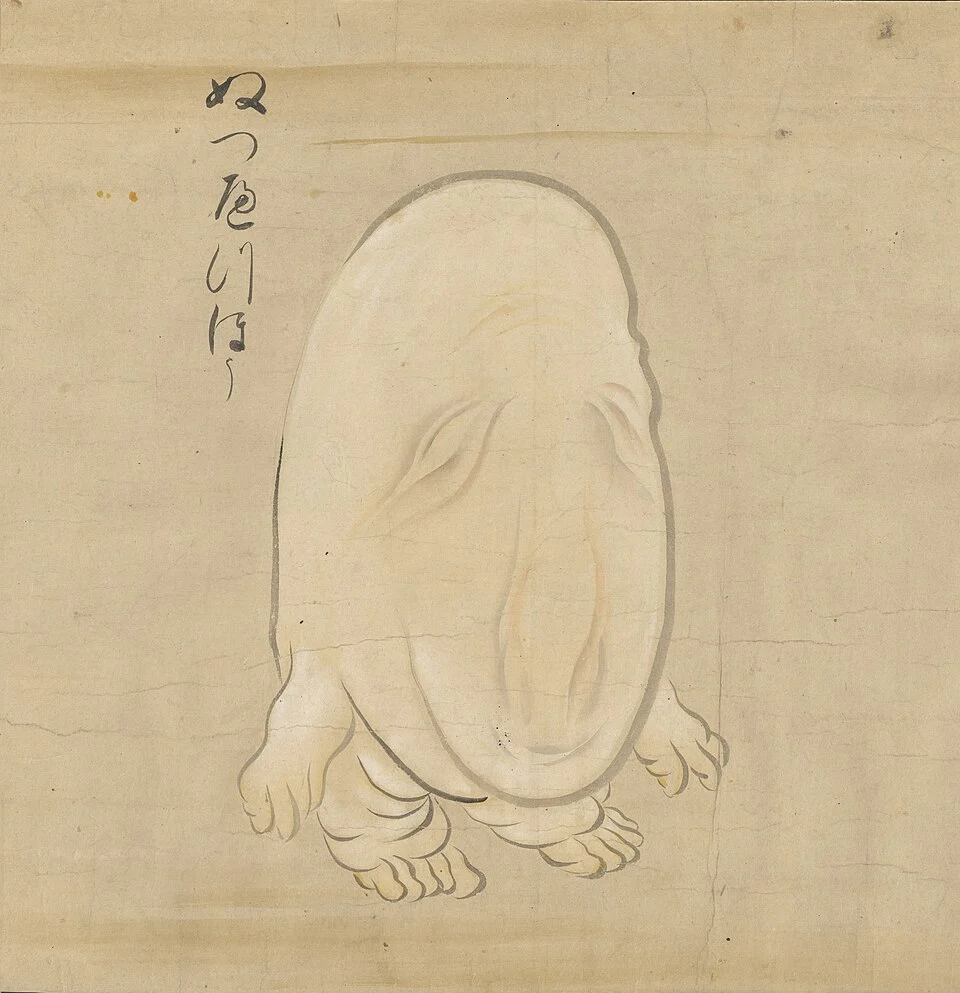
Nuppeppō
Image associated with the exact linked encyclopedia article; consult credited file description for its interpretation.
Overview
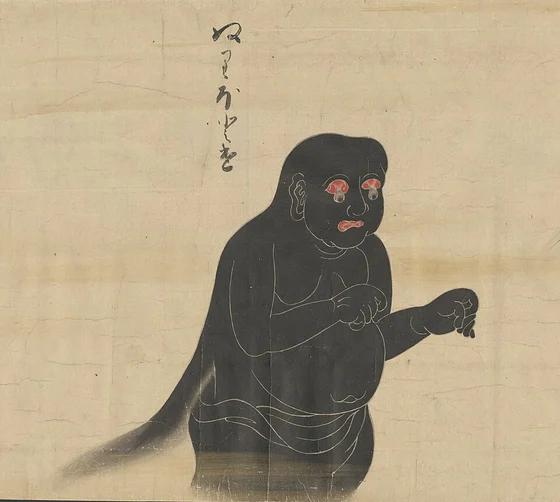
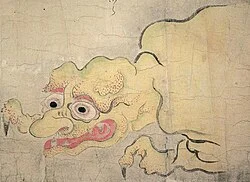
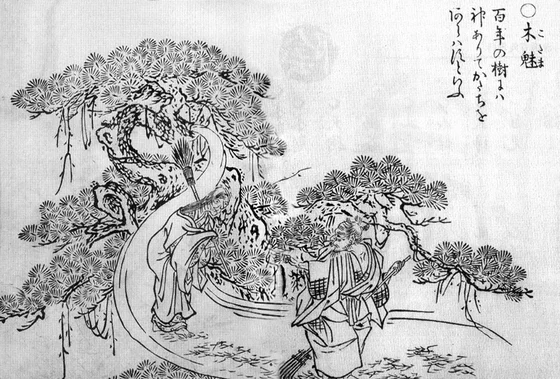
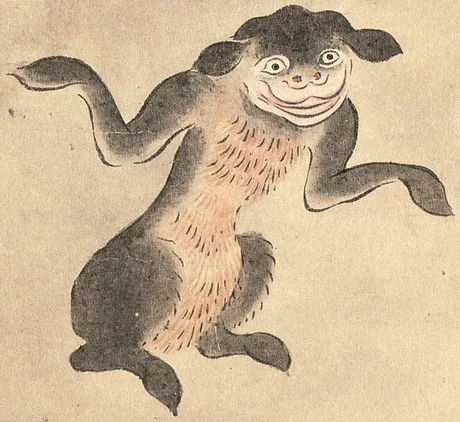
Nuppeppō appears in historical monster pictures as a mass of flesh whose facial and bodily features are difficult to separate. Wrinkles and small limbs produce an almost formless body, making recognition itself uncertain. The name occurs in more than one Edo-period visual witness. Sekien's plate gives the subject a clear place in the illustrated repertoire even though it does not provide an extensive explanatory narrative.
Later accounts add a smell of decay, a temple setting or extraordinary effects from eating its flesh, but the primary support for such claims varies. They should not be treated as simple observations read from the picture. The figure also overlaps historically with discussions of faceless beings, without being identical to every modern noppera-bō story. This entry retains the visibly indeterminate anatomy and leaves elaborate origin explanations to separately identified texts.
Origins & earliest records
Selected historical witness: Gazu Hyakki Yagyō (1776) by Toriyama Sekien. The linked library record identifies a surviving printed edition; it does not establish when the belief first arose.
Records & interpretation
The historical illustration and individual contextual reference support this profile. Named motifs, local narratives and later explanations are distinguished; image-to-plate matching still needs review.
Selected bibliography
Documented works and useful reading. This is not a list of every appearance.
- 01
Gazu Hyakki Yagyō
Selected historical witness; individual illustration now checked in the separately linked primary scan. This edition is not a claim of the earliest oral attestation.
Family & connections
A source-supported family tree or inspiration record has not yet been compiled for this profile. Related reading below indicates a connection in subject matter, not a proven lineage or creative influence.
Primary records and illustrations
Gazu Hyakki Yagyō
Volume 3, Wind (風); digitized Smithsonian Libraries copy, 1805 edition. IIIF canvas index 18 (zero-based); GazuHyakkiyagyo3Tori_0019.jp2
Named ぬっぺっぽう; a wrinkled fleshy mass with small feet and indistinct facial folds occupies a domestic setting. Visual inspection of the digitized plate and its printed label; image URL is copied from the actual IIIF manifest, not a guessed leaf reference.
Encyclopedia background
An additional attributed reference, separate from the editorial profile above.
Read the open encyclopedia overview
The nuppeppō (Japanese: ぬっぺふほふ or ぬっぺっぽう) is a yōkai that appears in Edo Period yōkai emaki such as the Gazu Hyakki Yagyō and the Hyakkai Zukan. It is depicted with indistinguishable wrinkles on its face and body as a one head blob of meat.
Text from Wikipedia contributors, “Nuppeppō”. CC BY-SA 4.0. Extracted introduction; formatting changed. Retrieved 5 October 2026. The source article may have changed since retrieval.
References
Sources supporting this profile. Linked pages have their own scope and editorial standards.
- Primary illustration / library recordGazu Hyakki Yagyō — historical library editionResearch access: 2026-10-05
- Secondary referenceNuppeppō — contextual overview and bibliographyResearch access: 2026-10-05
- Primary illustrated plate / institutional digitizationGazu Hyakki Yagyō — directly inspected IIIF canvas index 18 (zero-based); GazuHyakkiyagyo3Tori_0019.jp2Research access: 2026-10-05
Image credits
Reference illustrationNuppeppō
Image associated with the exact linked encyclopedia article; consult credited file description for its interpretation.