Negrinho do Pastoreio
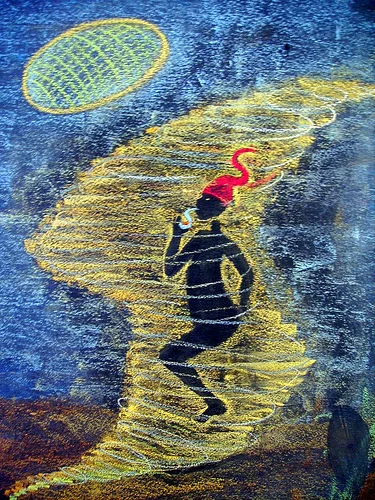
Image associated with the exact linked encyclopedia article; consult credited file description for its interpretation.
Overview
João Simões Lopes Neto's version places an unnamed enslaved child under a wealthy, merciless rancher's authority. After horses are lost, the boy endures punishment and is abandoned at an anthill. When the rancher returns, he finds the child alive, beside the Virgin Mary and the recovered horses. The supernatural reversal exposes the master's brutality rather than making the boy a threatening monster.
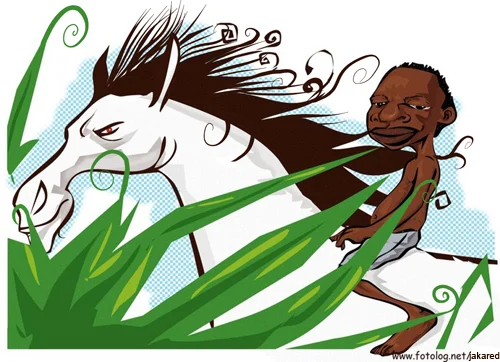
The full sequence in Lopes Neto begins with a horse race: the rancher’s favoured mount abruptly turns near the finish, and the furious owner punishes the child before ordering him to guard a herd for thirty days. Wild canids scatter the horses while he sleeps. After another beating, he takes a candle from the Virgin’s shrine; each drop of wax becomes a light, illuminating the country until he finds the herd. The rancher’s own son deliberately scatters it again. This repeated sabotage and recovery explains the final punishment more precisely than a single accidental loss.
After three foggy days and recurring dreams, the rancher finds the child unharmed beside the Virgin and recovered horses. Later travellers report the boy riding a bay horse with his herd in different places at the same hour. The ending adds an annual three-day visit to the ants, now described as his friends; the scattered horses return when the bay calls. The candle offered for finding lost belongings is linked to repayment of the light borrowed from the Virgin’s altar.
The story's ending presents him travelling across the countryside and helping those who seek missing possessions. Candles belong to that narrated appeal, not instructions endorsed here as a guaranteed method. The historical title is retained because it identifies the established work and figure, while the prose recognizes the child's humanity. Literary versions and later devotional reception require interpretation alongside Brazil's history of slavery, rather than treating the violent episode as verified biography.
Origins & earliest records
The inspected Lendas do Sul edition was published in Pelotas in 1913. Its prefatory letter, dated 1 January 1907, refers to an earlier Correio Mercantil publication on 26 December. This supplies evidence of an earlier printed circulation, but neither witness establishes the legend's first oral telling or a historical child's identity.
Records & interpretation
The complete story and prefatory letter were read in Project Gutenberg’s transcription. The separately inspected Wikisource page identifies the 1913 edition and pp. 57–67 but currently omits part of the candle episode and cuts off before the full ending; it is not alone evidence of complete reading. The Casa de Rui Barbosa record identifies a later cordel adaptation, not read in full. The account remains a literary rendering of enslavement and supernatural protection, not verified biography.
In the literature
“o Negrinho de pé com a pele lisa, perfeita,”
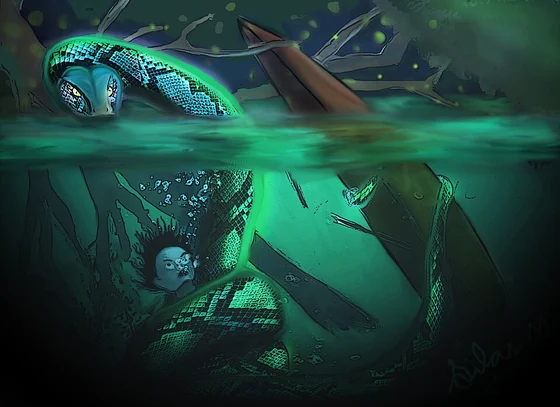
O Negrinho do Pastoreio, restoration at the anthill
An unnamed enslaved child without baptismal sponsors calls Mary his godmother. His cruel owner punishes him after a lost horse race, forces him to guard horses without rest and beats him when jackals release them. He recovers the herd by candlelight but the owner’s son deliberately scatters it again. Another beating leaves him apparently dead; his body is thrown into an anthill. After three foggy days the owner returns and sees him alive with healed skin, the horses and Mary protecting him. The child rides away. Travellers then report simultaneously seeing him drive his herd, while later accounts describe him seeking lost possessions. For three days each year he disappears into an anthill to visit the ants as friends; his dispersed horses rejoin him at the third dawn. The concluding account continues his unseen rides and links found possessions with candles offered for Mary’s altar.
Selected bibliography
Documented works and useful reading. This is not a list of every appearance.
- 01
Lendas do Sul: O Negrinho do Pastoreio
Echenique & C., Pelotas, 1913, pp. 57–67 as identified by Wikisource; complete narrative and 1907 letter read in Gutenberg2837. Wikisource transcription has omissions.
- 02
O negrinho do pastoreio
Editora Luzeiro edition of a cordel adaptation; bibliographic record inspected, full adaptation not read.
- 03
Lendas do sul — O Negrinho do Pastoreio, complete body and preceding CoelhoNeto letter1January1907
Lendas do sul, Pelotas: Echenique & C.,1913, digital title/catalogue identified. Complete selected named narrative and preceding dated correspondent letter read. Author Nota states a literary presentation of transmitted oral tradition; no original scan-page claim or whole-volume review.
Family & connections
A source-supported family tree or inspiration record has not yet been compiled for this profile. Related reading below indicates a connection in subject matter, not a proven lineage or creative influence.
Located primary passages
Specific passages supporting details in this entry, grouped by their published witness.
Lendas do Sul: O Negrinho do Pastoreio
Lendas do sul, Pelotas: Echenique & C.,1913, digital title/catalogue identified. Complete selected named narrative and preceding dated correspondent letter read. Author Nota states a literary presentation of transmitted oral tradition; no original scan-page claim or whole-volume review.
- An unnamed enslaved child without baptismal sponsors calls Mary his godmother. His cruel owner punishes him after a lost horse race, forces him to guard horses without rest and beats him when jackals release them. He recovers the herd by candlelight but the owner’s son deliberately scatters it again. Another beating leaves him apparently dead; his body is thrown into an anthill. After three foggy days the owner returns and sees him alive with healed skin, the horses and Mary protecting him. The child rides away. Travellers then report simultaneously seeing him drive his herd, while later accounts describe him seeking lost possessions. For three days each year he disappears into an anthill to visit the ants as friends; his dispersed horses rejoin him at the third dawn. The concluding account continues his unseen rides and links found possessions with candles offered for Mary’s altar.
O Negrinho do Pastoreio, complete body and preceding CoelhoNeto letter1January1907
The beating scene says he seemed to die, while later reports call it a death; restoration is explicit, but this wording is not silently replaced by a clinical death certificate. Mary is chosen devotional godmother, not biological mother; no father or personal name supplied. Ants shift from threatened devourers to friends in the annual visitation. No candle prayer, invocation or ritual formula copied.
References
Sources supporting this profile. Linked pages have their own scope and editorial standards.
- Primary textLopes Neto: O Negrinho do PastoreioResearch access: 2026-10-05
- ReferenceFundação Casa de Rui Barbosa: cordel bibliographic recordResearch access: 2026-10-05
- Primary textLopes Neto: complete narrative and prefatory letter in Lendas do SulResearch access: 2026-10-05
Image credits
Reference illustrationNegrinho do Pastoreio
Image associated with the exact linked encyclopedia article; consult credited file description for its interpretation.