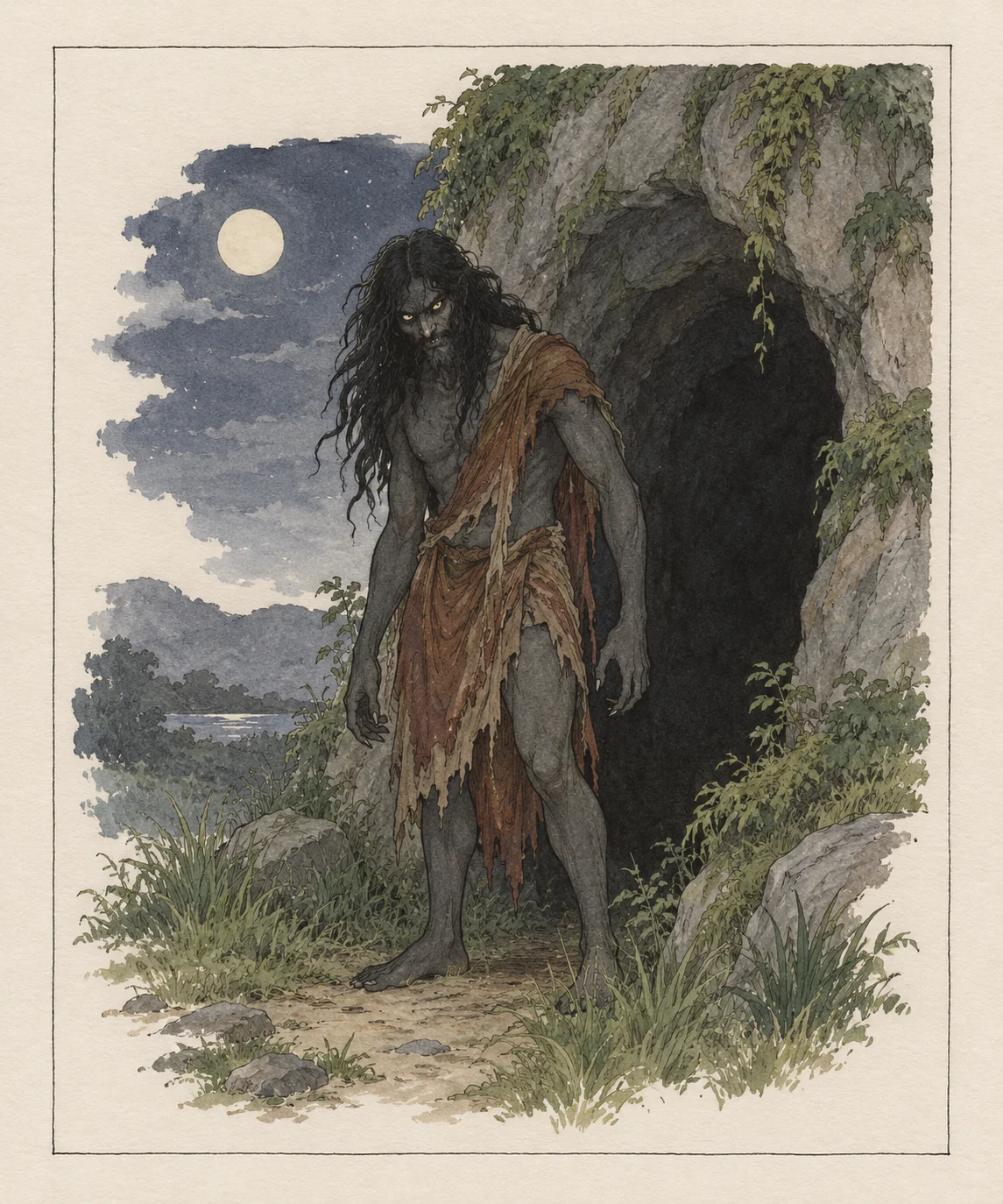
Māyāvī (Rāmāyaṇa demon) — original modern interpretation.
AI-generated modern interpretation; undescribed appearance, clothing and scenery are imagined. Not historical artwork or ethnographic evidence.
Overview
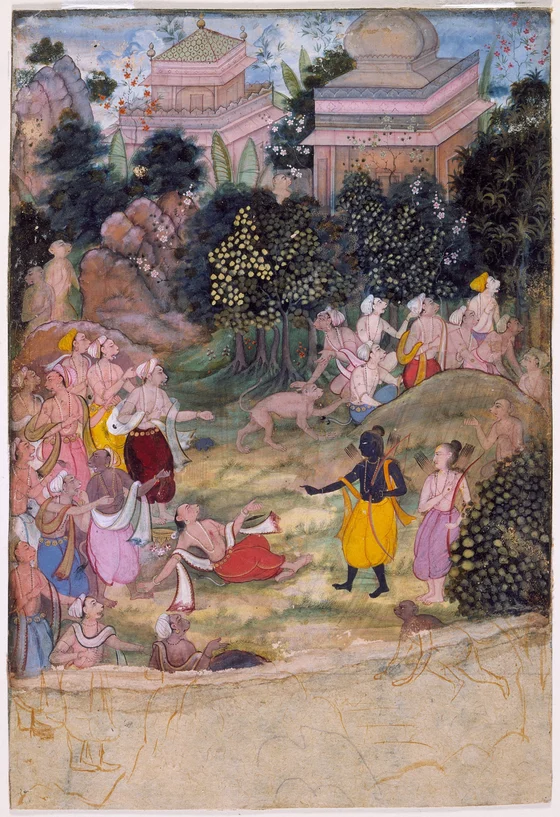
In Sugriva’s narrated account, Mayavi arrives at Kishkindha at night and challenges Vali over their rivalry. When Vali and Sugriva pursue him, the demon flees into a grass-covered cave. Vali enters, leaving his brother to keep watch outside.
The wait lasts a year. Sugriva sees blood and hears demons within, while Vali later says that he found and killed Mayavi and his companions before forcing his way out. The monster’s retreat becomes the setting for a fatal misunderstanding between the vanara brothers. These two embedded accounts do not provide a detailed anatomical portrait.
Origins & earliest records
South Asian epic religious narrative
Records & interpretation
Actual Griffith canto passages directly read in the hosted complete edition.
Selected bibliography
Documented works and useful reading. This is not a list of every appearance.
- 01
The Ramayan of Valmiki
IV.9–10; printed title-page edition range, not epic composition date.
Family & connections
A source-supported family tree or inspiration record has not yet been compiled for this profile. Related reading below indicates a connection in subject matter, not a proven lineage or creative influence.
Primary records and illustrations
The Ramayan of Valmiki, Griffith translation
Hosted complete edition, printed title-page range 1870–1874. IV.9–10
Actual canto text read; speech attribution preserved. No creature illustration asserted.
References
Sources supporting this profile. Linked pages have their own scope and editorial standards.
- Historical primary epic translationGriffith, Ramayan — IV.9–10Research access: 2026-10-05
Image credits
Original modern interpretation of the cited accountMāyāvī (Rāmāyaṇa demon) — original modern interpretation.
AI-generated modern interpretation; undescribed appearance, clothing and scenery are imagined. Not historical artwork or ethnographic evidence.