A sourced illustration has not yet been added. This gap is included in the coverage record.
Overview
The little cake appears while the fox is crossing a loch and answers questions about its journey. Its account connects it with the implements and places of its own making, including the baking stone and quern. It intends to pass the fox as it has passed previous stages. Independent movement and conversation give the food a temporary characterhood: the episode does not specify eyes, limbs, a human shape or a permanent spirit inhabiting every bannock.
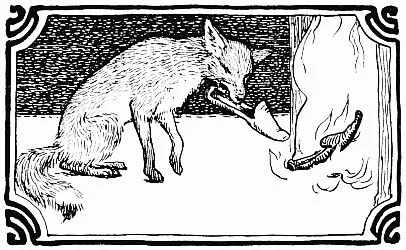
The fox offers his back, the tip of his tail and his ear before suggesting his mouth. At each stage the bonnach says it fears being eaten. He finally argues that swallowing is impossible while he swims, persuading it to accept precisely the most dangerous place. Once it enters his mouth, he declares his freedom to do as he pleases and eats it. Jacobs nests this short encounter within the larger Russet Dog cycle; its ending is therefore preserved as a discrete fable incident rather than merged with every travelling-cake story in other languages.
Origins & earliest records
Jacobs cites Campbell’s The Fox and the little Bonnach, volume III, tale lxvi, among the components of his chapter. His note compares English variants but comparison alone does not establish which telling began first. The selected 1895 print is the directly inspected source.
Records & interpretation
The speaking, travelling cake is attested in the text, and its defeat turns on the fox’s verbal deception. This documents a narrative motif rather than animation of actual food. Details absent from the passage, including a gingerbread-man anatomy, are not supplied.
In the literature
“The fox ate the little bonnach”
The Russet Dog, pp133–135; little bonnach ending; p134; fatal trick
A little bonnach speaks with the fox during a lake-crossing encounter and repeatedly anticipates being eaten. It rejects back, tail and ear rides, but accepts the claim that the fox cannot eat while swimming and enters his mouth. The fox eats it; no resurrection or escape is narrated.
Selected bibliography
Documented works and useful reading. This is not a list of every appearance.
- 01
More Celtic Fairy Tales: The Russet Dog, pp. 133–134; note XXXVIII
Selected episode and relevant source note inspected. Earlier works named by Jacobs are attributed references, not falsely claimed as independently collated texts.
- 02
More Celtic Fairy Tales
Joseph Jacobs, More Celtic Fairy Tales, selected1895 Nutt/Putnam edition, PG34453. Complete selected tale and respective compiler-note paragraph independently read.
Family & connections
A source-supported family tree or inspiration record has not yet been compiled for this profile. Related reading below indicates a connection in subject matter, not a proven lineage or creative influence.
Located primary passages
Specific passages supporting details in this entry, grouped by their published witness.
More Celtic Fairy Tales
Joseph Jacobs, More Celtic Fairy Tales, selected1895 Nutt/Putnam edition, PG34453. Complete selected tale and respective compiler-note paragraph independently read.
- A little bonnach speaks with the fox during a lake-crossing encounter and repeatedly anticipates being eaten. It rejects back, tail and ear rides, but accepts the claim that the fox cannot eat while swimming and enters his mouth. The fox eats it; no resurrection or escape is narrated.
The Russet Dog, pp133–135; little bonnach ending; Speaking bread, resisted offers and fatal crossing
Named narrative actions and compiler interpretations distinguished. No verse, prayer or ritual formula excerpts; no real-animal behavioural proof implied.
Primary source witness
Joseph Jacobs, More Celtic Fairy Tales, selected1895 Nutt/Putnam edition, PG34453. Complete selected tale and respective compiler-note paragraph independently read.
- Jacobs’s collected chapter combines Campbell materials including Fox and Little Bonnach, volumeIII taleLXVI. His English cake-tale parallels are identified as comparisons, without treating this episode as a separately witnessed performance or conflating its ending with surviving cake variants.
No independent collation of the cited underlying editions claimed.
References
Sources supporting this profile. Linked pages have their own scope and editorial standards.
- Primary textMore Celtic Fairy Tales, selected 1895 edition: The Russet Dog, pp. 133–134; note XXXVIIIResearch access: 2026-10-05
Image credits
A sourced illustration has not yet been added. This gap is included in the coverage record.