Lion Prince (The Singing Springing Lark)
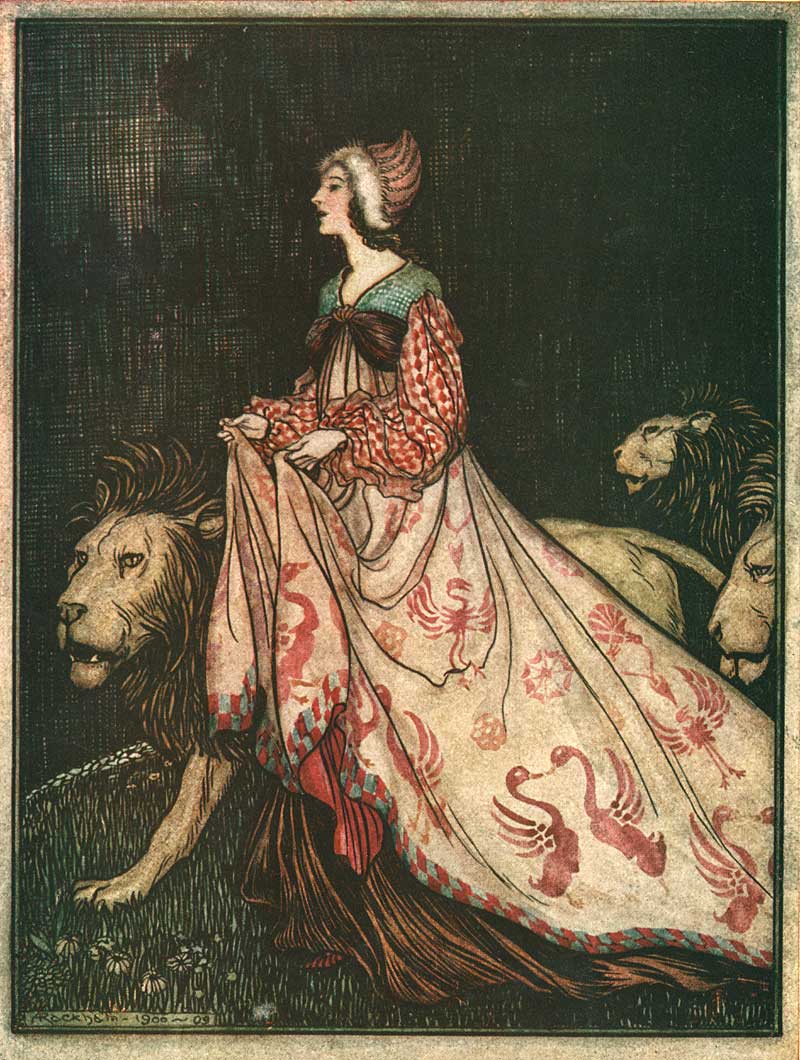
Actual Rackham illustration inspected: woman travels accompanied by lions. File caption explicitly names Singing Springing Lark/The Lady and the Lion, 1909 published illustration; exact enchanted prince story, not real-animal photography.
Overview
A father seeking a lark for his youngest daughter takes a bird from a castle tree and is confronted by a lion. To escape, he promises the first being who welcomes him home, which proves to be his daughter. She goes willingly and discovers that the lion is an enchanted prince whose entire household resumes human shape at night. Their marriage produces a child.
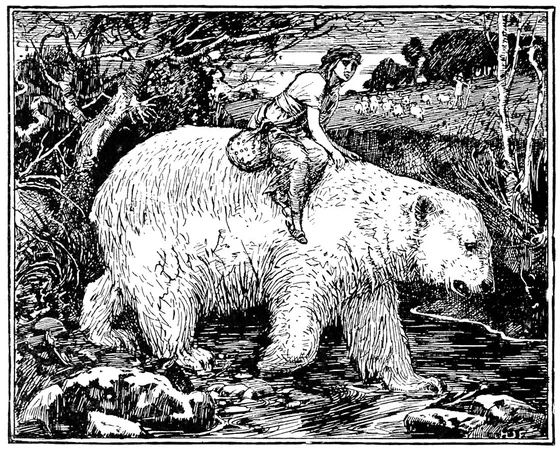
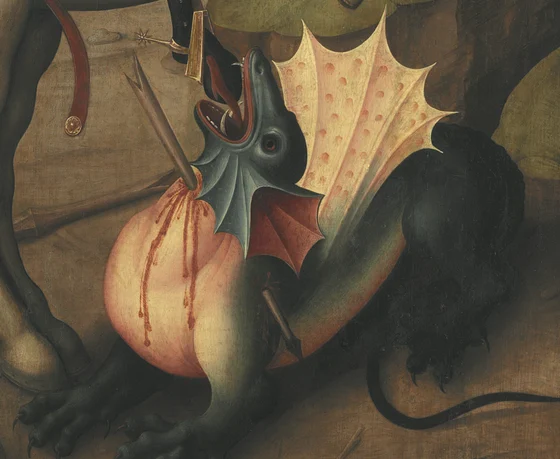
At a family wedding, a stray candle ray transforms him into a white dove for seven years. Blood drops and feathers guide his wife until the trail disappears. At the Red Sea he becomes a lion again and fights a dragon who is herself an enchanted princess. The wife's intervention releases both, but the rival princess takes him away and suppresses his memory. Renewed recognition and a griffin journey eventually restore the original family. The night wind's nut grows into a tall tree in the middle of the Red Sea, giving the tired griffin a necessary resting place during the crossing.
Origins & earliest records
Grimm's tale88, Das singende springende Löweneckerchen, is selected here through Margaret Hunt's1884 English Household Tales. It explicitly joins a lion husband, a later dove form and an enchanted dragon princess in one narrative. These staged transformations are attested features of this collected version, not proof that other animal bridegrooms share its conditions or identity.
Records & interpretation
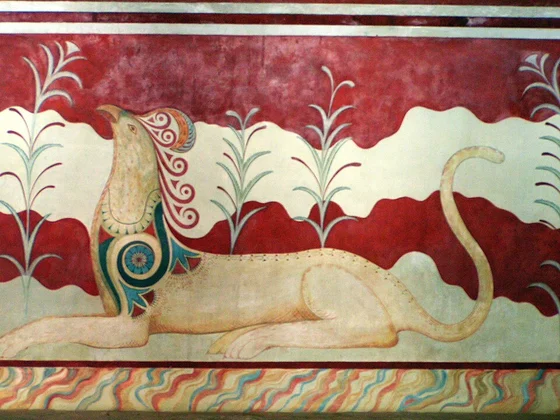
Day-night changes, the narrow candle ray, seven-year feather trail and Red Sea fight all appear directly in the story. The dragon princess is a separate person, and the transport griffin a third creature. Their coexistence supplies literary evidence for successive rescue complications; it is not zoological evidence or a geographical observation of lions becoming doves.
In the literature
“a red drop of blood and a little white feather”
Tale 88, The Singing, Springing Lark; The wife follows her husband’s dove form · Margaret Hunt
The paired marks guide her journey after the candlelight transformation.
Selected bibliography
Documented works and useful reading. This is not a list of every appearance.
- 01
Household Tales, tale 88: The Singing, Springing Lark
Specific numbered primary tale inspected. English translation terms and literary transmission remain distinct from oral origin.
- 02
Household Tales — The Singing, Springing Lark
Margaret Hunt historical English translation (1884); Project Gutenberg5314. Exact numbered tale and observed HTML anchor used; no inferred printed page or earliest oral date.
Family, evolution & connections
The youngest daughter in The Singing, Springing Lark
The youngest daughter marries the lion-shaped prince, who takes human form at night. Her later search for him follows a further transformation into a white dove; those shapes belong to the same husband.
The couple’s child in The Singing, Springing Lark
The story mentions their little child when the couple travels to a family wedding and returns to that child after the husband’s rescue. It gives neither an invented name nor a separate animal species for the child.
Located primary passages
Specific passages supporting details in this entry, grouped by their published witness.
Household Tales, tale 88: The Singing, Springing Lark
Margaret Hunt historical English translation (1884); Project Gutenberg5314. Exact numbered tale and observed HTML anchor used; no inferred printed page or earliest oral date.
- A lion threatens the father taking its lark, then demands what first meets him at home. His youngest daughter goes to the castle and learns that the prince and his household are lions by day and human at night; she marries him.
Tale 88, The Singing, Springing Lark; Lark bargain and daily lion forms
- A candle ray through a warped door changes him into a white dove for seven years. His wife follows blood drops and feathers, then seeks celestial and wind guidance. The south wind finds him a lion fighting an enchanted dragon princess; an eleventh reed enables his victory and restores both opponents’ human shapes.
Tale 88, The Singing, Springing Lark; Candle ray, seven-year dove journey and battle
- The released dragon princess takes him away on a griffin and plans marriage. His wife trades wondrous gifts for nights with him; the first is defeated by a sleeping draught. Avoiding the next draught lets him recognize her voice and explain that the other princess had bewitched him to forget. They escape by griffin using a nut-tree rest stop.
Tale 88, The Singing, Springing Lark; New forgetting spell and reunion by purchased nights
Complete named tale read. Original narrative curse causes and modern species identities are not inferred; prose only, no song or ritual-formula excerpts.
References
Sources supporting this profile. Linked pages have their own scope and editorial standards.
- Primary textHunt's Household Tales — 88 The Singing, Springing LarkResearch access: 2026-10-05
Image credits
Historical illustrationLion Prince (The Singing Springing Lark)
Actual Rackham illustration inspected: woman travels accompanied by lions. File caption explicitly names Singing Springing Lark/The Lady and the Lion, 1909 published illustration; exact enchanted prince story, not real-animal photography.