Kurangaituku
Image associated with the exact linked encyclopedia article; consult credited file description for its interpretation.
Overview
Grey’s selected Hatupatu account describes Kurangaituku hunting birds with her mouth and moving rapidly with wings on her arms. After Hatupatu accidentally strikes her while aiming at the same bird, she captures him and keeps him in a cave containing animal companions, cloaks and a carved weapon. Her raw-food habits differ from his secret preparation of cooked meals while she is away.
Hatupatu encourages her to travel far for hunting, destroys much of the cave’s contents and flees with treasured possessions. A surviving bird alerts her, beginning a pursuit in which rock shelter and geothermal terrain become important. The selected story ends with her death at hot springs. Her captivity, household and the destruction she discovers remain visible, rather than reducing the figure to an unexplained bird monster.
The cave inventory in Grey’s version is specific: a carved two-handed wooden weapon, a red kākā-feather cloak, a thick dog-fur cloak, an ornamented flax cloak and tame lizards and birds. Hatupatu conceals his refusal of raw birds and roasts food while alone. His escape involves both taking the coveted possessions and killing the animal companions. The one bird that survives flies to Kurangaituku and tells her who destroyed the household. She returns to the cave in three strides, then follows the bird’s continuing guidance while calling after the fugitive.
Hatupatu’s rock shelter interrupts the pursuit without defeating her. After she passes and her voice fades, he emerges and runs again. At the Rotorua sulphur-springs named Te Whaka-rewa-rewa, he leaps across while she assumes the water is cold and tries to wade. She sinks through the crust and dies from the heat. This combines exceptional speed with a fatal misreading of unfamiliar terrain; it does not make her invulnerable or able to enter the stone refuge.
The public Great Te Arawa Stories version adds claws and explicitly describes the mouth as beak-like. Its pursuit includes thrown rocks and a different account of the hot-pool crossing. The site identifies its text as transferred with minimal updates from the Ngā Pūmanawa e Waru Education Trust’s 2018 website. That contemporary Te Arawa educational witness is cited separately, rather than treated as wording already present in Grey.
Origins & earliest records
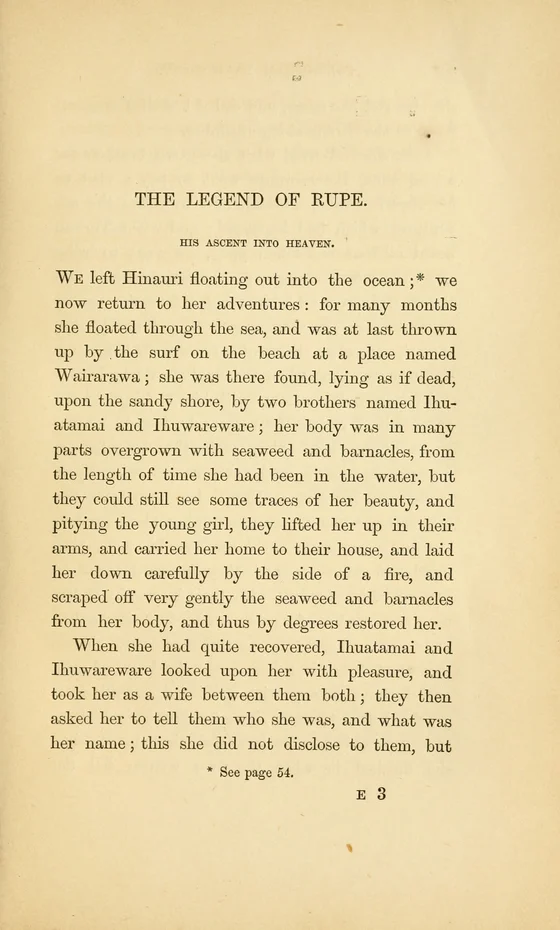
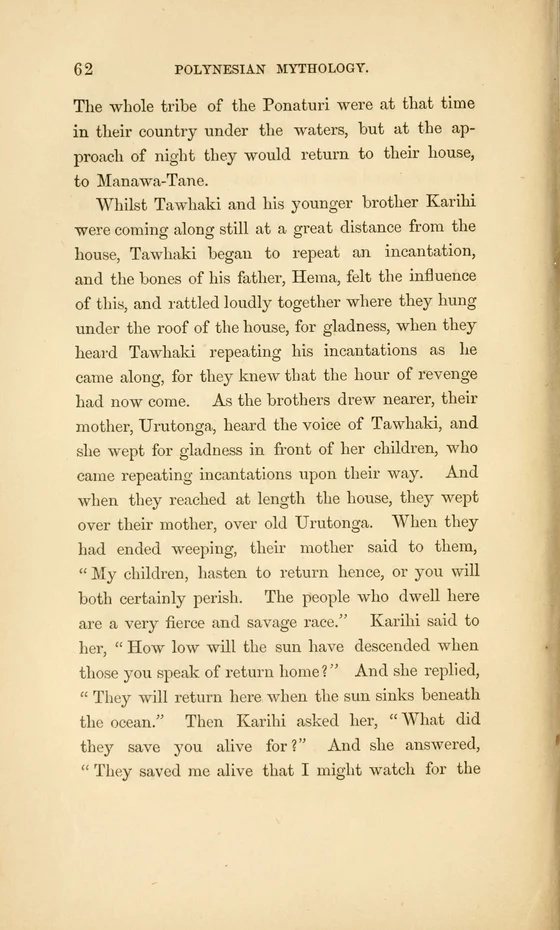
This profile follows The Legend of Hatupatu and His Brothers in George Grey’s English Polynesian Mythology of 1855. Grey edited and translated material received from Māori narrators; the resulting volume is a mediated written witness. Its publication date does not establish oral origins, and public community versions can differ in language, emphasis and detail.
Records & interpretation
Grey’s selected episode and the separately attributed Great Te Arawa Stories account describe a bird-associated woman, captivity and a landscape-linked chase. Their differing anatomical wording and pursuit details remain attributed; the later war section of Grey’s chapter is outside the selected episode.
Selected bibliography
Documented works and useful reading. This is not a list of every appearance.
- 01
Polynesian Mythology: The Legend of Hatupatu and His Brothers
Complete Kurangaituku capture, cave-destruction and pursuit episode through her death read within the larger Hatupatu chapter. Later war narrative is outside this located episode.
- 02
Hatupatu and Kurangaituku / Ko Hātupatu rāua ko Kurangaituku
Public complete educational story read; specific beak/claw and rock-throwing details retained as this version, not Grey’s text.
- 03
Polynesian Mythology and Ancient Traditional History of the New Zealand Race
English work first published1855; online transcription derived from Sacred Texts. Exact print edition underlying this mirror is not independently established.
Family & connections
A source-supported family tree or inspiration record has not yet been compiled for this profile. Related reading below indicates a connection in subject matter, not a proven lineage or creative influence.
Located primary passages
Specific passages supporting details in this entry, grouped by their published witness.
Polynesian Mythology: The Legend of Hatupatu and His Brothers
English work first published1855; online transcription derived from Sacred Texts. Exact print edition underlying this mirror is not independently established.
- Kurangaituku catches Hatupatu with lips used as a bird spear.
- Kurangaituku has birdlike wings upon her arms.
- Kurangaituku sinks through the sulphur-spring crust and dies while pursuing Hatupatu.
This is an edited English witness of a Māori narrative, not a universal version. Grey’s publication credit does not identify every Māori contributor; transcription print edition remains unconfirmed.
Encyclopedia background
An additional attributed reference, separate from the editorial profile above.
Read the open encyclopedia overview
Kurangaituku is a part-woman part-bird supernatural being in Māori mythology as told by the iwi (tribes) of Te Arawa and Raukawa. Her name is sometimes spelled Kurungaituku. She is sometimes described as an ogress or a witch, although some versions of the legend are sympathetic to her and present her as a nurturing caretaker of birds. She is said to have been betrayed and defeated by the young Te Arawa man Hatupatu.
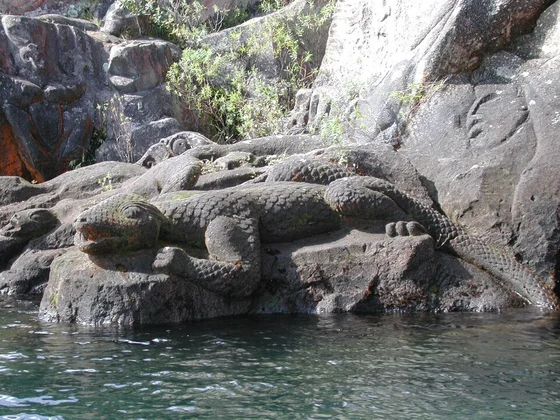
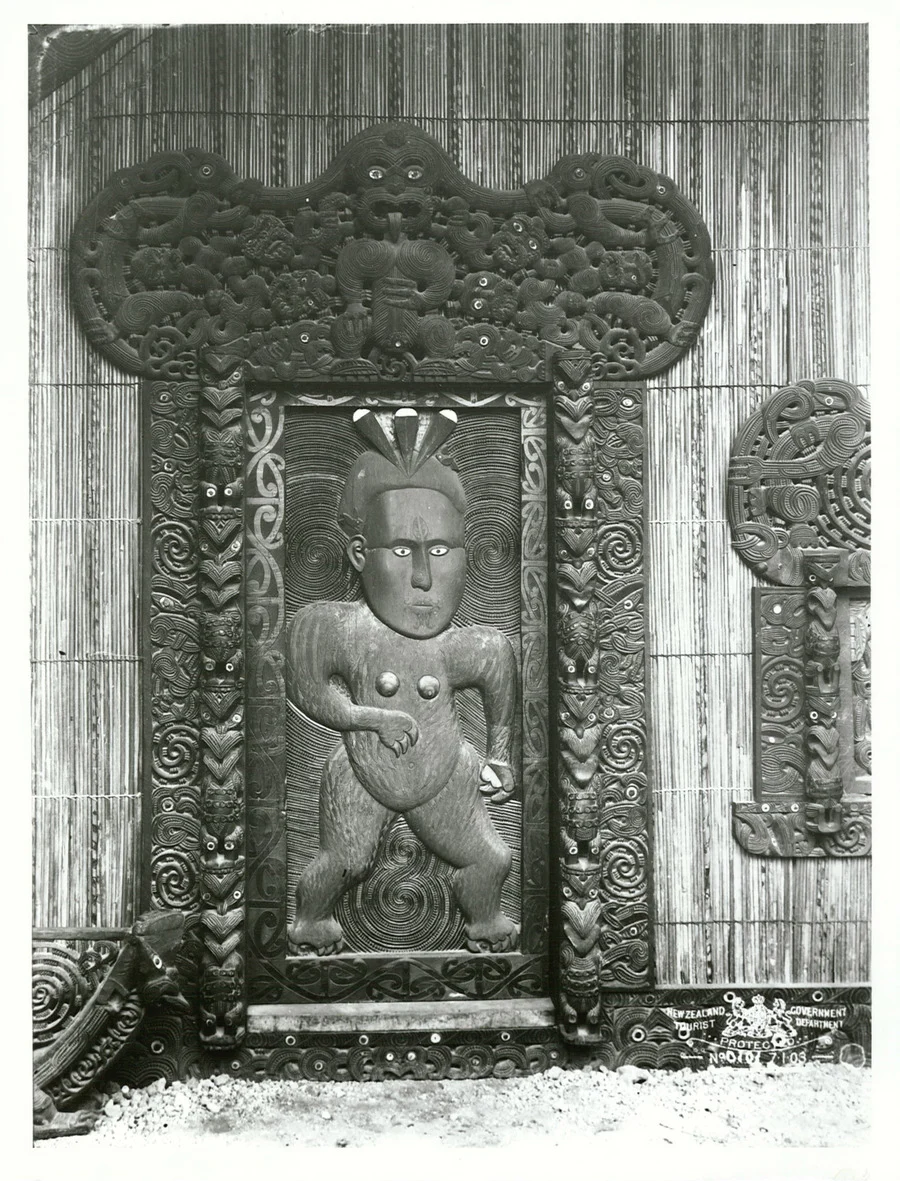
A number of New Zealand places are associated with Kurangaituku and Hatupatu, including Te Kōhatu o Hatapatu, a rock that Hatupatu is said to have hid in while escaping from her. She is also the subject of whakairo (traditional carving) and other artworks, and the Kurangaituku Netball Tournament has been held annually in Rotorua since 1933. Whiti Hereaka's novel Kurangaituku (2021) retells the legend from Kurangaituku's perspective, and won the top fiction prize at the Ockham New Zealand Book Awards.
Text from Wikipedia contributors, “Kurangaituku”. CC BY-SA 4.0. Extracted introduction; formatting changed. Retrieved 5 October 2026. The source article may have changed since retrieval.
References
Sources supporting this profile. Linked pages have their own scope and editorial standards.
- Primary textGrey 1855, The Legend of Hatupatu and His BrothersResearch access: 2026-10-05
- CommunityGreat Te Arawa Stories: Hatupatu and KurangaitukuResearch access: 2026-10-05
Image credits
Reference illustrationKurangaituku
Image associated with the exact linked encyclopedia article; consult credited file description for its interpretation.