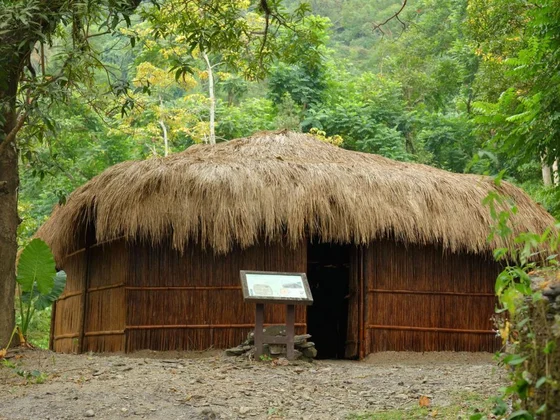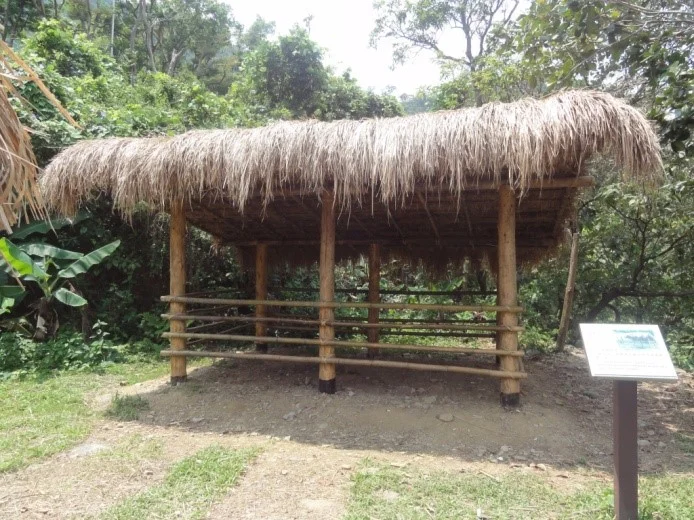
Open shelter with a thatched roof, timber posts and horizontal rails.
Open shelter shown on the Taiwan Indigenous Peoples Culture Park’s Kavalan traditional-house page; undated photograph. Compressed for display.
Overview
The CIP treats the Lanyang Plain as the historical homeland, with later Kavalan settlement in Hualien and Taitung.
Nineteenth-century displacement preceded armed resistance in 1878 alongside the Sakizaya. Identity campaigns from the 1980s led to official recognition in 2002.
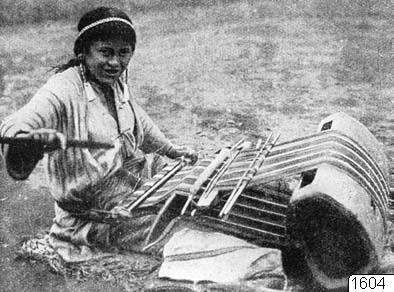
Banana-fibre weaving, sailing and trade, and adaptable songs are documented, while age-group and ritual arrangements vary locally. The council states that living alongside Amis communities did not erase Kavalan identity.
History & identity
Accounts of origins on southern islands are community traditions.
Sources & representation
One CIP page supports the self-name, geography, 1878 resistance, recognition chronology, weaving, songs and local variation.
Selected bibliography
Documented works and useful reading. This is not a list of every appearance.
- 01
Kavalan
Selected bibliography; institutional overview by the Council of Indigenous Peoples, Taiwan. No further literature established in this packet.
Language & cultural connections
Source-supported language and cultural connections have not yet been compiled for this profile.
References
Sources supporting this profile. Linked pages have their own scope and editorial standards.
- Government institutional web pageKavalanResearch access: 2026-10-06
Image credits
Institutional photographOpen shelter with a thatched roof, timber posts and horizontal rails.
Open shelter shown on the Taiwan Indigenous Peoples Culture Park’s Kavalan traditional-house page; undated photograph. Compressed for display.