Kamaitachi
Image associated with the exact linked encyclopedia article; consult credited file description for its interpretation.
Overview
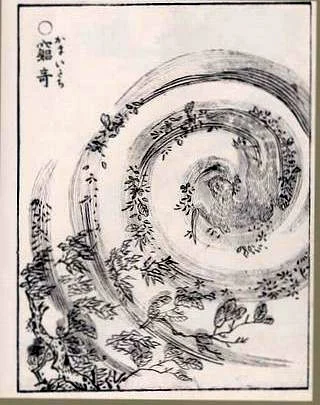
Kamaitachi associates sudden cuts or injuries with a passing wind and, in many representations, with a weasel-like supernatural attacker. The combination joins an unexplained bodily experience to a movement that can be felt but not easily grasped. Sekien's printed image provides a historical visual witness, while regional stories and later pictures vary in how they explain the injury and what sort of being caused it.
A familiar later version has several creatures act in sequence, but that arrangement should not be treated as the content of every earlier account. The name, artwork and local report can preserve different layers of the tradition. This entry focuses on the relation between wind, sharpness and an elusive agent. It makes no medical claim about actual wounds and no assertion that a distinct supernatural species explains the experiences recorded by storytellers.
Origins & earliest records
Selected illustrated witness: Toriyama Sekien's Gazu Hyakki Yagyō (1776). This is an attestation of the named representation, not a claim that the belief began in that year.
Records & interpretation
Historical prints and textual references establish an imagined being and its representation. The linked contextual article distinguishes the pictured form from regional accounts; these sources do not establish zoological existence.
Selected bibliography
Documented works and useful reading. This is not a list of every appearance.
- 01
Gazu Hyakki Yagyō
Selected historical witness; individual illustration now checked in the separately linked primary scan. This edition is not a claim of the earliest oral attestation.
Family, evolution & connections
Weasels
Kamaitachi representations join a weasel-like attacker with passing wind and unexplained cuts. The comparison with real weasels clarifies an animal-shaped visual motif without identifying the creature as a particular Mustela species. It also leaves regional explanations of the injury separate from Sekien’s surviving printed depiction.
Primary records and illustrations
Gazu Hyakki Yagyō
Volume 1, Yin (陰); digitized Smithsonian Libraries copy, 1805 edition. IIIF canvas index 21 (zero-based); GazuHyakkiyagyo1Tori_0022.jp2
Named 窮奇 with reading; a small animal is caught within a curved spiral of wind above vegetation. Visual inspection of the digitized plate and its printed label; image URL is copied from the actual IIIF manifest, not a guessed leaf reference.
Encyclopedia background
An additional attributed reference, separate from the editorial profile above.
Read the open encyclopedia overview
Kamaitachi (鎌鼬; Japanese pronunciation: [ka.ma.iꜜ.ta.tɕi]) is a Japanese yōkai from the oral tradition of the Kōshin'etsu region. It can also refer to the strange events that this creature causes.
They appear riding on dust devils and cut people using their sickle-like front claws, delivering sharp, painless wounds. The name is a combination of the words kama (sickle), and itachi (weasel).
Text from Wikipedia contributors, “Kamaitachi”. CC BY-SA 4.0. Extracted introduction; formatting changed. Retrieved 5 October 2026. The source article may have changed since retrieval.
References
Sources supporting this profile. Linked pages have their own scope and editorial standards.
- Primary illustrated book / national-library recordNocturnal Procession of the Hundred Demons — historical editionResearch access: 2026-10-05
- National library / primary illustration contextTORIYAMA Sekien’s Illustrated Night Parade of the Demon HordeResearch access: 2026-10-05
- Secondary referenceKamaitachi — contextual overview and bibliographyResearch access: 2026-10-05
- Primary illustrated plate / institutional digitizationGazu Hyakki Yagyō — directly inspected IIIF canvas index 21 (zero-based); GazuHyakkiyagyo1Tori_0022.jp2Research access: 2026-10-05
Image credits
Historical illustrationKamaitachi
Image associated with the exact linked encyclopedia article; consult credited file description for its interpretation.