A sourced illustration has not yet been added. This gap is included in the coverage record.
Overview
Jabučilo, called Yaboutchilo in Petrovitch’s spelling and Tchile in its diminutive, is the winged steed of Voïvode Momčilo. His master says he can fly whatever distance is required. At the first cockcrow he unfolds a pair of wings reaching down to his hooves.
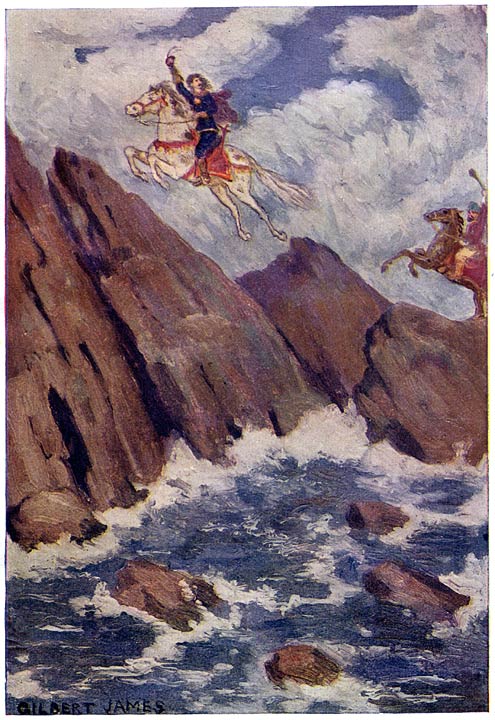
Momčilo’s wife Vidossava secretly disables those wings before a planned ambush. Jabučilo crushes more opponents than his rider’s sword, but cannot supply their accustomed aerial escape. When reproached, he answers in a neighing voice: his wings were burned and their surviving parts bound beneath his belt. He advises his master to escape another way. Momčilo dismounts, caresses him for the last time and leaps toward the castle. The subsequent narrative follows the rider’s death without supplying the horse with a recovery or final fate.
Origins & earliest records
Woislav M. Petrovitch, Hero Tales and Legends of the Serbians, Chapter XI, pp. 187–191. Selected imprint lists first publication August 1914 and reprints through December 1921.
Records & interpretation
Complete relevant encounter and printed locators read. The ballad is attributed to Karadžić’s transcription from an unnamed Serbian bard; footnote 5 identifies Tchile as a diminutive.
In the literature
“To-day I cannot fly”
Chapter XI, The Ambuscade, p.190; damaged-wing explanation · Woislav M. Petrovitch
The horse crushes attackers during the ambush, but cannot fly when its rider tries to escape. It speaks, explains the damaged wings and tells him to flee independently. Momtchilo dismounts; the subsequent failed climb and death concern the rider. The text supplies no separate death or restoration for Yaboutchilo.
Selected bibliography
Documented works and useful reading. This is not a list of every appearance.
- 01
Hero Tales and Legends of the Serbians, Chapter XI, pp. 187–191
The ballad is attributed to Karadžić’s transcription from an unnamed Serbian bard; footnote 5 identifies Tchile as a diminutive.
- 02
Hero Tales and Legends of the Serbians
Woislav M. Petrovitch, Hero Tales and Legends of the Serbians, London: George G. Harrap; selected December1921 reprint, first published August1914. Complete Chapter XI Marriage of King Voukashin and Chapter VI Tsarina Militza/Zmay episodes, plus complete Balačko pursuit/contest segment at the end of Chapter VIII, independently read in original English prose. Original Serbian witnesses not independently inspected.
Family & connections
A source-supported family tree or inspiration record has not yet been compiled for this profile. Related reading below indicates a connection in subject matter, not a proven lineage or creative influence.
Located primary passages
Specific passages supporting details in this entry, grouped by their published witness.
Hero Tales and Legends of the Serbians
Woislav M. Petrovitch, Hero Tales and Legends of the Serbians, London: George G. Harrap; selected December1921 reprint, first published August1914. Complete Chapter XI Marriage of King Voukashin and Chapter VI Tsarina Militza/Zmay episodes, plus complete Balačko pursuit/contest segment at the end of Chapter VIII, independently read in original English prose. Original Serbian witnesses not independently inspected.
- Momtchilo’s wife describes Yaboutchilo as a flying winged horse. She induces her husband to disclose when its wings open, then sees two wings reaching its hoofs and burns or binds them. The literal wing anatomy is explicit in this account, unlike mounts whose text only says they fly. Tchile is separately glossed as a diminutive name.
Chapter XI, Vidossava’s Treachery / The Winged Horse, pp.187–189
- The horse crushes attackers during the ambush, but cannot fly when its rider tries to escape. It speaks, explains the damaged wings and tells him to flee independently. Momtchilo dismounts; the subsequent failed climb and death concern the rider. The text supplies no separate death or restoration for Yaboutchilo.
- Petrovitch says Karadgitch recorded this ballad from a Serbian bard, while lamenting the limits of his English rendering. The bard is not personally named in the selected note. Its asserted medieval dating and speculative chronicle basis remain the compiler’s claims, not independently checked first attestations.
Selected1921 witness distinguished from first1914 edition. Original Serbian ballad not independently read; medieval dating/chronicle derivation not established by this inspection.
References
Sources supporting this profile. Linked pages have their own scope and editorial standards.
- Primary textPetrovitch primary text: Chapter XI, pp. 187–191Research access: 2026-10-05
Image credits
A sourced illustration has not yet been added. This gap is included in the coverage record.