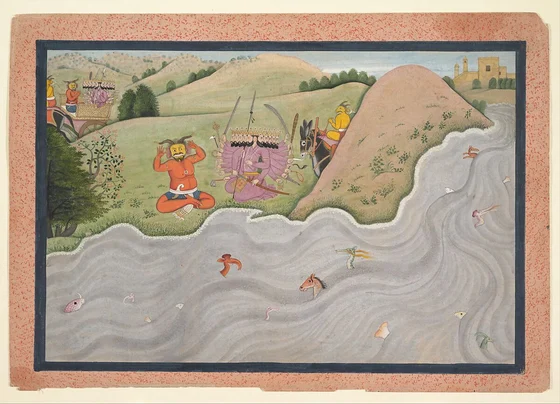
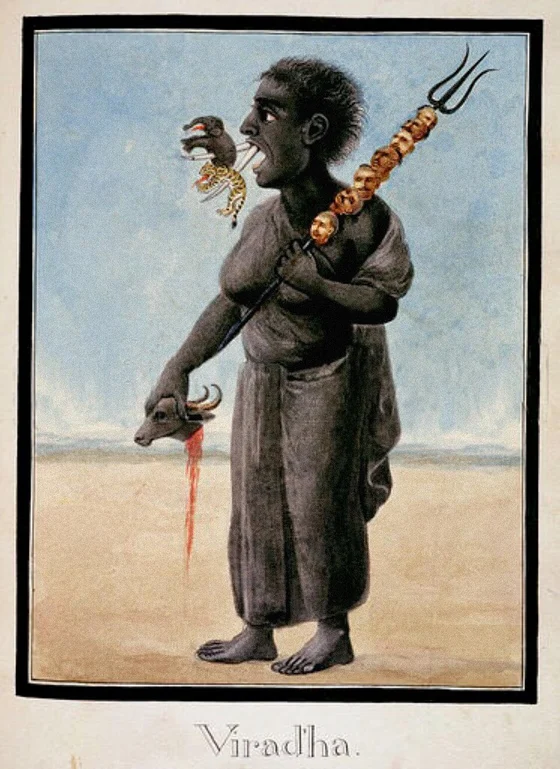
A sourced illustration has not yet been added. This gap is included in the coverage record.
Overview
Ilvala, called Ilval in Griffith’s translation, adopts a brahmin’s appearance and speaks Sanskrit to invite priests to a funeral ceremony. He serves the flesh of Vātāpi disguised as a ram. Once the visitors have eaten, his summons causes the brother to emerge violently and kill them.
The scheme fails when Agastya digests the meal beyond recall. On hearing that Vātāpi is dead, Ilvala attacks the sage in fury. Agastya destroys him with a burning glance. Ilvala’s disguise and spoken command differ from his brother’s animal transformation, despite their shared part in a single murderous trap.
Origins & earliest records
South Asian Rāmāyaṇa narrative tradition
Records & interpretation
Primary-text translation directly read by identified book/canto.
Selected bibliography
Documented works and useful reading. This is not a list of every appearance.
- 01
The Rámáyan of Válmíki
Title page gives translation span 1870–1874. Book III XI, pp. 241–242. Selected historical verse witness.
Family & connections
A source-supported family tree or inspiration record has not yet been compiled for this profile. Related reading below indicates a connection in subject matter, not a proven lineage or creative influence.
Primary records and illustrations
The Rámáyan of Válmíki
Book III. III XI, pp. 241–242
Actual translated primary passages directly read. Checked HTML canto anchor. No new image bytes inspected.
References
Sources supporting this profile. Linked pages have their own scope and editorial standards.
- Historical primary-text translationGriffith Rāmāyaṇa — Book III XI, pp. 241–242Research access: 2026-10-05
Image credits
A sourced illustration has not yet been added. This gap is included in the coverage record.