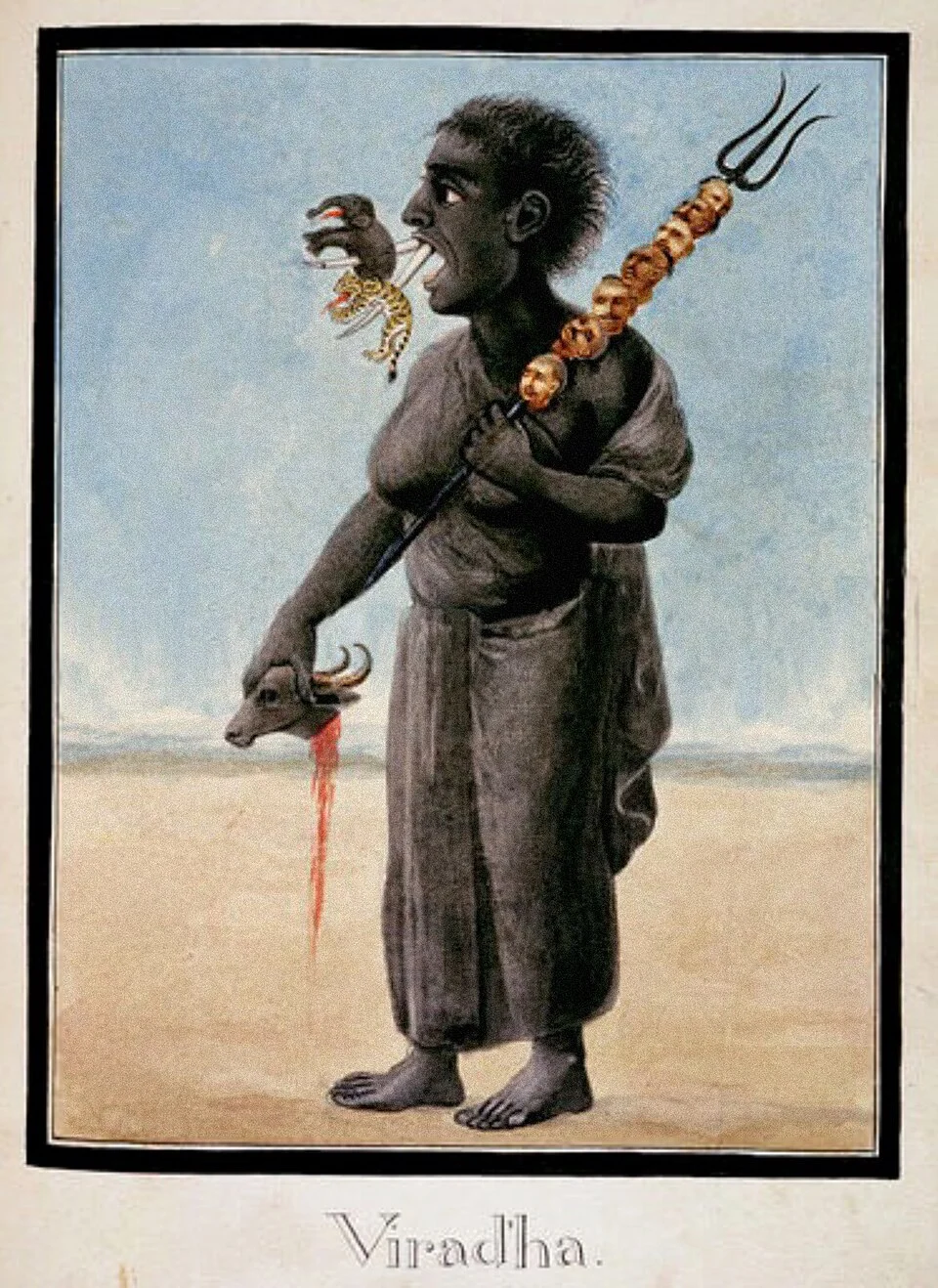
Viradha, British Library historical painting,1802
Printed label Viradha beneath fanged figure with bloodied animal and head-bearing trident; source identifies Adhyatma Ramayana,1802. Indian School denotes unidentified maker, not personal artist.
Overview
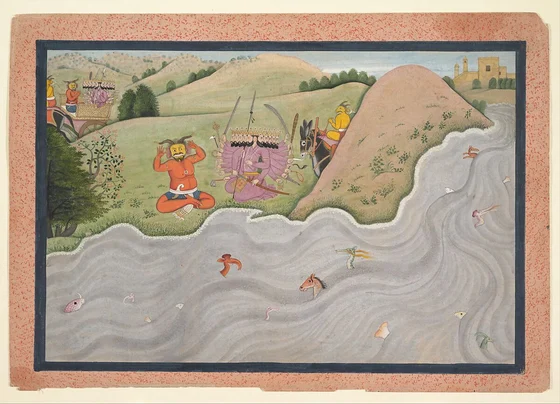
Virādha appears in Daṇḍaka forest as a mountain-sized rākṣasa with sunken eyes, a bloody tiger hide and an iron spear carrying numerous animal carcasses. He takes Sītā and threatens the brothers. He claims a boon from Brahmā that prevents weapons from destroying his body; arrows and swords wound him without ending his life.
The brothers disable his arms and bury him. Before release from his monstrous condition he identifies himself as Tumburu, a celestial musician cursed by Kubera. The promised ending of the curse depends on Rāma defeating him. His warning about a nearby sage becomes helpful guidance, so his story changes from abduction and battle to recognised identity and liberation.
Origins & earliest records
South Asian Rāmāyaṇa narrative tradition
Records & interpretation
Historical primary-text translation directly read by book and canto.
Selected bibliography
Documented works and useful reading. This is not a list of every appearance.
- 01
The Rámáyan of Válmíki
Translation title page gives 1870–1874; Book III II–IV, pp. 230–233. English verse wording attributed to Griffith.
Family & connections
A source-supported family tree or inspiration record has not yet been compiled for this profile. Related reading below indicates a connection in subject matter, not a proven lineage or creative influence.
Primary records and illustrations
The Rámáyan of Válmíki
Book III. III II–IV, pp. 230–233
Actual Griffith translation downloaded and passages read. Book/canto anchors checked in HTML; no illustration claim.
References
Sources supporting this profile. Linked pages have their own scope and editorial standards.
- Historical primary-text translationGriffith Rāmāyaṇa — Book III II–IV, pp. 230–233Research access: 2026-10-05
Image credits
Historical illustrationViradha, British Library historical painting,1802
Printed label Viradha beneath fanged figure with bloodied animal and head-bearing trident; source identifies Adhyatma Ramayana,1802. Indian School denotes unidentified maker, not personal artist.