A sourced illustration has not yet been added. This gap is included in the coverage record.
Overview
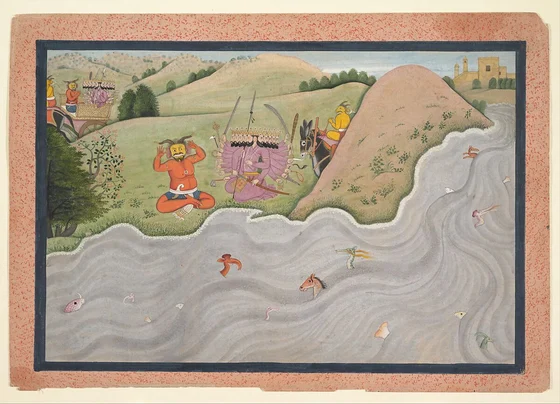
Subāhu, spelled Suváhu by Griffith, attacks Viśvāmitra’s rite with Mārīca and a company of rākṣasas. They approach through the sky surrounded by magically produced gloom and drop blood onto the sacred ground. Rāma and Lakṣmaṇa have been keeping a prolonged watch for this interruption.
The brothers’ response separates the two named attackers. A weapon throws Mārīca into the ocean alive, whereas Rāma strikes Subāhu in the chest with a fiery shaft and kills him. The remaining attackers are dispersed by another divine weapon. Subāhu’s role in this passage is a ritual assailant, with no separate animal disguise described.
Origins & earliest records
South Asian Rāmāyaṇa narrative tradition
Records & interpretation
Historical primary-text translation directly read by book and canto.
Selected bibliography
Documented works and useful reading. This is not a list of every appearance.
- 01
The Rámáyan of Válmíki
Translation title page gives 1870–1874; Book I XXXII, pp. 44–45. English verse wording attributed to Griffith.
Family & connections
A source-supported family tree or inspiration record has not yet been compiled for this profile. Related reading below indicates a connection in subject matter, not a proven lineage or creative influence.
Primary records and illustrations
The Rámáyan of Válmíki
Book I. I XXXII, pp. 44–45
Actual Griffith translation downloaded and passages read. Book/canto anchors checked in HTML; no illustration claim.
References
Sources supporting this profile. Linked pages have their own scope and editorial standards.
- Historical primary-text translationGriffith Rāmāyaṇa — Book I XXXII, pp. 44–45Research access: 2026-10-05
Image credits
A sourced illustration has not yet been added. This gap is included in the coverage record.