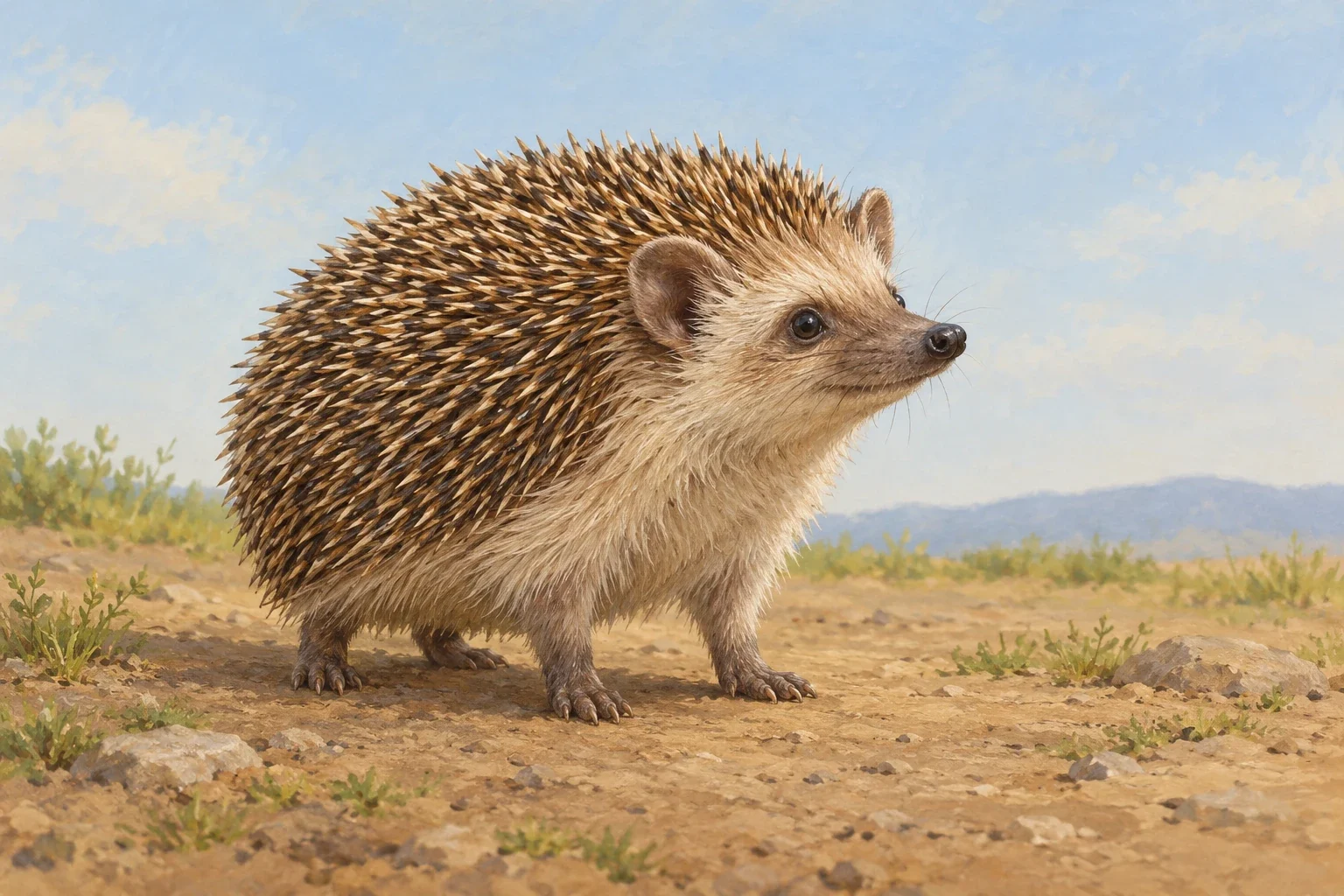
AI narrative interpretation of The Hedgehog in Thorburn’s Solomon Fable in Thorburn’s Bannú; or Our Afghan Frontier (1876).
AI narrative interpretation of the speaking hedgehog in Thorburn’s Pashto fable. Colors, spines, natural proportions and solitary quiet pose are invented; no scientific species or authenticated likeness is identified.
Overview
King Solomon receives a jar containing the water of life and calls the animals and birds to a council before deciding whether to drink it. The hedgehog is absent. A horse is sent to fetch him and returns without him; a hawk also fails to persuade him. When a dog is sent, the hedgehog comes readily.
Solomon is angry that the hedgehog has rejected the messengers he regards as honourable and accepted the dog, which the king calls unclean. The hedgehog answers that a horse serves an enemy as willingly as a friend, while a hawk obeys whoever feeds it. He calls the dog faithful because it remains with its master even after harsh treatment. These are the character’s arguments within the fable, not claims of zoological conduct or an endorsed ranking of animals.
Impressed by this reasoning, Solomon asks whether he should drink the water. The hedgehog advises against it: in his account the king would become perpetually old and miserable, burdening himself and his descendants. Solomon follows the advice and overturns the jar. The story does not say that the hedgehog drinks the water, possesses immortality or casts a spell on it.
The animal wins a hearing through an explanation of his earlier conduct and then gives the counsel that settles the king’s decision. This is the speaking hedgehog of Thorburn’s particular Pashto collection witness. No scientific species, documented physical likeness, universal animal behaviour or exclusive modern national origin is established.
Origins & earliest records
The Hedgehog’s Reasoning, Class III fables in Thorburn’s Bannú; or Our Afghan Frontier (1876), original p.219. Thorburn collected and condensed Pashto tales in the district; the individual narrator and precise village for this fable are unnamed.
Records & interpretation
Complete The Hedgehog’s Reasoning, printed p.219, checked paragraph by paragraph on native PDF235, including Solomon overturning the jar. Full preface and complete chapterII collection prelude, including its instrument footnote and condensation statement, read separately.
Selected bibliography
Documented works and useful reading. This is not a list of every appearance.
- 01
Bannú; or Our Afghan Frontier
London: Trübner, 1876; consulted scan retains the original title and body in a later Sang-e-Meel facsimile whose notice says first published in Pakistan 1970. Thorburn says he condensed and translated fifty Pashto tales; these two tellers and collection villages are unnamed.
Family & connections
A source-supported family tree or inspiration record has not yet been compiled for this profile. Related reading below indicates a connection in subject matter, not a proven lineage or creative influence.
References
Sources supporting this profile. Linked pages have their own scope and editorial standards.
- Historical condensed English translation of collected Pashto tales; original text in later facsimileThorburn, Bannú; or Our Afghan Frontier (1876), Class III fables, original pp.219–220Research access: 2026-10-21
Image credits
AI-generatedAI narrative interpretation of The Hedgehog in Thorburn’s Solomon Fable in Thorburn’s Bannú; or Our Afghan Frontier (1876).
AI narrative interpretation of the speaking hedgehog in Thorburn’s Pashto fable. Colors, spines, natural proportions and solitary quiet pose are invented; no scientific species or authenticated likeness is identified.