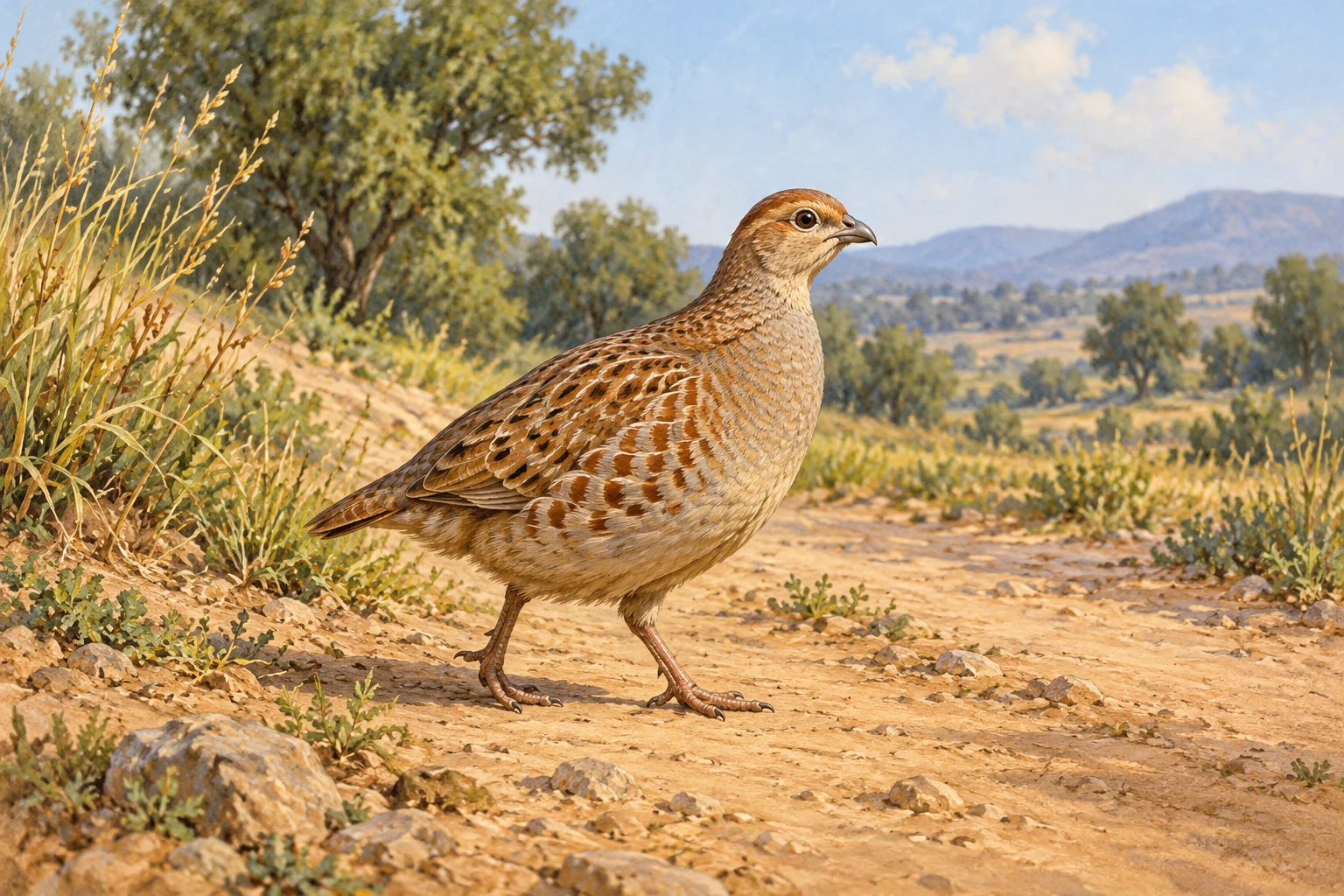
Thorburn’s resourceful partridge; detailed plumage and rural setting imagined.
Original narrative illustration; species-like detail and setting imagined rather than an authenticated specimen.
Overview
Thorburn’s partridge begins as the jackal’s companion, but friendship becomes an escalating series of demands. Asked to make him laugh, she lands on the foremost of four peasants walking in single file. Each man tries to strike her as she hops to the next head, causing the men to hit one another and quarrel. She escapes to the delighted jackal. When he next asks for dinner, she distracts a boy carrying milk and cakes to his father. Hopping just beyond the boy’s grasp, she keeps him occupied while the jackal drinks the milk and steals the cakes. Her quick movement controls what the humans notice, rather than relying on a magical transformation.
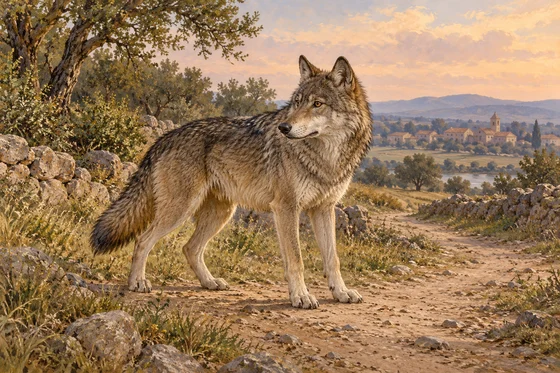
The jackal then asks her to make him cry. This time the partridge resents being treated as a servant and decides to satisfy the demand at his expense. She flies ahead to barking dogs and leads them towards the place where he is resting after his meal. The sleepy jackal must run for his life; only a hole finally saves him from the pursuing dogs. He ends exhausted, regretting his request and vowing revenge against her. The tale closes there, without narrating that revenge or reconciling the friends. The same resourcefulness that secured his entertainment and food becomes a means of asserting the bird’s dignity.
Origins & earliest records
S. S. Thorburn’s Bannú; or Our Afghan Frontier, original English publication 1876, read in a 1970 Lahore facsimile retaining the original title and pagination. Thorburn, a British district settlement officer, says he condensed and translated fifty popular Pashto tales. Neither this tale’s individual teller nor a precise collection village is named. His colonial judgments about the storytellers are historical mediation, not adopted assessments.
Records & interpretation
Complete The Partridge and the Jackal, Class III, printed pp. 220–221, through the jackal’s escape into a hole and vow of revenge; full preface and complete chapter collection prelude read. Original selected pages and both edition notices visually inspected.
Selected bibliography
Documented works and useful reading. This is not a list of every appearance.
- 01
Bannú; or Our Afghan Frontier
Part II, Chapter II, Class III, The Partridge and the Jackal, printed pp. 220–221; original body in 1970 facsimile.
Family & connections
A source-supported family tree or inspiration record has not yet been compiled for this profile. Related reading below indicates a connection in subject matter, not a proven lineage or creative influence.
References
Sources supporting this profile. Linked pages have their own scope and editorial standards.
- Historical condensed English translation of a collected Pashto taleThorburn 1876: complete The Partridge and the JackalResearch access: 2026-10-18
Image credits
AI-generatedThorburn’s resourceful partridge; detailed plumage and rural setting imagined.
Original narrative illustration; species-like detail and setting imagined rather than an authenticated specimen.