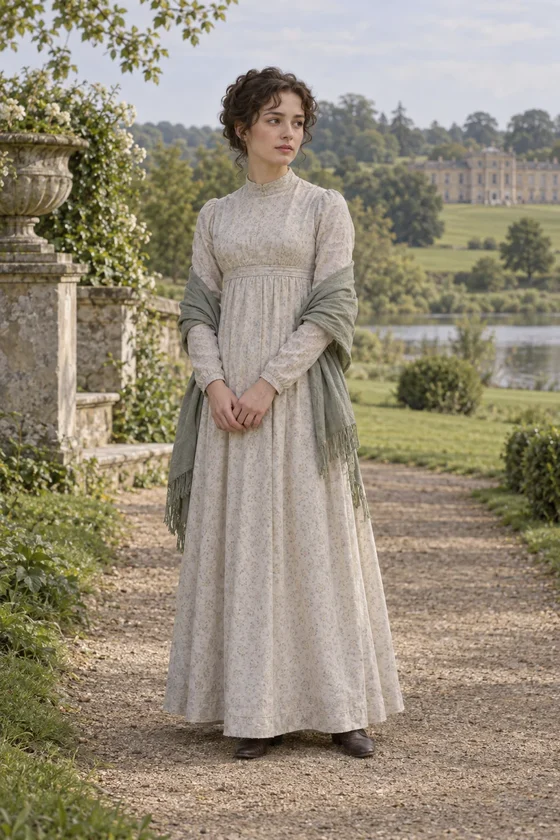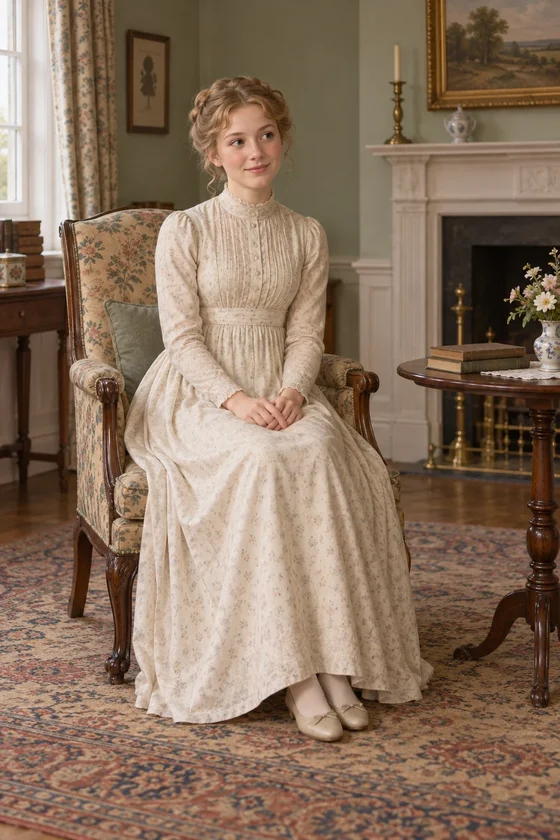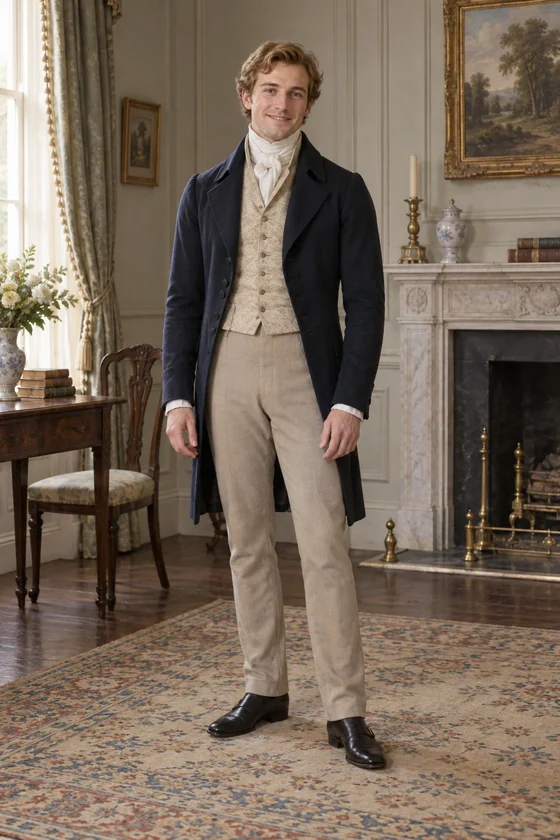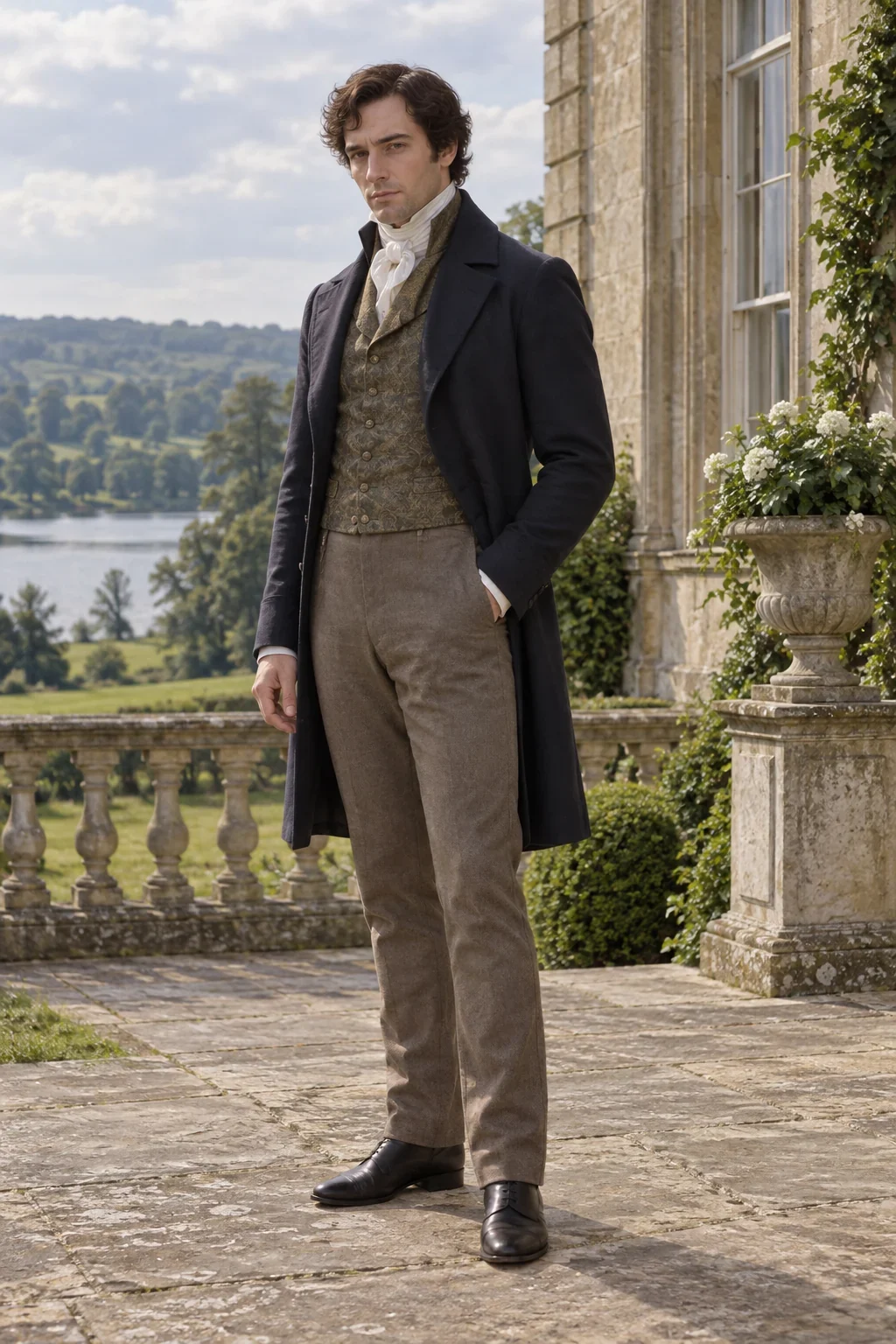
Imagined Fitzwilliam Darcy in a quiet original-novel portrait.
Unofficial AI interpretation. Darcy pauses at Pemberley. Selected object or posture follows the original novel; exact portrait, unmentioned clothing and scene arrangement are imagined, without an adaptation likeness claim. Full-frame display derivative; no upscaling.
Overview
Fitzwilliam Darcy is the wealthy owner of Pemberley whose manners and choices become a central object of judgment in Pride and Prejudice. The early assembly notices his tall figure and handsome appearance before deciding that his reserve and evident disdain make him disagreeable. His refusal to dance with Elizabeth is an actual social slight, not merely a misunderstanding manufactured by others. He is Bingley’s friend and adviser, but his greater confidence and social standing do not give him a noble title in the novel. The name Darcy belongs to a gentleman and landowner, rather than an adaptation’s invented duke or prince.
His attraction to Elizabeth grows through conversation and observation even while he regards her family connections as obstacles. He discourages Bingley’s attachment to Jane, believing Jane indifferent and judging the Bennet household unfavourably. Those conclusions are later challenged, especially the interpretation of Jane’s restrained manner. At Hunsford he proposes to Elizabeth with a frank account of the objections he has struggled against. She receives that mixture of admiration and condescension as insulting and refuses him. Her accusations about Jane and Wickham provoke the letter through which he offers an explanation, rather than a spoken debate that immediately resolves their differences.
The letter distinguishes his part in Bingley’s departure from the story Wickham has circulated. Darcy describes arrangements made for Wickham, the payment he accepted instead of a church position and the attempted elopement with Georgiana. Elizabeth later tests the account against remembered evidence and information from others. The profile treats this as a narrated disclosure with corroborating developments, not as a universal rule that wealth makes a witness truthful. His sister and the household at Pemberley also reveal aspects of responsibility and affection that his first public manners concealed. Elizabeth’s visit brings their acquaintance into less adversarial circumstances.
After Lydia leaves with Wickham, Darcy finds the pair and helps secure the marriage and associated settlements, asking that his part remain concealed. His motives include concern for Elizabeth and an acknowledgment that he had not exposed Wickham earlier. He subsequently corrects his interference with Bingley by admitting that Jane does love him and that her presence in London had been hidden. A later conversation with Elizabeth enables their engagement, while Lady Catherine’s opposition ultimately fails to dictate his choice. This original-story account preserves his initial pride alongside practical generosity and change. It does not give him a fixed age, exact hair colour, unreported early schooling or later fan-fiction history as evidence established by the selected book.
First appearances & development
Jane Austen’s Pride and Prejudice establishes this character through the Bennet sisters’ courtships and changing judgments. This profile follows the selected original narrative and does not combine adaptation continuity with it.
Canon & continuity
Original narrative.
Selected bibliography
Documented works and useful reading. This is not a list of every appearance.
- 01
Pride and Prejudice
Original.
Family & connections
A source-supported family tree or inspiration record has not yet been compiled for this profile. Related reading below indicates a connection in subject matter, not a proven lineage or creative influence.
References
Sources supporting this profile. Linked pages have their own scope and editorial standards.
- PrimaryPride and PrejudiceResearch access: 2026-10-12
Image credits
Unofficial modern AI interpretationImagined Fitzwilliam Darcy in a quiet original-novel portrait.
Unofficial AI interpretation. Darcy pauses at Pemberley. Selected object or posture follows the original novel; exact portrait, unmentioned clothing and scene arrangement are imagined, without an adaptation likeness claim. Full-frame display derivative; no upscaling.